
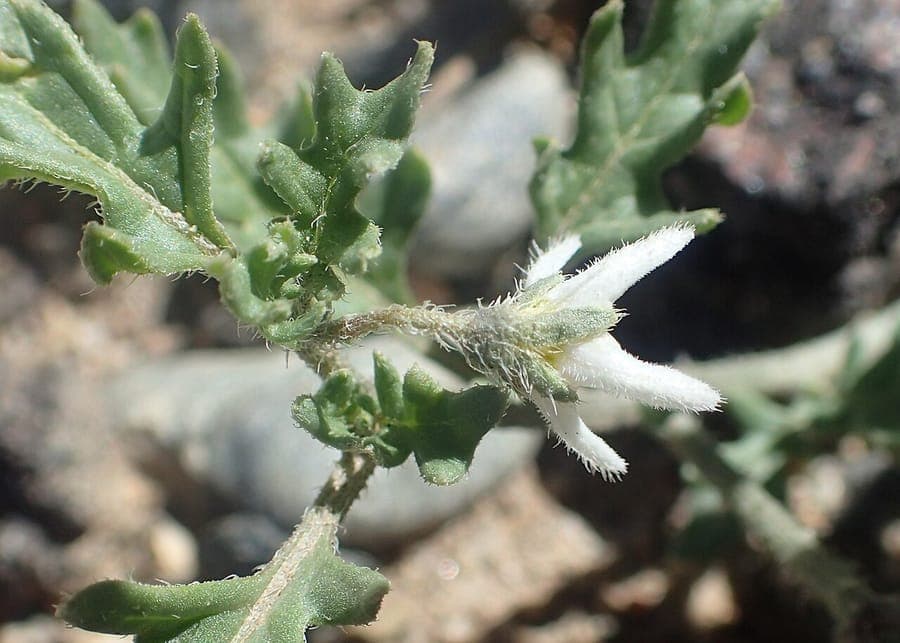
Kenraiz / CC BY-SA 4.0, via Wikimedia Commons
Cut-leaf nightshade: complete guide
Solanum triflorum
¿Quieres ver Cut-leaf nightshade: complete guide en tu jardín?
1 minuto, sin tarjeta de crédito
Overview
Cut-leaf nightshade (Solanum triflorum) is a herbaceous plant from North and South America belonging to the Solanaceae family - same as tomato, pepper, and potato. This plant grows as a low shrub, 30-60 cm tall, with distinctly lobed leaves and small white to pale purple flowers. Fruits are tiny green berries ripening to yellow. It's an uncommon ornamental in Western Europe, appearing occasionally as a casual weed.
Appearance and bloom cycle
Leaves are highly distinctive: deeply lobed to almost pinnatifid, creating an open, airy plant silhouette. Leaf segments are thin and delicate. Stems are green, nearly hairless. Blooming runs June through October. Flowers are tiny (8-10 mm wide), white to pale purple, typically clustered in pairs or threes per node (hence the Latin name triflorum). Fruits are small berries of 6-8 mm, green then yellow.
Ideal location
Full sun to partial shade works well. Minimum 4-6 hours direct sunlight promotes good growth and flowering. Cut-leaf nightshade behaves as an annual in temperate climates and grows in ground or containers. Suitable for vegetable plots, experimental gardens, and educational purposes. Not frost-hardy; it dies at first freeze.
Soil requirements
Average, well-draining garden soil suffices. No special soil needs. Moderately fertile soil preferred - very rich soil promotes foliage at flowering's expense. Neutral to slightly acidic pH (6.0-7.0) ideal. Accepts various soil types including sand-clay mixtures. Container growing uses standard potting mix, not too dense.
Watering
Keep moderately moist, not waterlogged. Water when top 1-2 cm of soil feels dry. During growth (June-August), water once or twice weekly. Hot spells require more water. Not water-demanding like Impatiens, nor drought-loving. Established plants outdoors rarely need supplemental water after establishment.
Diseño gratis
¿Quieres ver Cut-leaf nightshade: complete guide en tu jardín? Crea un diseño gratis ahora.
Pruning
Pruning unnecessary. Plant naturally assumes compact form. Seedling tips can be lightly pinched in early spring for bushier growth, but it's optional. Spent flowers drop naturally. If plants grow leggy (indicating light insufficiency), relocate to brighter location.
Maintenance calendar
May: Sow seeds in warm propagator or plant seedlings outdoors after last frost.
June-July: Growth period. Regular watering and minimal feeding. First flowers appear.
August-September: Flowering peaks. Consistent watering. Fruits develop.
October: Flowering declines. Temperatures drop. Light frost damages plant.
November: Plant dies at first freeze. Seeds can be collected for next season.
Winter hardiness
Absolutely not winter-hardy in temperate zones. Even light frosts near 0°C cause severe damage. In mild-winter regions (southern UK, southern France) plants might overwinter in sheltered spots, but typically grown as annuals. USDA zones 5-10 (seasonal).
Toxicity warning
Caution: all plant parts are potentially toxic. Leaves, stems, and green fruits contain possible alkaloids. Ripe yellow berries probably less toxic but inedible. DO NOT EAT ANY PART. Keep away from children and pets. If ingested or if skin contact causes irritation, consult physician immediately.
Related species
Related plants include Solanum nigrum (black nightshade) and Solanum lycopersicum (tomato). For plant collectors, Cut-leaf nightshade is interesting alongside other Solanum species for studying leaf morphology and flower biology.
Closing
Cut-leaf nightshade is a fascinating plant for gardening enthusiasts and botany students. Less valuable as ornament than as educational tool on plant families and development. Rarely available at garden centers; seeds found online. For complete front garden design using safe, proven ornamentals, gardenworld.app tools help. This platform enables planning with affordable, tested plants that keep family and pets safe.
¿Quieres ver Cut-leaf nightshade: complete guide en tu jardín? Crea un diseño gratis ahora.
Sube una foto, elige un estilo y obtén un diseño fotorrealista con lista de plantas en menos de un minuto.
Más de 10.000 jardines diseñados
Sin tarjeta de crédito


Plantas similares
Solanum dolichosepalum: complete guide
Solanum dolichosepalum
Discover Solanum dolichosepalum, an Andean nightshade with striking long sepals. Growing tips, hardiness, and companion planting for your patio.
Solanum ripense: complete guide
Solanum ripense
Discover Solanum ripense, a moisture-loving Andean nightshade for pond edges and conservatories. Growing tips, hardiness, and companions.
Solanum tomentosum: complete guide
Solanum tomentosum
Discover Solanum tomentosum, a thorny South African nightshade with felted leaves. Growing tips, hardiness, and companion planting ideas.