
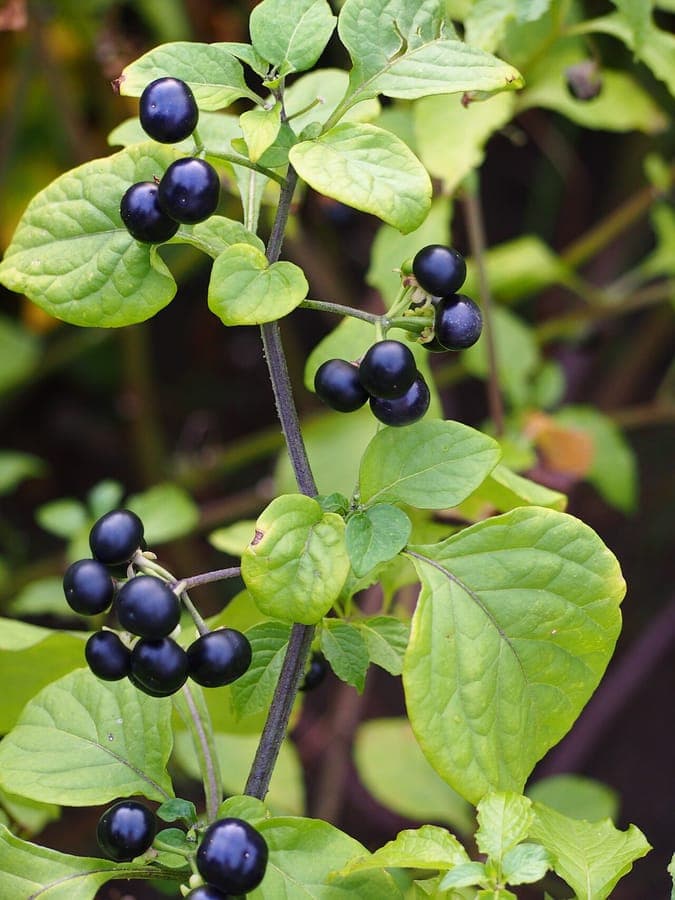
Agnieszka Kwiecień, Nova / CC BY-SA 4.0, via Wikimedia Commons
Garden huckleberry: complete guide
Solanum scabrum
¿Quieres ver Garden huckleberry: complete guide en tu jardín?
1 minuto, sin tarjeta de crédito
Overview
Garden huckleberry (Solanum scabrum) is a fascinating compact shrub from tropical and southern Africa and the Indian Ocean region. This plant is valued for its beautiful purple flowers and numerous dark, glossy berries that adorn the plant in summer and autumn. With its compact growth habit, attractive flowers, and decorative fruits, Garden huckleberry is an interesting choice for garden and container plantings.
Appearance and Bloom
Garden huckleberry reaches heights of 60 to 120 centimeters with dark green, hairy foliage. The plant produces small purple, slightly star-shaped flowers that form in clusters. The flowering period runs from July to October. After flowering, numerous round, dark purple to black berries appear that are very ornamental. These fruits remain on the plant for a long time.
Ideal Location
Garden huckleberry thrives best in full sun to light shade. The plant feels most at home in warm, sheltered locations where growth is stimulated. In temperate climates, the plant is better suited as a container plant. Protection from frost is essential in cold regions.
Soil
Garden huckleberry grows best in well-draining, nutrient-rich soils. A mixture of garden soil and compost provides ideal growing conditions. For container plantings, use standard potting mix. Good drainage prevents root rot.
Watering
This plant needs regular watering, especially during the growing season. The soil should remain moist but not waterlogged. In very dry periods, daily misting can be beneficial. In winter months, moisture input can be reduced.
Diseño gratis
¿Quieres ver Garden huckleberry: complete guide en tu jardín? Crea un diseño gratis ahora.
Pruning
Garden huckleberry requires minimal pruning. Light pruning in early spring can help keep the plant compact and full. Regularly remove spent leaves and branches. After heavy fruiting, light pruning can also promote new berry formation.
Maintenance Calendar
During the growing season, regular feeding with balanced fertilizer is needed. Regularly check for insect infestations and soil diseases, though the plant is generally resistant. Protect against frost in cold winters. Do not let it dry out completely.
Winter Hardiness
Garden huckleberry is frost-sensitive and will likely not survive very severe winters. In temperate climates, the plant is better suited as a container plant that can be protected in winter. In warmer regions, it can grow outdoors year-round.
Companion Plants
Garden huckleberry combines well with other heat-loving plants such as Brazilian nightshade and other Solanum species. Sun-lovers like Lantana and Heliotropium form beautiful neighbors. Foliage effects of silver-leaved plants contrast nicely with the dark berries of Garden huckleberry.
Conclusion
Garden huckleberry is an attractive plant for gardens in warmer climates and for container plantings. With its purple flowers, ornamental dark berries, and compact form, it is an interesting choice. Provide it with sufficient warmth, light, and moisture for optimal growth and fruiting. Available at major garden retailers worldwide.
¿Quieres ver Garden huckleberry: complete guide en tu jardín? Crea un diseño gratis ahora.
Sube una foto, elige un estilo y obtén un diseño fotorrealista con lista de plantas en menos de un minuto.
Más de 10.000 jardines diseñados
Sin tarjeta de crédito


Plantas similares
Solanum dolichosepalum: complete guide
Solanum dolichosepalum
Discover Solanum dolichosepalum, an Andean nightshade with striking long sepals. Growing tips, hardiness, and companion planting for your patio.
Solanum ripense: complete guide
Solanum ripense
Discover Solanum ripense, a moisture-loving Andean nightshade for pond edges and conservatories. Growing tips, hardiness, and companions.
Solanum tomentosum: complete guide
Solanum tomentosum
Discover Solanum tomentosum, a thorny South African nightshade with felted leaves. Growing tips, hardiness, and companion planting ideas.