
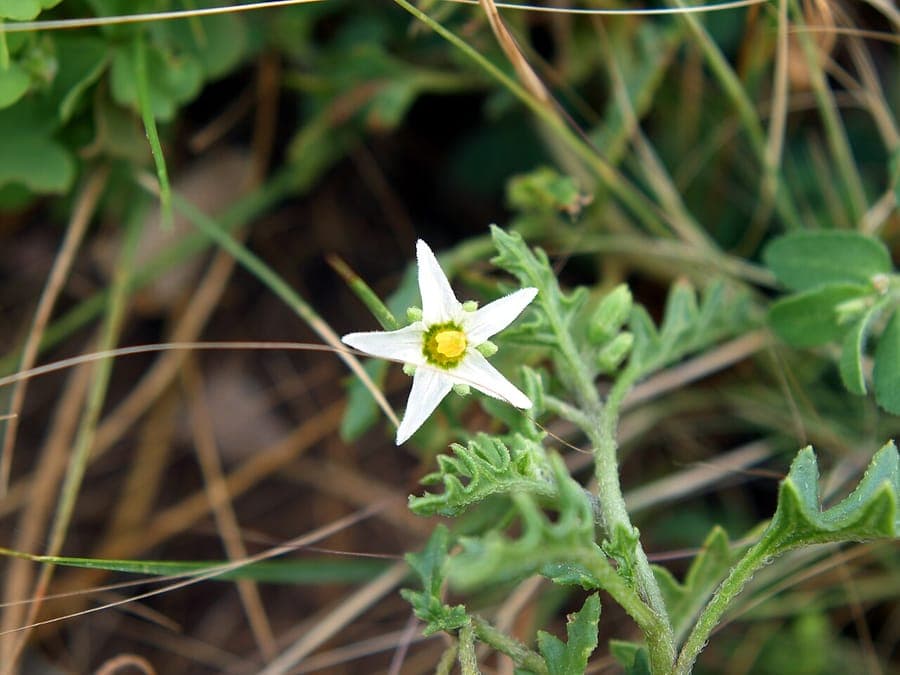
Jim Pisarowicz / Public domain, via Wikimedia Commons
Leafy-fruited nightshade: complete guide
Solanum sarrachoides
¿Quieres ver Leafy-fruited nightshade: complete guide en tu jardín?
1 minuto, sin tarjeta de crédito
Overview
The leafy-fruited nightshade (Solanum sarrachoides) is an annual weed and invasive plant native to Brazil and northern Argentina. This member of the nightshade family (Solanaceae) causes problems in many gardens and cultivated areas due to its rapid spread and potentially toxic properties.
This guide helps you recognize this plant, understand where it grows, and how to manage it in gardens and surrounding landscapes.
Appearance and bloom
The leafy-fruited nightshade grows as a herbaceous annual plant reaching 30-60 cm tall. The plant has soft stems with scattered small prickles. The leaves are green, oval to lance-shaped, approximately 4-8 cm long.
The flowers are small, white to light purple, with yellow stamens. Flowering occurs from summer through autumn. After flowering, small round fruits develop that are initially green, then orange-yellow to red as they ripen.
The fruits contain numerous small seeds dispersed by birds and water. This is the primary reason this plant is so invasive.
Ideal location (for recognition)
Leafy-fruited nightshade grows in full sun to partial shade. It prefers dry to moderately moist soil. You'll usually find it in gardens, agricultural land, disturbed areas, and along roads where soil has been turned.
In warm temperate climates it can grow year-round. In cold regions it's a seasonal pest in summer and autumn.
Soil and growth preference
Leafy-fruited nightshade grows in practically all soil types, from sand to clay. It prefers non-rich to moderate soils. The plant is quite hardy and can tolerate disturbed soils.
It tolerates neutral to slightly acidic pH values. Because it's an annual weed, it disappears in winter in cold climates, but resows itself.
Diseño gratis
¿Quieres ver Leafy-fruited nightshade: complete guide en tu jardín? Crea un diseño gratis ahora.
Identification and possible confusion
Leafy-fruited nightshade can be confused with other nightshade plants. Look for:
- Small white flowers with yellow stamens
- Soft, prickly stems
- Small fruits initially green then red/orange
- Very rapid growth
- Seed production throughout the season
Removal and management
The best approach is prevention. Remove plants before they set seed. Pull young plants or cut mature ones off at ground level. Ensure removed material doesn't go into compost.
Herbicide application can help, though the plant regrows quickly. Repeated treatment over the season is needed. In severe infestations chemical control may be necessary (consult local experts).
Winter and seasonal behavior
In temperate climates the plant dies off in winter. However, seeds can survive multiple years in soil. In warm temperate climates the plant can grow year-round.
Health and precautions
The fruits are TOXIC and must not be eaten. The plant contains alkaloids that can be harmful. Ensure children and pets don't eat the fruits or leaves.
Note for gardens: If you have this plant in your garden, remove it safely and carefully.
Role in ecosystem
Although invasive and unwanted in gardens, the plant produces fruits eaten by birds. This aids dispersal. In some areas where it's native (South America), it plays a role in wild ecosystems.
In Europe and North America it is however an invasive weed without benefits.
Closing
Leafy-fruited nightshade is an unwanted guest in most gardens. With prevention - by stopping seed set - and early removal you can manage this plant.
When you find this weed in your garden, remove it carefully with gloves. More information about plant management is available at gardenworld.app/en and gardenworld.app/de.
¿Quieres ver Leafy-fruited nightshade: complete guide en tu jardín? Crea un diseño gratis ahora.
Sube una foto, elige un estilo y obtén un diseño fotorrealista con lista de plantas en menos de un minuto.
Más de 10.000 jardines diseñados
Sin tarjeta de crédito


Plantas similares
Solanum dolichosepalum: complete guide
Solanum dolichosepalum
Discover Solanum dolichosepalum, an Andean nightshade with striking long sepals. Growing tips, hardiness, and companion planting for your patio.
Solanum ripense: complete guide
Solanum ripense
Discover Solanum ripense, a moisture-loving Andean nightshade for pond edges and conservatories. Growing tips, hardiness, and companions.
Solanum tomentosum: complete guide
Solanum tomentosum
Discover Solanum tomentosum, a thorny South African nightshade with felted leaves. Growing tips, hardiness, and companion planting ideas.