
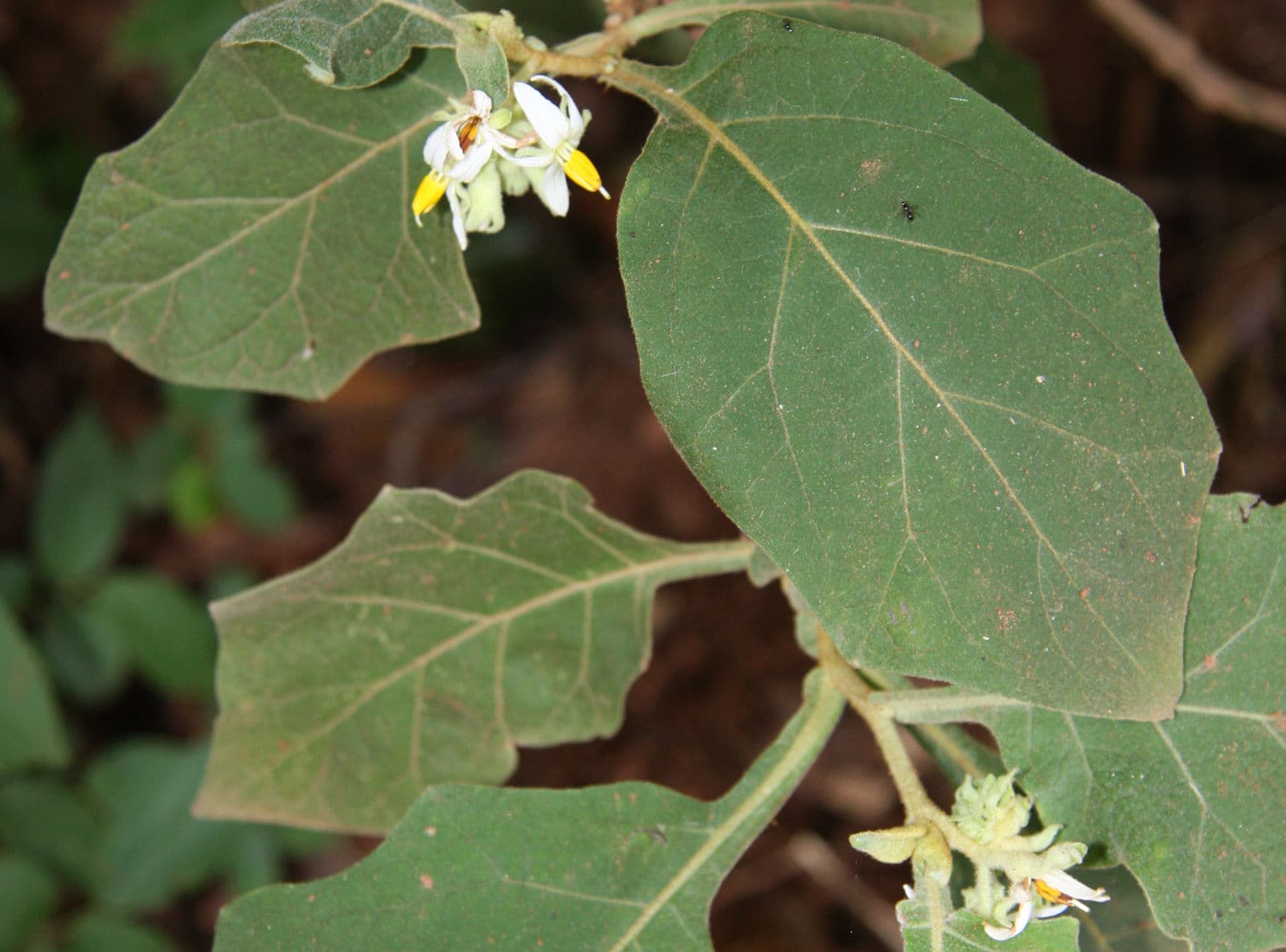
Solanum robustum: complete guide to this silverleaf nightshade
Solanum robustum
¿Quieres ver Solanum robustum: complete guide to this silverleaf nightshade en tu jardín?
1 minuto, sin tarjeta de crédito
Overview
Solanum robustum, commonly called shrubby nightshade, silverleaf nightshade, or cockroach poison, is a striking shrub native to tropical and subtropical South America. This plant grows naturally in Brazil, Paraguay, and northeastern Argentina, where it thrives in diverse ecosystems from rainforests to savannas.
Although native to tropical regions, Solanum robustum can be cultivated in temperate climates, especially under protected conditions. The plant offers remarkable ornamental value with its silver-grey foliage and delicate yellow flowers.
Appearance and Bloom
Solanum robustum is a deciduous to semi-evergreen shrub reaching 2 to 3 meters tall under ideal conditions. In cooler climates, the plant remains smaller and can be grown in containers.
The leaves are the plant's most distinctive feature. They are large, up to 15 centimeters long, with deeply lobed margins and a characteristic silvery to silver-grey surface texture. This metallic sheen on the leaf surface gives the plant a remarkably exotic and ornamental appearance.
Flowers appear in summer and early autumn, arranged in small clusters. Flower color ranges from yellow to orange-yellow. Though modest in size, these blooms attract numerous pollinators.
Following pollination, small orange-yellow berries develop that are highly toxic. Though attractive to observe, these berries must never be consumed.
Ideal Location
Solanum robustum performs best in warm locations with full sun to light partial shade. The plant requires considerable warmth and sunlight for optimal growth and flowering.
In temperate climates, the plant must be protected against cold winters. This can be achieved by growing the plant in containers that can be moved indoors during winter, or by selecting protected locations such as against walls or under overhangs.
The plant is ideally suited to greenhouse or conservatory cultivation in temperate climates, where it can be grown in warm, sheltered conditions.
Soil
Solanum robustum prefers well-drained, moderately fertile soil. The plant thrives in sandy loam to loamy sand with moderate organic matter.
Soil pH can range from acidic (pH 5.5) to neutral (pH 7.0), though neutral is optimal. The plant does not tolerate waterlogging and requires good drainage of excess rainwater.
In containers, a mixture of approximately 40% garden or potting soil, 30% sand, and 30% compost is ideal.
Watering
Solanum robustum requires regular watering during the growing season. The plant thrives in moist but not waterlogged soil.
During summer and the growing period, the plant must be watered regularly, especially in warm, dry conditions. Container-grown plants need more frequent watering than in-ground specimens.
During the winter dormant period, watering can be significantly reduced, though the soil should not dry completely.
Pruning
Solanum robustum responds well to pruning and benefits from regular structural shaping. After flowering, long shoots can be shortened to keep the plant compact.
Each year, remove a few of the oldest stems from the center to improve light and air circulation. This also reduces disease risk.
The plant tolerates regular pruning and responds well with new growth. In warm conditions, the plant may grow aggressively, requiring periodic pruning.
Maintenance Calendar
Spring (April-May): Begin regular pruning of winter damage. Start feeding. Increase watering as temperatures rise.
Summer (June-August): Apply regular feeding. Water consistently. Enjoy blooms. Watch for pests in warm conditions.
Autumn (September-October): Begin gradually reducing watering as temperatures cool. Apply final feeding. Move containers to protected locations.
Winter (November-March): Minimize watering but keep soil from drying completely. Protect from frost. Keep plant in warm indoor location if possible.
Diseño gratis
¿Quieres ver Solanum robustum: complete guide to this silverleaf nightshade en tu jardín? Crea un diseño gratis ahora.
Winter Hardiness
Solanum robustum is not winter-hardy and cannot tolerate frost. The plant dies when exposed to temperatures below approximately 5 degrees Celsius.
In temperate climates, the plant must be overwintered in a protected environment such as a greenhouse, conservatory, or warm room indoors. In tropical and subtropical regions, winter protection is unnecessary.
For long-term cultivation in temperate climates, container growing is recommended, allowing the plant to be moved indoors during winter.
Companion Plants
In warm conditions, Solanum robustum pairs well with other South American plant material. Consider:
- Other tropical Solanum species for family-themed plantings
- Fuchsias for color contrast
- Bougainvillea for warm-climate gardening
- Tropical fruit plants for functional cultivation
- Subtropical groundcovers for texture
Propagation
Solanum robustum propagates most easily from semi-hardwood cuttings, taken in May or June while the plant is actively growing. Take cuttings 10 to 12 centimeters long, remove the lowest leaves, treat the base with rooting hormone, and place them in light, moist potting mix under plastic cover at 20 to 24 degrees Celsius. Rooting typically occurs within three to four weeks.
Sowing is also possible: sow fresh seed in spring at 22 to 25 degrees Celsius, with germination within two to four weeks. For gardeners seeking similar container plants with decorative foliage, Solanum rantonnetii 'Royal Robe' (blue potato bush) is a popular alternative requiring the same overwintering approach in a greenhouse or conservatory. Visit gardenworld.app for a detailed guide to propagating subtropical container plants and overwintering them indoors.
Pests and Diseases
Under the dry, warm conditions Solanum robustum prefers, spider mites are the primary pest, especially during indoor overwintering where humidity is low. Increase humidity through regular misting and check the undersides of leaves for fine webbing.
Whitefly and aphids can also establish under greenhouse conditions; yellow sticky traps and insecticidal soap keep populations in check. Root rot from verticillium fungi can occur with excessive moisture combined with poor drainage, so always ensure a free-draining substrate. Mealybugs may also nest in leaf axils under dry greenhouse conditions, recognizable by their white, waxy fluff; remove them with a cotton swab dipped in alcohol for light infestations, or treat heavier colonies with a horticultural oil spray. Biological control products targeting spider mites and mealybugs are widely available from garden centers for gardeners who prefer a chemical-free approach, and introducing predatory mites early in the season often prevents outbreaks from taking hold at all. Remember that the berries are highly toxic, so keep the plant out of reach of children and pets. Find more guidance on keeping subtropical container plants healthy on gardenworld.app.
Closing Thoughts
Solanum robustum offers a unique combination of exotic beauty and ornamental value. The silver-grey foliage and yellow flowers make this plant interesting for gardeners seeking something unusual and tropical.
The primary requirement is warmth and frost protection. In temperate climates, container cultivation is recommended. Start with seed or young plants from tropical nurseries.
Find seeds and plants through tropical specialists. Handle with care due to toxicity of berries.
¿Quieres ver Solanum robustum: complete guide to this silverleaf nightshade en tu jardín? Crea un diseño gratis ahora.
Sube una foto, elige un estilo y obtén un diseño fotorrealista con lista de plantas en menos de un minuto.
Más de 10.000 jardines diseñados
Sin tarjeta de crédito


Plantas similares
Solanum dolichosepalum: complete guide
Solanum dolichosepalum
Discover Solanum dolichosepalum, an Andean nightshade with striking long sepals. Growing tips, hardiness, and companion planting for your patio.
Solanum ripense: complete guide
Solanum ripense
Discover Solanum ripense, a moisture-loving Andean nightshade for pond edges and conservatories. Growing tips, hardiness, and companions.
Solanum tomentosum: complete guide
Solanum tomentosum
Discover Solanum tomentosum, a thorny South African nightshade with felted leaves. Growing tips, hardiness, and companion planting ideas.