
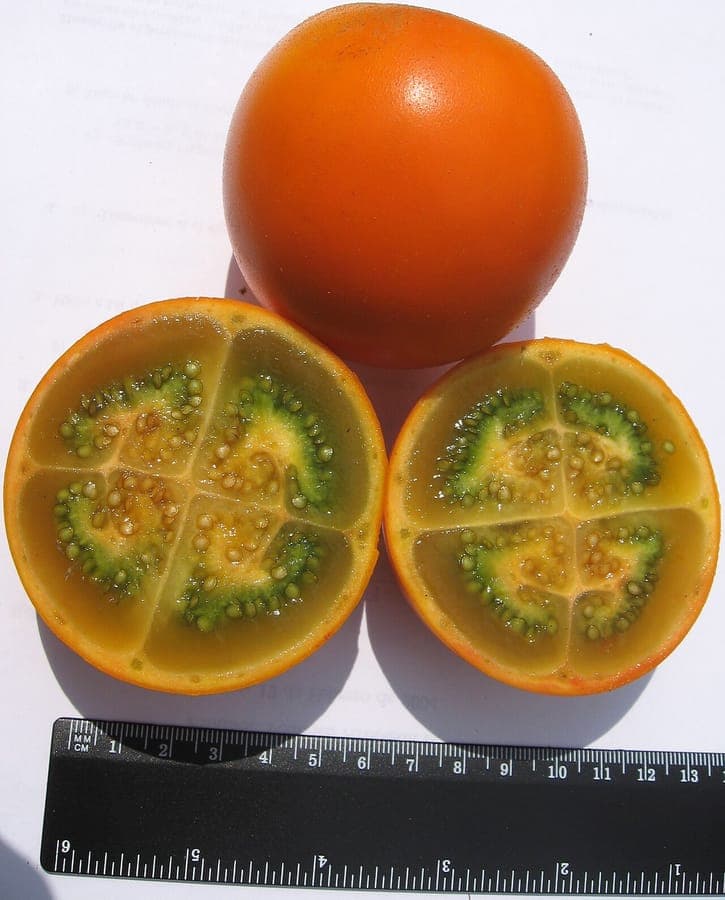
Picture taken by Fibonacci. / CC BY-SA 3.0, via Wikimedia Commons
Naranjilla (Lulo): complete guide
Solanum quitoense
¿Quieres ver Naranjilla (Lulo): complete guide en tu jardín?
1 minuto, sin tarjeta de crédito
Overview
The naranjilla or lulo (Solanum quitoense), native to mountain regions from Costa Rica through Venezuela and Peru, is a remarkable highland fruit shrub. The name 'naranjilla' literally means 'little orange' in Spanish, though the flavour resembles raspberry and pineapple with bright acidity. The plant produces distinctive orange-red, hairy fruits approximately the size of a cherry tomato.
Appearance & bloom cycle
Naranjilla grows as a semi-woody shrub, reaching 150-250 cm tall. The plant bears purple or white flowers (approximately 2-3 cm across) appearing May-July. Fruits mature 120-150 days after flowering and develop an orange-red hue. They're covered with soft hairs and contain characteristic chambers filled with numerous seeds. Foliage is large, oval and hairy.
Ideal location
Naranjilla thrives at elevation (600-2400 m in its native mountains) in cool mountain climate. In temperate regions, position in the coolest greenhouse section, not the warmest corner. 18-22°C is ideal; temperatures above 28°C reduce fruit-set. The plant appreciates humidity (60-70% atmospheric moisture) without waterlogging. Ensure good ventilation.
Soil requirements
Naranjilla demands fertile, acidic soil with pH 5.5-6.5. Incorporate plenty of organic material at planting – compost, leaf mould, peat. Soil must drain well yet remain consistently moist. In containers (40+ litres): blend peat, perlite and compost. Regular potassium application enhances fruit quality.
Watering
Naranjilla requires consistently moist soil, especially during growth and fruit-set. Water regularly but prevent waterlogging. Provide excellent drainage. The plant responds poorly to drought – dry periods halt fruiting. In containers: check moisture 2-3 times weekly. Naranjilla prefers cool water – even tap water is acceptable.
Diseño gratis
¿Quieres ver Naranjilla (Lulo): complete guide en tu jardín? Crea un diseño gratis ahora.
Pruning
Naranjilla grows bushy and can become quite dense. Early spring pruning: remove congestion, dead wood and excess growth. Cut the plant to 60 cm in the first season for better structure. Prune lateral branches to 30-40 cm for improved form. Remove fruits below 20 cm height to concentrate energy upward.
Maintenance calendar
Spring (March-May): Plant in prepared warm greenhouse. Water very regularly; growth accelerates. Begin feeding April (weekly half-strength). Maintain high humidity – mist daily.
Summer (June-September): Flowering and fruiting intensify. Water very regularly – drought is now critical. Feed monthly (full strength). Harvest begins July/August. Ensure good ventilation against fungal diseases.
Autumn (October-November): Harvest peaks. Water still regularly but reduce feeding. Allow plant to establish for winter rest. Provide 14-16 hours daily light.
Winter (December-February): Naranjilla enters dormant rest. Minimize watering – only keep surface moist. Temperature can drop to 12-15°C. No feeding.
Winter hardiness
Naranjilla is not frost-hardy outdoors in temperate zones. Plants die below 8°C. However, you can preserve them: cut back to 50 cm in October, lower temperature to 12-15°C, minimize water. Plants can dormancy 3-4 months and reactivate in March.
Companion plants
Naranjilla fits well in a greenhouse highland-fruit corner with other mountain crops: passion fruit, small guava cultivars. Don't combine with intense heat-lovers like papaya. Grow alongside moisture-loving plants (fuchsia, impatiens) in the same greenhouse section to share humidity.
Closing
Naranjilla brings authentic highland fruit experience to your greenhouse. The intensely sweet-tart flavour is truly addictive and unavailable commercially. The plant demands more attention than pepino, but rewards with abundant harvests. For greenhouse design inspiration visit gardenworld.app. Within 2-3 seasons dedicated growers establish reliable naranjilla systems – and harvests justify every moment of care!
¿Quieres ver Naranjilla (Lulo): complete guide en tu jardín? Crea un diseño gratis ahora.
Sube una foto, elige un estilo y obtén un diseño fotorrealista con lista de plantas en menos de un minuto.
Más de 10.000 jardines diseñados
Sin tarjeta de crédito


Plantas similares
Solanum dolichosepalum: complete guide
Solanum dolichosepalum
Discover Solanum dolichosepalum, an Andean nightshade with striking long sepals. Growing tips, hardiness, and companion planting for your patio.
Solanum ripense: complete guide
Solanum ripense
Discover Solanum ripense, a moisture-loving Andean nightshade for pond edges and conservatories. Growing tips, hardiness, and companions.
Solanum tomentosum: complete guide
Solanum tomentosum
Discover Solanum tomentosum, a thorny South African nightshade with felted leaves. Growing tips, hardiness, and companion planting ideas.