
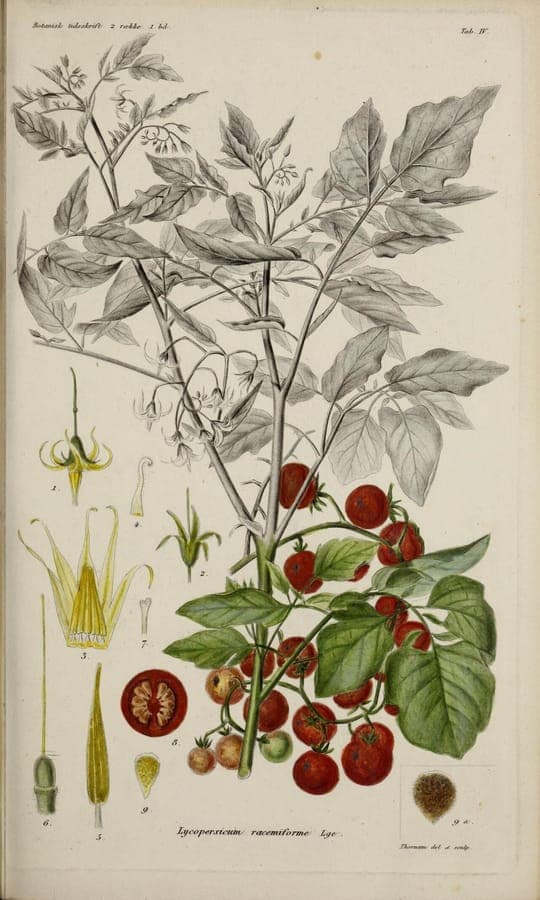
Botaniske forening i København.; Dansk botanisk forening. / Public domain, via Wikimedia Commons
Currant tomato: complete guide
Solanum pimpinellifolium
¿Quieres ver Currant tomato: complete guide en tu jardín?
1 minuto, sin tarjeta de crédito
Overview
The Currant tomato, scientifically known as Solanum pimpinellifolium, is a fascinating wild tomato species native to South America, particularly Peru, Ecuador, and the Galapagos Islands. This compact plant belongs to the Solanaceae family and is celebrated for its extremely small, flavourful fruits resembling redcurrants. Unlike cultivated tomato varieties, this species exhibits a more natural growth pattern and provides striking visual interest in any garden.
This species is particularly appealing to hobby gardeners seeking something beyond standard tomato varieties. The plant flowers abundantly and produces profuse tiny red or orange fruits that attract numerous pollinators. While not intended for commercial harvests, the Currant tomato brings unique charm to gardens and balconies alike.
Appearance & bloom cycle
Solanum pimpinellifolium grows as a herbaceous plant with thin, delicate stems reaching 60-90 cm tall. The leaves are small, feathery, and attractive, displaying a bright green colour. The plant produces numerous flowers in clustered arrangements, typically yellow, which is characteristic of many Solanum species.
The fruits are the true highlight: tiny, round tomatoes measuring just 1-2 cm in diameter, turning bright red or orange-yellow when ripe. Each fruit contains only a few seeds and minimal flesh, yet they are incredibly sweet and flavourful. Fruit production is prolific - a healthy plant can produce hundreds of fruits in a single season. Flowering occurs from May through September in temperate climates, with harvests continuing until the first frost.
Ideal location
The Currant tomato thrives best in locations receiving at least 6-8 hours of direct sunlight daily. Full sun is ideal and promotes vigorous growth and maximum fruit production. This is a warm-weather plant that prefers temperatures between 20-28°C during the growing season.
In temperate regions, this plant grows well in a sheltered, sunny garden position, though cultivation in a greenhouse, cold frames, or against a warm south-facing wall yields better results. The plant is extremely frost-sensitive - even a few degrees below freezing can damage it. Protect from strong winds that may break delicate stems.
Soil requirements
Solanum pimpinellifolium is not particularly fussy about soil composition, though it prefers light, well-draining soil. A mixture of 50% garden soil and 50% sand or perlite works excellently. The plant tolerates dry soil better than waterlogging, so ensure proper drainage.
Adding compost or well-rotted manure to the planting hole promotes vigorous growth. During the growing season, apply balanced fertiliser monthly. The plant also grows well in containers, provided you use at least 10 litres of potting mix and feed regularly.
Watering
Once established, this plant is fairly drought-tolerant, though regular watering promotes better growth and productivity. Water deeply and regularly when the top 2-3 cm of soil feels dry. Ensure the soil doesn't become waterlogged, as this can cause leaf disease and root problems.
During hot periods, daily watering may be necessary. Morning watering is preferable to evening watering to prevent fungal diseases. Container plants require more frequent watering than in-ground specimens.
Diseño gratis
¿Quieres ver Currant tomato: complete guide en tu jardín? Crea un diseño gratis ahora.
Pruning
This plant responds well to light pruning. Remove lower leaves when they yellow or show signs of disease. Pinch out side shoots to keep the plant more compact and bushy. This approach encourages more lateral branching and consequently increased fruit production.
If the plant becomes too tall, pinch out the growing tips to limit further height. This stimulates lateral growth and more flower buds.
Maintenance calendar
Spring (March-May): Sow seeds indoors in February-March and transplant in May. Prepare planting holes with compost.
Summer (June-August): Water and feed regularly. Check weekly for pests and diseases. First harvests can begin in early July.
Autumn (September-October): Continue harvesting until frost. End of October typically marks season's end in temperate regions.
Winter: This is an annual or short-lived perennial that cannot survive cold winters outdoors. Save seeds from ripe fruits for next year.
Winter hardiness
Solanum pimpinellifolium is not frost-hardy. The plant is already damaged by frost around 0°C and dies completely at -5°C or lower. Outdoor overwintering in temperate regions is impossible.
However, you can collect seeds from ripe fruits and store them for the next season. Many gardeners grow this as an annual plant and resow each year.
Companion plants
The Currant tomato pairs well with other heat-loving crops: basil, oregano, sweet pepper, and other tomato varieties. Underplanting and surrounding with lavender, marjoram, and thyme attracts beneficial insects.
Avoid proximity to fenugreek and possibly some brassicas that attract the same diseases.
Harvesting and use
For fruit-bearing species, harvest when fully ripe and gently detach from the plant. For herbs, snip the top 5-10 cm of branches for fresh use. For flowers, gather just before they fully open for maximum colour and fragrance. Many species can be dried for winter use. Store dried material in airtight containers away from direct sunlight for best preservation.
Lagerung und Verarbeitung
Die winzigen Fruchte konnen frisch genossen, zu Kompott oder Marmelade verarbeitet oder getrocknet werden. Sie bieten einen intensiven, suussauerlichen Geschmack, der sich von Standard-Sorten deutlich unterscheidet. Die Samen konnen aus reifen Fruchten extrahiert und auf Papier getrocknet werden. Lagern Sie die getrockneten Samen in kuhlen, trockenen Bedingungen fur mehrere Jahre Lebensdauer.
Extra care tips
Make sure to regularly remove dead leaves and flowers to keep the plant healthy. This stimulates further growth and flower production. Use seed-free compost in pots and ensure good air circulation around the plant. Many diseases arise from excessive moisture on leaves. Therefore, water at the root zone, not on the foliage itself. On very hot days, leaves may wilt slightly; this is normal and the plant recovers after sunset. Companion planting with basil helps repel certain insects naturally.
Closing
Solanum pimpinellifolium is an enriching addition to any vegetable or balcony garden with full sun. Though the fruits are small, the overwhelming productivity and intense flavour more than compensate. The plant grows quickly, flowers abundantly, and requires minimal maintenance. Find seeds at quality garden centres or save seeds from last season. For more garden inspirations, visit gardenworld.app where you'll discover more plant details and companion planting tips. Try this unique wild tomato this season - your garden and taste buds will thank you!
For complete garden design featuring this and other climate-suited plants, visit gardenworld.app.
¿Quieres ver Currant tomato: complete guide en tu jardín? Crea un diseño gratis ahora.
Sube una foto, elige un estilo y obtén un diseño fotorrealista con lista de plantas en menos de un minuto.
Más de 10.000 jardines diseñados
Sin tarjeta de crédito


Plantas similares
Solanum dolichosepalum: complete guide
Solanum dolichosepalum
Discover Solanum dolichosepalum, an Andean nightshade with striking long sepals. Growing tips, hardiness, and companion planting for your patio.
Solanum ripense: complete guide
Solanum ripense
Discover Solanum ripense, a moisture-loving Andean nightshade for pond edges and conservatories. Growing tips, hardiness, and companions.
Solanum tomentosum: complete guide
Solanum tomentosum
Discover Solanum tomentosum, a thorny South African nightshade with felted leaves. Growing tips, hardiness, and companion planting ideas.