
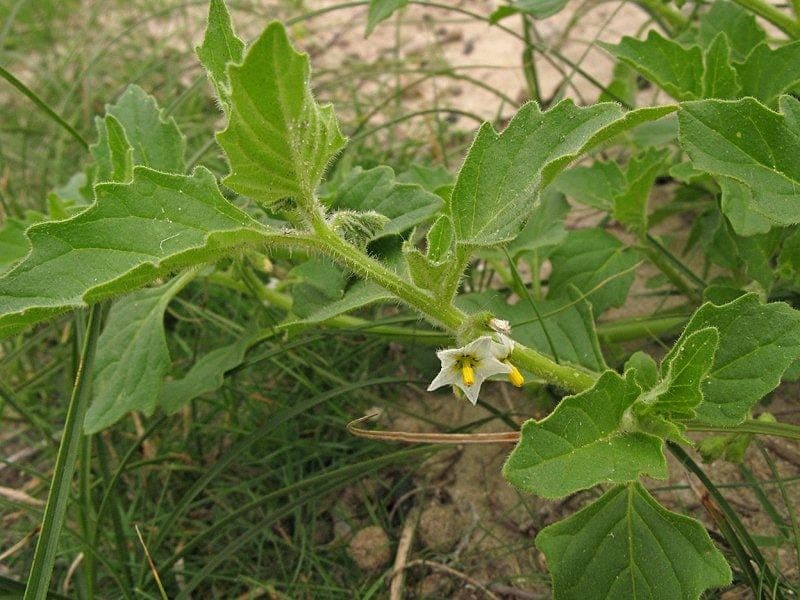
Quentin Groom / CC BY-SA 3.0, via Wikimedia Commons
Argentine Nightshade: complete guide
Solanum physalifolium
¿Quieres ver Argentine Nightshade: complete guide en tu jardín?
1 minuto, sin tarjeta de crédito
Overview
Argentine nightshade (Solanum physalifolium), ranging from Peru to northwestern Argentina, is a wild-growing member of the nightshade family. Unlike pepino, this species is not edible – the berries are toxic. However, as a bird-food plant and interesting landscape specimen, it's gaining popularity. The glossy, golden berries in their distinctive papery calyx attract numerous birds, enhancing garden ecology.
Appearance & bloom cycle
Argentine nightshade grows as an herbaceous plant, 50-100 cm tall. It bears small, white or pale flowers (approximately 1-1.5 cm across), appearing July through October. After flowering, glossy orange-yellow berries develop within 6-8 weeks, enclosed by the characteristic papery husk. Foliage is green and hairy.
Ideal location
Argentine nightshade thrives in both full sun and partial shade, though sunlight increases flowering and fruiting. Position where you can easily observe visiting birds – perhaps along a hedge or as a background planting. The plant is quite wind-tolerant and adapts to most soil conditions.
Soil requirements
This plant is not fussy about soil. Well-draining, moderately fertile garden earth works perfectly. pH 5.5-7.5 is acceptable. It even grows on poorer soils. No special amendments needed; standard garden soil suffices. Good drainage matters mainly to prevent root rot during wet winters.
Watering
Argentine nightshade is fairly drought-tolerant once established, though regular water promotes growth. Water moderately; the plant tolerates both wet and dry conditions reasonably well. Excessive water causes more problems than drought – ensure good drainage. Water deeply when first planted; afterwards rainfall usually suffices. In containers, water when the top 2-3 cm becomes dry.
Diseño gratis
¿Quieres ver Argentine Nightshade: complete guide en tu jardín? Crea un diseño gratis ahora.
Pruning
Argentine nightshade responds well to pruning for bushier form. After flowering, cut the plant back to 30-40 cm to stimulate vigorous regrowth. Remove dead stems early in the season. Leave spent fruits on the plant for bird-food; removal isn't necessary.
Maintenance calendar
Spring (March-May): Plant seedlings or young plants outside once all frost risk passes (May). Position in well-prepared soil. Water regularly during establishment.
Summer (June-August): Flowering begins; water moderately. Ensure birds can easily access the plant – it's now a food source.
Autumn (September-November): Fruits mature. Minimize watering. Leave fruits hanging for bird food through December/January.
Winter (December-February): In many regions this plant survives outdoors if winters aren't unusually wet. Protect against severe frosts below 5°C.
Winter hardiness
Argentine nightshade is not fully frost-hardy in northern and central regions, but may survive outdoors in milder areas if winters are not exceptionally severe. In colder zones, protect from frost or regrow annually from seed. Young plants can be overwintered indoors in cool (5-10°C) dry conditions.
Companion plants
This plant fits perfectly in the wildflower corner. Combine with other bird-food plants like rowan, elder and hornbeam. It also thrives alongside other Solanum species and shrubby vegetation providing bird habitat structure. The glossy berries attract various bird species seeking winter nutrition.
Closing
Although toxic to humans, Argentine nightshade is an ecologically valuable garden specimen, especially for bird enthusiasts. The glossy berries provide bird nutrition September through January. Sow seed in March or plant young specimens in May. For more garden inspiration and planting ideas visit gardenworld.app. Once established, this plant demands minimal maintenance – an ideal addition to bird-friendly gardens!
¿Quieres ver Argentine Nightshade: complete guide en tu jardín? Crea un diseño gratis ahora.
Sube una foto, elige un estilo y obtén un diseño fotorrealista con lista de plantas en menos de un minuto.
Más de 10.000 jardines diseñados
Sin tarjeta de crédito


Plantas similares
Solanum dolichosepalum: complete guide
Solanum dolichosepalum
Discover Solanum dolichosepalum, an Andean nightshade with striking long sepals. Growing tips, hardiness, and companion planting for your patio.
Solanum ripense: complete guide
Solanum ripense
Discover Solanum ripense, a moisture-loving Andean nightshade for pond edges and conservatories. Growing tips, hardiness, and companions.
Solanum tomentosum: complete guide
Solanum tomentosum
Discover Solanum tomentosum, a thorny South African nightshade with felted leaves. Growing tips, hardiness, and companion planting ideas.