
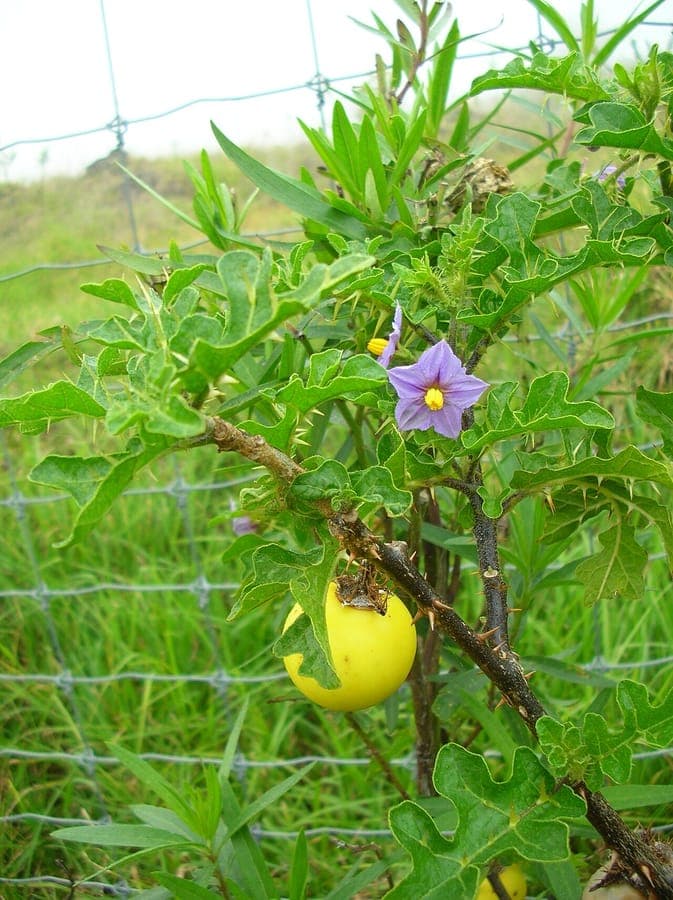
Forest & Kim Starr / CC BY 3.0, via Wikimedia Commons
Solanum linnaeanum: complete guide
Solanum linnaeanum
¿Quieres ver Solanum linnaeanum: complete guide en tu jardín?
1 minuto, sin tarjeta de crédito
Overview
Solanum linnaeanum, known as Sodom-apple, apple-of-Sodom, or black-spine nightshade, is a fascinating Mediterranean plant from the Solanaceae family. This species naturally occurs in Southern Europe (Italy, Spain, Greece, North Africa) and has been known since ancient times from classical texts. The name 'apple-of-Sodom' refers to the toxic fruits that are inedible.
This plant is of great botanical and ethnobotanical significance. It grows wild in dry, rocky habitats around the Mediterranean. The plant is also invasive in many warm regions outside its natural range.
Appearance and bloom
Sodom-apple forms a compact shrub, usually 0.5 to 1.2 meters tall, though it can grow larger in ideal conditions. The plant has adapted dark green leaves and characteristic black, needle-like thorns arranged along the stems. These sharp thorns give the plant its defensive character.
The flowers are striking blue-violet to purple, approximately 1.5 to 2 centimeters in diameter. They appear in rich clusters and bloom throughout the warm season (May to October in the Mediterranean). The fruits are small, yellow-orange berries about the size of a cherry. These fruits contain numerous seeds and are highly toxic - they must never be eaten.
Ideal location
Sodom-apple requires full sun and warm growing conditions. This is essential for optimal flowering and fruiting. The plant grows best in dry, rocky habitats with good drainage. In Southern Europe, it can grow outdoors year-round.
In temperate climates, it must be treated as a greenhouse or summer plant. The plant is highly drought-tolerant and withstands windy conditions well. Protection from extreme cold is essential.
Soil
Sodom-apple grows best in dry, well-draining soils. Sand, gravel, or rocky substrate are ideal. The plant tolerates poor soils well and does not require much feeding. In fact, it grows better in poor soils than in very rich ground.
In pot cultivation, use standard potting soil mixed with sand or perlite for optimal drainage. Excessive feeding can lead to luxuriant growth with fewer flowers.
Diseño gratis
¿Quieres ver Solanum linnaeanum: complete guide en tu jardín? Crea un diseño gratis ahora.
Watering
Sodom-apple is highly drought-tolerant after establishment. The plant requires minimal watering under natural conditions. Young plants can be watered until well established. Subsequently, the plant survives on rainfall alone.
In pot cultivation, water when the soil feels dry. Overwatering must be avoided - the plant tolerates drought much better. During very dry periods, supplemental water may be useful.
Pruning
Minimal pruning is needed. The plant naturally forms a compact shape. Only dead or damaged branches need removal. In spring, the plant can be lightly cut back for neater appearance.
Formative pruning is normally unnecessary. The plant flowers on new growth, so very short cutting back in early spring can promote flowering.
Maintenance calendar
January-March: Spring pruning, keep dry. April-May: Growth and first flowering, minimal water. June-September: Peak flowering and fruiting period, water as needed. October-December: Growth slows, keep dry, prepare for rest.
Winter hardiness
Sodom-apple is winter-hardy in Southern regions (zones 8-9). In much of Europe, it must be protected or treated as a greenhouse plant. The plant tolerates short frost periods to about -5 degrees, but prefers more protection.
In areas with severe winters, the plant must be overwintered indoors or replanted annually. It can grow outdoors from May to October in temperate climates.
Companion plants
Sodom-apple combines well with other Mediterranean and drought-loving plants. Lavender, rosemary, santolina and other silver-foliaged shrubs form harmonious combinations. In greenhouse gardens, it fits well with other tropical and subtropical plants.
The blue flowers contrast beautifully with yellow and silver foliage. The plant grows well in stony alpine troughs with other xerophilic plants.
Closing thoughts
Solanum linnaeanum is a unique plant particularly interesting for collectors and lovers of exotic flora. The blue flowers and characteristic thorns make it a striking addition to heat-loving gardens. Caution is essential due to toxic fruit.
Not standard at garden centers but available from specialized suppliers. Suitable for gardenworld.app/en for Southern European gardens and greenhouse collections.
¿Quieres ver Solanum linnaeanum: complete guide en tu jardín? Crea un diseño gratis ahora.
Sube una foto, elige un estilo y obtén un diseño fotorrealista con lista de plantas en menos de un minuto.
Más de 10.000 jardines diseñados
Sin tarjeta de crédito


Plantas similares
Solanum dolichosepalum: complete guide
Solanum dolichosepalum
Discover Solanum dolichosepalum, an Andean nightshade with striking long sepals. Growing tips, hardiness, and companion planting for your patio.
Solanum ripense: complete guide
Solanum ripense
Discover Solanum ripense, a moisture-loving Andean nightshade for pond edges and conservatories. Growing tips, hardiness, and companions.
Solanum tomentosum: complete guide
Solanum tomentosum
Discover Solanum tomentosum, a thorny South African nightshade with felted leaves. Growing tips, hardiness, and companion planting ideas.