
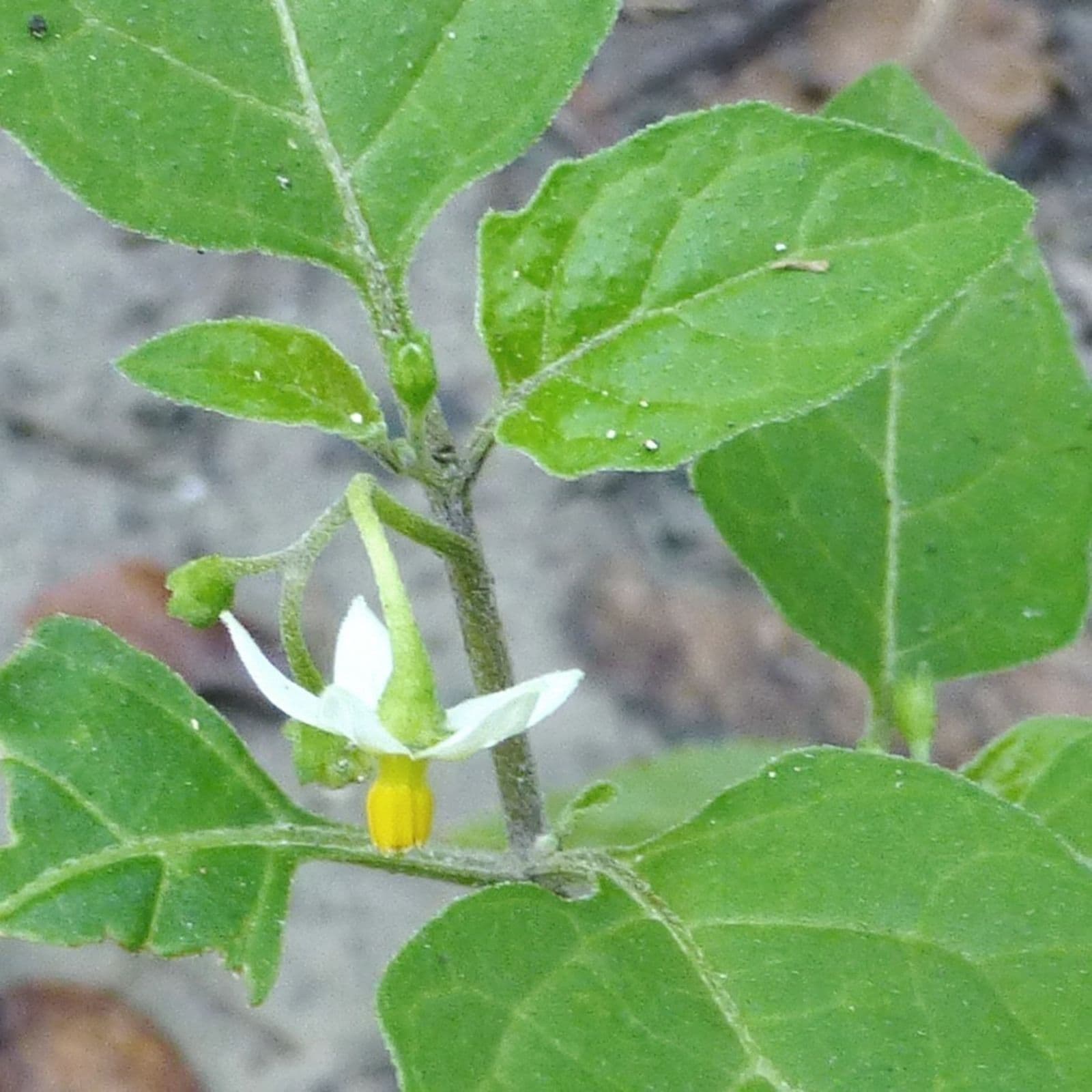
Solanum interius: complete guide to this plains nightshade
Solanum interius
¿Quieres ver Solanum interius: complete guide to this plains nightshade en tu jardín?
1 minuto, sin tarjeta de crédito
Overview
Solanum interius, commonly called plains nightshade or deadly black nightshade, is a fascinating herbaceous plant from the Solanaceae family. This plant grows naturally in the Great Plains of North America, from Canada to the central United States, thriving in dry prairie and steppe environments.
Although native to North America, this plant deserves attention for its interesting growth pattern, delicate flowers, and ecological value in natural gardens. The plant plays an important role in prairie ecosystems where it flourishes.
Appearance and Bloom
Solanum interius is a low-growing herbaceous plant, typically reaching 30 to 60 centimeters tall. The plant develops a compact, regular branching habit with densely arranged leaves.
The leaves are lance-shaped to elliptical, with smooth margins and subtle surface texture. Leaf color is green to yellow-green, shifting toward reddish tones under stress conditions.
Flowers are small, roughly 8-12 millimeters across, appearing in late summer. Flower color varies from purple to violet to nearly white. The flowers grow in small clusters and attract bees and other pollinators.
Following pollination, small berries form, changing from green to red to reddish-brown as they mature. These berries contain seeds useful for propagation.
Ideal Location
Solanum interius performs best in full sun with at least six to eight hours of direct sunlight daily. The plant tolerates light shade but flowers more abundantly in full sun.
The plant is very drought-tolerant and ideal for dry, sunny locations in the garden. It is particularly well-suited to dry slopes, gravelly areas, and extensive plantings with minimal maintenance.
The plant is fairly wind-resistant and tolerates windy conditions without significant stress. Heavy, wet, clay soils must be avoided.
Soil
Solanum interius prefers well-drained, sandy to rocky soils with low fertility. The plant is remarkably tolerant of poor, depleted soils and can grow where many other plants struggle.
Soil pH can range from acidic (pH 5.0) to neutral (pH 7.0), though neutral to slightly acidic is optimal. The plant does not tolerate heavy clay soils and requires good drainage.
Rich soil or heavy feeding should be avoided, as this encourages excessive growth that is more susceptible to disease and pests.
Watering
Once established, Solanum interius is exceptionally drought-tolerant. The plant has minimal water requirements and actually thrives best in dry conditions.
During the first growing season after planting, regular watering is necessary until the root system develops fully. After that, watering can usually be discontinued entirely.
Excessive moisture, especially in wet winters, can lead to root rot. Always ensure good drainage and avoid planting in areas where water accumulates or stagnates.
Pruning
Solanum interius requires no pruning for its natural habit. The plant grows compact and regular without producing long, straggly shoots.
As the plant ages and becomes less vigorous, it can be cut back to the base in late spring to stimulate regrowth. This leads to plant rejuvenation.
Remove dead or damaged parts as needed. For seed collection, leave a few seed heads unpruned until fully ripe.
Diseño gratis
¿Quieres ver Solanum interius: complete guide to this plains nightshade en tu jardín? Crea un diseño gratis ahora.
Maintenance Calendar
Spring (April-May): Check for winter damage and remove dead material. Plant seedlings. Begin watering as the growing season begins.
Summer (June-August): Monitor moisture levels. Enjoy blooms and pollinator visits. Allow some seed heads to ripen for seed collection.
Autumn (September-October): Harvest seed as it ripens. Allow the plant to die back naturally. Sow fresh seed directly.
Winter (November-March): The plant is usually dormant or dead. In milder climates, young growth may occur. Protect against wet feet.
Winter Hardiness
Solanum interius is moderately winter-hardy. The plant can tolerate temperatures down to about -15 degrees Celsius, but prolonged cold below -20 degrees Celsius can be harmful.
In milder areas of the UK and Northern Europe, the plant may grow as a perennial. In harsher climates, it is usually grown as an annual or short-lived plant.
Better than winter protection is seed collection for replanting in the following spring. Collect ripe seed in autumn and store in a cool, dry place.
Companion Plants
Solanum interius pairs well with other prairie and steppe plants. Consider:
- Other native North American wildflowers for prairie effect
- Echinacea species (purple coneflower) for color contrast
- Monarda species (bee balm) for texture
- Rudbeckia species (black-eyed Susan) for long bloom season
- Dry grasses like Panicum and Festuca for natural movement
Propagation
Solanum interius propagates abundantly from seed in the wild, and this remains the simplest method in cultivated gardens too. Collect the ripe, reddish-brown berries in September or October, squeeze the seed from the pulp, and let it dry on paper towel for several days. Sow directly outdoors in autumn for natural cold stratification, or store the seed cool and dry and sow indoors in March at 18 to 20 degrees Celsius; germination then takes two to three weeks.
Cuttings are technically possible using semi-ripe shoots 8 to 10 centimeters long in June, but this is rarely practiced since seed is so abundant and reliable. Note that this plant can self-seed aggressively in favorable, open soil, so remove unwanted seedlings early if you want to limit spread. Visit gardenworld.app for a step-by-step guide to collecting and storing seed from native prairie plants.
Pests and Diseases
As a member of the nightshade family, Solanum interius shares some vulnerabilities with related crops such as potato (for example the cultivar 'Bintje') and tomato. Colorado potato beetle can attack the plant in areas where the beetle also plagues potato fields; check regularly for the distinctive orange-yellow larvae and black-striped adult beetles, removing them by hand for light infestations.
Aphids and whitefly may establish during warm, dry summers, especially on young shoots; an insecticidal soap usually suffices. Powdery mildew can occur in overly dense plantings or areas with poor air circulation, recognizable by a white powdery coating on the leaves. Important to remember: all parts of the plant, especially unripe berries, are toxic if ingested, so avoid planting it where small children or pets have unsupervised access. Find more guidance on gardening safely with toxic native plants on gardenworld.app.
Closing Thoughts
Solanum interius is a unique, drought-tolerant herbaceous plant with historical and ecological value. For gardeners seeking to create ecological gardens or grow interesting, rare North American wildflowers, this plant is certainly worthwhile.
Harvest seed from wild populations or purchase from specialized growers. Begin with fresh seed and patience. This plant demands little maintenance once established.
Find seeds and young plants through native plant specialists for your prairie garden project.
¿Quieres ver Solanum interius: complete guide to this plains nightshade en tu jardín? Crea un diseño gratis ahora.
Sube una foto, elige un estilo y obtén un diseño fotorrealista con lista de plantas en menos de un minuto.
Más de 10.000 jardines diseñados
Sin tarjeta de crédito


Plantas similares
Solanum dolichosepalum: complete guide
Solanum dolichosepalum
Discover Solanum dolichosepalum, an Andean nightshade with striking long sepals. Growing tips, hardiness, and companion planting for your patio.
Solanum ripense: complete guide
Solanum ripense
Discover Solanum ripense, a moisture-loving Andean nightshade for pond edges and conservatories. Growing tips, hardiness, and companions.
Solanum tomentosum: complete guide
Solanum tomentosum
Discover Solanum tomentosum, a thorny South African nightshade with felted leaves. Growing tips, hardiness, and companion planting ideas.