
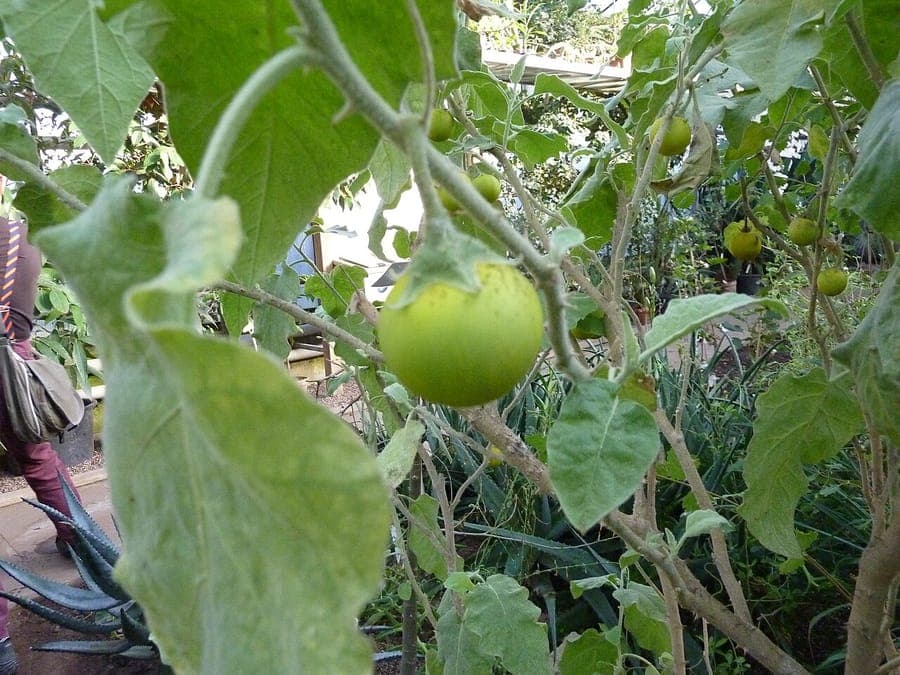
James Steakley / CC BY-SA 3.0, via Wikimedia Commons
Bitter-apple: complete guide
Solanum incanum
¿Quieres ver Bitter-apple: complete guide en tu jardín?
1 minuto, sin tarjeta de crédito
Overview
Bitter-apple (Solanum incanum) is a fascinating shrubby plant native to Africa, the Middle East, and India. Distinguished by its purple flowers (small, to 20 mm) and particularly its characteristic yellow fruits (10-15 mm), this is a heat-loving plant thriving in warm, dry locations. An exotic choice for gardeners seeking something truly unusual.
Appearance and Bloom Cycle
Bitter-apple grows as a compact, spiny shrub reaching 1-1.5 meters tall. Leaves are small, lanceolate, green but sometimes with purple tinges. Stems are densely hairy with sharp spines (1-2 cm).
Flowers are small (10-20 mm), purple to violet, appearing in clusters (July-September). Fruits are round, yellow (10-15 mm), persisting on the plant into autumn. The fruits are toxic and inedible.
Ideal Location
Bitter-apple thrives in full sun with minimum six to seven hours of direct sunlight daily. This is essential for flowering. The plant tolerates warm, dry microclimates excellently - perfect against south-facing walls or in Mediterranean gardens.
Not suitable for shaded locations. Excellent for dry, heat-loving gardens and rock gardens.
Soil Requirements
Bitter-apple prefers very freely draining, sandy soil. This is critical - the plant cannot tolerate waterlogged conditions. Acidic soils are acceptable, but neutral to slightly alkaline (pH 6.5-7.5) is preferred.
The plant is very tolerant of nutrient-poor soils. No feeding is needed; in rich soils, the plant typically becomes too lush (excess foliage, few flowers).
Watering
Bitter-apple is an extremely drought-tolerant plant. Once established, virtually no supplemental water is needed except during extreme drought periods. Regular watering (3-5 litres weekly) is essential for two to three months after planting.
Once established, this plant is self-sufficient. Excessive water causes root rot.
Diseño gratis
¿Quieres ver Bitter-apple: complete guide en tu jardín? Crea un diseño gratis ahora.
Pruning
Bitter-apple rarely requires pruning. Remove only dead or damaged branches in early spring (March-April). The plant grows naturally compact.
Spines can be carefully shortened if hindering, but wear gloves - they're sharp. Older plants may be cut back to half size in spring to encourage rejuvenation.
Maintenance Calendar
MARCH-APRIL: Inspection and deadwood removal MAY-JUNE: Bloom preparation JULY-SEPTEMBER: Flowering and fruiting period OCTOBER-NOVEMBER: Enjoy ornamental fruits DECEMBER-FEBRUARY: Winter dormancy
Winter Hardiness
Bitter-apple is hardy to USDA Zone 9-10 (minimum -6°C). In cooler regions, this plant must be grown in containers and overwintered in frost-free environments or greenhouses.
Outdoor cultivation is practical only in Mediterranean climates or exceptionally warm microclimates.
Companion Plants
Bitter-apple pairs well with other drought-tolerant plants:
- Agapanthus (blue flowers)
- Rosmarinus (aromatic)
- Salvia (purple contrast)
- Nerium oleander (Mediterranean ensemble)
- Lavandula stoechas (structural interest)
Perfect for Mediterranean-inspired gardens.
Closing
Solanum incanum is for gardeners seeking something genuinely exotic and different. With its purple flowers, yellow fruits, and distinctive spines, it brings authentic African character. Not for temperate climates - this is for warm-region enthusiasts or those creating Mediterranean dream gardens. In colder areas, container cultivation is the solution. This is a plant for adventurers! Design your Mediterranean garden with gardenworld.app and choose exotic species. Explore more exotic plants on gardenworld.app.
¿Quieres ver Bitter-apple: complete guide en tu jardín? Crea un diseño gratis ahora.
Sube una foto, elige un estilo y obtén un diseño fotorrealista con lista de plantas en menos de un minuto.
Más de 10.000 jardines diseñados
Sin tarjeta de crédito


Plantas similares
Solanum dolichosepalum: complete guide
Solanum dolichosepalum
Discover Solanum dolichosepalum, an Andean nightshade with striking long sepals. Growing tips, hardiness, and companion planting for your patio.
Solanum ripense: complete guide
Solanum ripense
Discover Solanum ripense, a moisture-loving Andean nightshade for pond edges and conservatories. Growing tips, hardiness, and companions.
Solanum tomentosum: complete guide
Solanum tomentosum
Discover Solanum tomentosum, a thorny South African nightshade with felted leaves. Growing tips, hardiness, and companion planting ideas.