
Wouter Hagens / Public domain, via Wikimedia Commons
Solanum heterodoxum: complete guide
Solanum heterodoxum
¿Quieres ver Solanum heterodoxum: complete guide en tu jardín?
1 minuto, sin tarjeta de crédito
Overview
Solanum heterodoxum, commonly known as melonleaf nightshade or morelle, is a fascinating plant from the Solanaceae family. This species naturally occurs in Mexico, from central and gulf coast regions to the northeast and southwest. It is a plant rarely grown in gardens and is primarily of botanical and ethnobotanical significance.
The plant is known for its unusual leaf morphology and interesting flowers. It is a plant for collectors and enthusiasts involved in preserving wild Solanum species.
Appearance and bloom
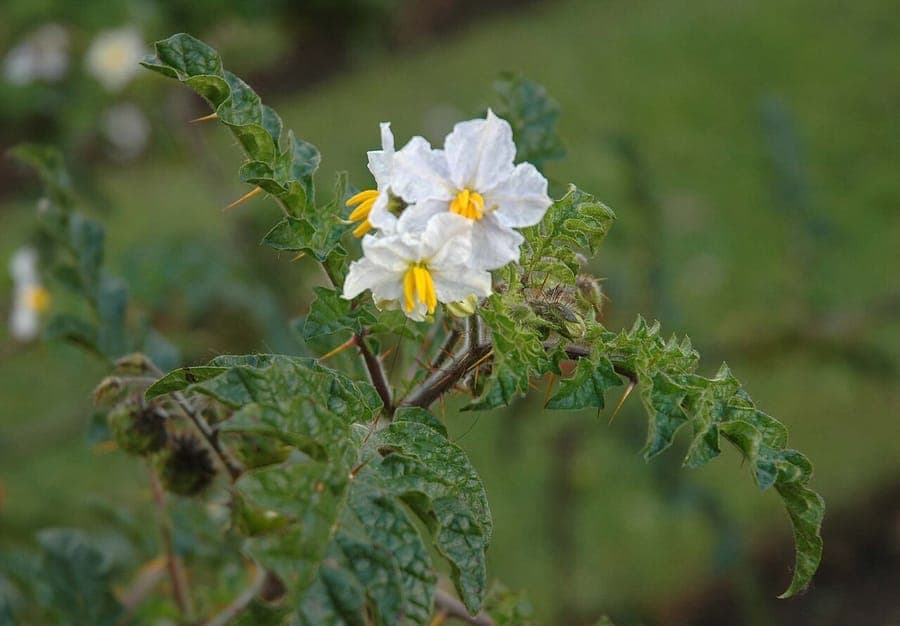
Melonleaf nightshade is an herbaceous to semi-woody plant usually reaching 40 to 80 centimeters tall. The most characteristic feature is the foliage: large leaves deeply divided into lobes, with a texture truly reminiscent of watermelon leaves. This very distinctive leaf pattern makes the plant easily recognizable.
The flowers are purple to violet and appear in small clusters. They are approximately 1.5 to 2 centimeters in diameter. Following pollination, fruits develop: small green berries that later turn yellow-orange. These fruits contain numerous seeds. All plant parts, especially unripe fruits, contain toxic alkaloids.
Ideal location
Melonleaf nightshade grows best in warm, sunny locations with good air circulation. The plant is thermophilic and thrives in warm, dry climate. In Mexican states where it naturally occurs, it grows in open shrub vegetation in full sun.
In temperate climates, it can be grown outdoors as a seasonal plant, but greenhouse cultivation is recommended for optimal growth. Protection from strong winds is important.
Soil
Melonleaf nightshade thrives in well-draining, nutrient-rich soils. A mixture of garden soil with sand and compost is ideal. The plant tolerates dry soils better than heavy, clayey ground.
In pot cultivation, potting soil with extra sand for drainage can be used. Regular feeding during the growing season is necessary for optimal flowering and fruiting.
Diseño gratis
¿Quieres ver Solanum heterodoxum: complete guide en tu jardín? Crea un diseño gratis ahora.
Watering
Melonleaf nightshade prefers moderate moisture levels. Maintain even moisture levels but avoid waterlogging. The plant tolerates drought better than excessive moisture. In pot cultivation, check regularly that soil is lightly moist.
Water more during growing season (spring-summer), reduce moisture levels in fall-winter. On warm days, daily watering may be necessary depending on growing conditions.
Pruning
Minimal pruning is needed. The plant grows compactly and naturally forms a neat shape. Only dead or damaged parts need removal. For bushier growth, growing points can be pinched in young years.
Older plants can be cut back hard in spring to encourage new growth material.
Maintenance calendar
May-June: Purchase plants or sow seeds in greenhouse, transplant after frost. June-August: Growth and flowering, water and feed regularly. August-October: Flowering and fruiting, attention to watering. October-April: Growth slows, reduce watering, stop feeding.
Winter hardiness
Melonleaf nightshade is not winter-hardy in temperate climates. Only very light frost is tolerated (-1 to 0 degrees). In areas with winters, the plant is best treated as an annual or overwintered indoors.
In southern areas, it can be overwintered in a sheltered spot with protection. The plant grows better in warm, dry climate.
Companion plants
Melonleaf nightshade can grow in containers alongside other heat-loving plants. In greenhouse gardens, it forms an interesting companion to other Solanum species and exotic plants. The characteristic leaves provide striking contrast with other leaf forms.
Compositions with silver-toned foliage or red/purple plants create interesting color combinations.
Closing thoughts
Solanum heterodoxum is an extremely interesting plant for those engaged in botanical heritage and rare plants. It requires warm growing conditions and careful handling due to toxic parts. This is a project for experienced growers who have patience and are engaged in plant conservation.
Seed is sometimes available through specialized seed companies. Suitable for gardenworld.app/en for serious plant collectors.
¿Quieres ver Solanum heterodoxum: complete guide en tu jardín? Crea un diseño gratis ahora.
Sube una foto, elige un estilo y obtén un diseño fotorrealista con lista de plantas en menos de un minuto.
Más de 10.000 jardines diseñados
Sin tarjeta de crédito


Plantas similares
Solanum dolichosepalum: complete guide
Solanum dolichosepalum
Discover Solanum dolichosepalum, an Andean nightshade with striking long sepals. Growing tips, hardiness, and companion planting for your patio.
Solanum ripense: complete guide
Solanum ripense
Discover Solanum ripense, a moisture-loving Andean nightshade for pond edges and conservatories. Growing tips, hardiness, and companions.
Solanum tomentosum: complete guide
Solanum tomentosum
Discover Solanum tomentosum, a thorny South African nightshade with felted leaves. Growing tips, hardiness, and companion planting ideas.