
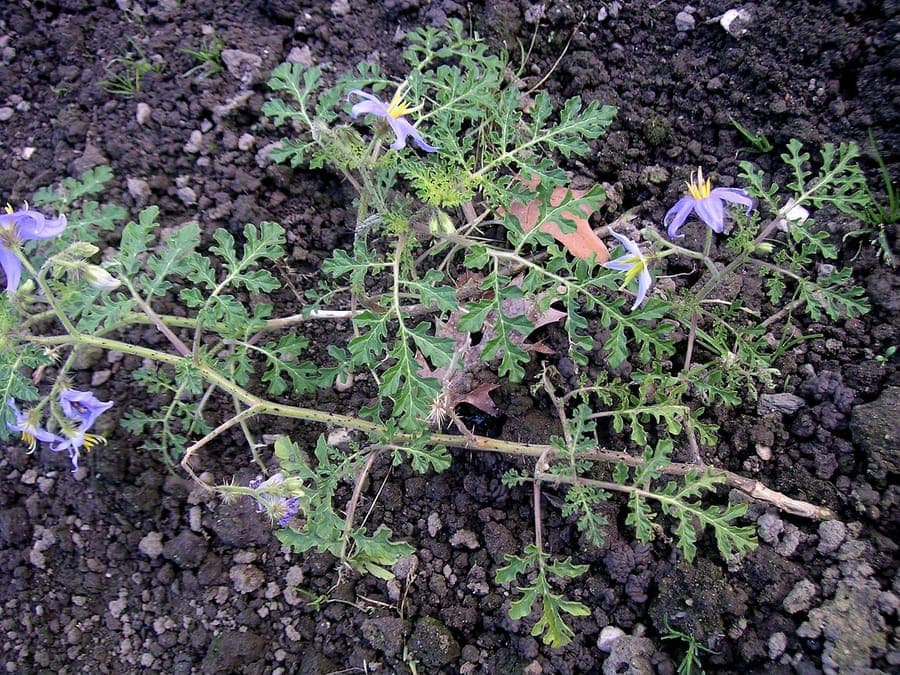
User:Carstor / CC BY-SA 3.0, via Wikimedia Commons
Solanum citrullifolium: complete guide
Solanum citrullifolium
¿Quieres ver Solanum citrullifolium: complete guide en tu jardín?
1 minuto, sin tarjeta de crédito
Overview
Solanum citrullifolium, known as melon-leaf nightshade or watermelon nightshade, is a fascinating plant from the Solanaceae family (nightshade family). This plant naturally occurs in the southern United States (Texas, Oklahoma) and northern Mexico. The name refers to the characteristic leaves that resemble watermelon foliage.
This plant is primarily of botanical interest and is rarely grown in gardens. It is an intriguing plant for enthusiasts of exotic crops and collectors of nightshade plants. Caution is warranted due to toxic parts.
Appearance and bloom
Melon-leaf nightshade grows as a compact herbaceous plant, usually 30 to 60 centimeters tall. The characteristic leaves are large, deeply lobed or divided, truly resembling watermelon foliage. This distinctive leaf pattern is unique among Solanum species.
The flowers are purple to blue-violet, approximately 1.5 centimeters in diameter, and appear in clusters. They bloom throughout the growing season in suitable climates. Following pollination, small green to yellow fruits develop resembling tiny tomatoes. These fruits are toxic and must not be eaten.
Ideal location
Melon-leaf nightshade requires warm, sunny locations to thrive. The plant is thermophilic and grows best in climates with mild winters or in greenhouses. In temperate climates, it can be grown as an annual plant in full sun.
Protection from cold winds is important. In southern regions, it can grow outdoors, but in mixed climates, greenhouse cultivation is necessary for optimal growth and reproduction.
Soil
Melon-leaf nightshade grows best in well-draining, slightly nutrient-rich soils. A mixture of garden soil with sand and compost provides ideal growing conditions. The plant tolerates less acidic soils.
In pot cultivation, standard potting soil mixed with perlite can be used for better drainage. The plant requires regular feeding during the growing season.
Diseño gratis
¿Quieres ver Solanum citrullifolium: complete guide en tu jardín? Crea un diseño gratis ahora.
Watering
Melon-leaf nightshade requires regular, even moisture, especially during flowering and fruit-setting phases. Do not let the soil dry out completely, but avoid waterlogged conditions. Even moisture is important for healthy growth and fruiting.
On dry summer days, water daily. Watering early in the morning prevents fungal diseases. Potted plants require more frequent watering than ground-grown plants.
Pruning
Minimal pruning is needed for melon-leaf nightshade. The plant grows compactly and naturally forms a neat shape. Only dead or damaged parts need removal. For more branching, pinch out growing points when the plant is young.
The plant can be cut back in autumn if grown as a greenhouse plant to prepare it for the next season.
Maintenance calendar
May-June: Sow seeds indoors or purchase plants, transplant after frost. June-July: Growth accelerates, water and feed regularly. July-September: Flowering and fruit-setting, busy care period. October-November: Growth slows, reduce watering. November-April: Rest period, minimal care needed.
Winter hardiness
Melon-leaf nightshade is not winter-hardy in temperate climates. The plant survives only light frost (to -2 degrees) and must be brought indoors for winter or treated as an annual. In southern USA states and southern Europe, it can overwinter outdoors.
The plant is best grown as an annual, replanted yearly, or overwintered as a greenhouse plant in a warm location.
Companion plants
Melon-leaf nightshade can grow in containers alongside other heat-loving plants such as verbena, begonia, and impatiens. In greenhouse gardens, it forms an interesting companion to other nightshade plants.
Its compact form makes it suitable for pots on patios and terraces. Combine with silver-toned foliage plants for contrast.
Closing thoughts
Solanum citrullifolium is a fascinating plant for enthusiasts and collectors, but requires careful handling due to toxic parts. It is a plant demanding patience and warm, sunny growing conditions. For those seeking a challenge, this is a rewarding project.
Not easily found at standard garden centers. Look for seeds from specialized suppliers or seed merchants. Suitable for gardenworld.app/en for plant lovers.
¿Quieres ver Solanum citrullifolium: complete guide en tu jardín? Crea un diseño gratis ahora.
Sube una foto, elige un estilo y obtén un diseño fotorrealista con lista de plantas en menos de un minuto.
Más de 10.000 jardines diseñados
Sin tarjeta de crédito


Plantas similares
Solanum dolichosepalum: complete guide
Solanum dolichosepalum
Discover Solanum dolichosepalum, an Andean nightshade with striking long sepals. Growing tips, hardiness, and companion planting for your patio.
Solanum ripense: complete guide
Solanum ripense
Discover Solanum ripense, a moisture-loving Andean nightshade for pond edges and conservatories. Growing tips, hardiness, and companions.
Solanum tomentosum: complete guide
Solanum tomentosum
Discover Solanum tomentosum, a thorny South African nightshade with felted leaves. Growing tips, hardiness, and companion planting ideas.