
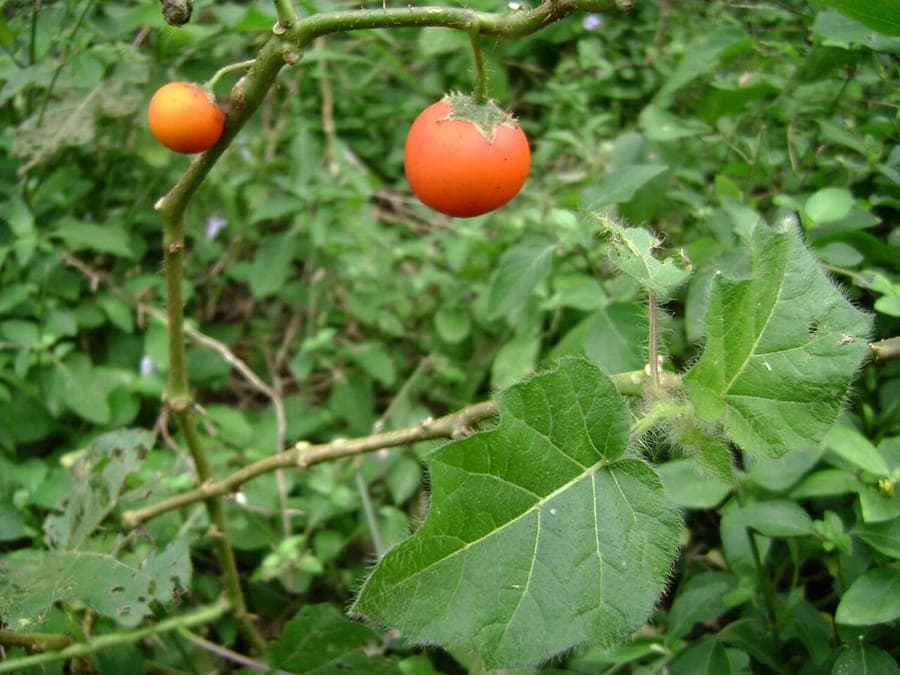
Tauʻolunga / CC BY-SA 3.0, via Wikimedia Commons
Solanum capsicoides: complete guide
Solanum capsicoides
¿Quieres ver Solanum capsicoides: complete guide en tu jardín?
1 minuto, sin tarjeta de crédito
Overview
Cockroach-berry (Solanum capsicoides), also known as Devil's Apple, is a tender ornamental shrub from the Solanaceae family native to tropical South America. This fascinating plant distinguishes itself through delicate white flowers and striking globe-shaped fruits that ripen to warm orange-red, creating spectacular visual interest.
As a garden plant, this typically grows in containers or in sheltered, warm locations in temperate climates. The plant reaches 1 to 1.5 metres in height and forms a compact, bushy structure. Like other Solanum species, this plant proves toxic and must not be eaten, though it offers exceptional ornamental value.
Appearance & bloom
Cockroach-berry grows as a compact shrub with attractive dark green foliage. Leaves are oval-lance shaped, smooth and glossy. The plant grows rapidly in warm conditions.
During summer (June-August) numerous small five-petalled flowers appear in pure white with golden stamens. These develop into globe-shaped fruits ripening to yellow-orange and proving very eye-catching on the plant. Fruits persist for weeks to months and provide year-long ornamental interest.
Ideal location
Cockroach-berry requires abundant sunlight: minimum 6 to 8 hours direct sun daily. In warm climates, light afternoon shade proves welcome. The plant also grows under artificial lighting. A warm, protected position proves essential in temperate climates.
This plant works beautifully as a container specimen that moves indoors during winter. In mild climates (zones 9-10) it may remain outdoors year-round. Wind can cause foliage damage.
Soil
Cockroach-berry thrives in nutrient-rich, well-draining soil. Use standard potting soil blended with sand for improved drainage. Neutral to slightly acidic soil (pH 6.0-7.0) proves ideal.
For containers use large pots (minimum 30-40 litres). Ensure drainage holes in pot bottoms. In-ground planting requires soil amendment with compost.
Diseño gratis
¿Quieres ver Solanum capsicoides: complete guide en tu jardín? Crea un diseño gratis ahora.
Watering
Cockroach-berry requires regular watering during the growing season. Water when the top soil layer feels dry. Whether in containers or in-ground, maintain soil moisture without waterlogging.
During winter (dormancy period), reduce watering significantly. Overwatering promotes root rot and fungal disease. During very dry weather, daily misting helps combat spider mites.
Pruning
Cockroach-berry tolerates regular pruning well. In early spring (March-April), shorten stems to encourage bushy growth. Remove dead or damaged branches.
Flowers emerge on young wood, so pruning stimulates flowering. In very hot climates, summer pruning may prove necessary for shape maintenance.
Maintenance calendar
January-February: Dormancy, minimal watering, pest inspection. March-April: Pruning, feeding begins, increase water. May-June: Growth and flowering preparation. July-August: Full flowering, fruit set, regular watering. September-October: Fruit ripening, reduce water. November-December: Dormancy preparation, bring indoors in temperate climates.
Winter hardiness
Cockroach-berry proves non-hardy. In zones 10-11 it overwinters outdoors. For temperate climates (zones 7-9), the plant must overwinter indoors or under protection. Temperatures below 10 degrees Celsius prove damaging.
Companion plants
Flowers attract pollinators enthusiastically. Fruits are eaten by birds in tropical habitats, though this occurs less frequently in Europe. It remains primarily ornamental.
Closing remarks
Cockroach-berry represents a spectacular adornment for summer terraces and winter cultivation. With proper care it performs well and provides years of fruit beauty. Source this plant from specialist nurseries or online tropical plant suppliers.
Learn more on gardenworld.app. Discover additional tropical ornamentals for warm-loving gardens.
¿Quieres ver Solanum capsicoides: complete guide en tu jardín? Crea un diseño gratis ahora.
Sube una foto, elige un estilo y obtén un diseño fotorrealista con lista de plantas en menos de un minuto.
Más de 10.000 jardines diseñados
Sin tarjeta de crédito


Plantas similares
Solanum dolichosepalum: complete guide
Solanum dolichosepalum
Discover Solanum dolichosepalum, an Andean nightshade with striking long sepals. Growing tips, hardiness, and companion planting for your patio.
Solanum ripense: complete guide
Solanum ripense
Discover Solanum ripense, a moisture-loving Andean nightshade for pond edges and conservatories. Growing tips, hardiness, and companions.
Solanum tomentosum: complete guide
Solanum tomentosum
Discover Solanum tomentosum, a thorny South African nightshade with felted leaves. Growing tips, hardiness, and companion planting ideas.