
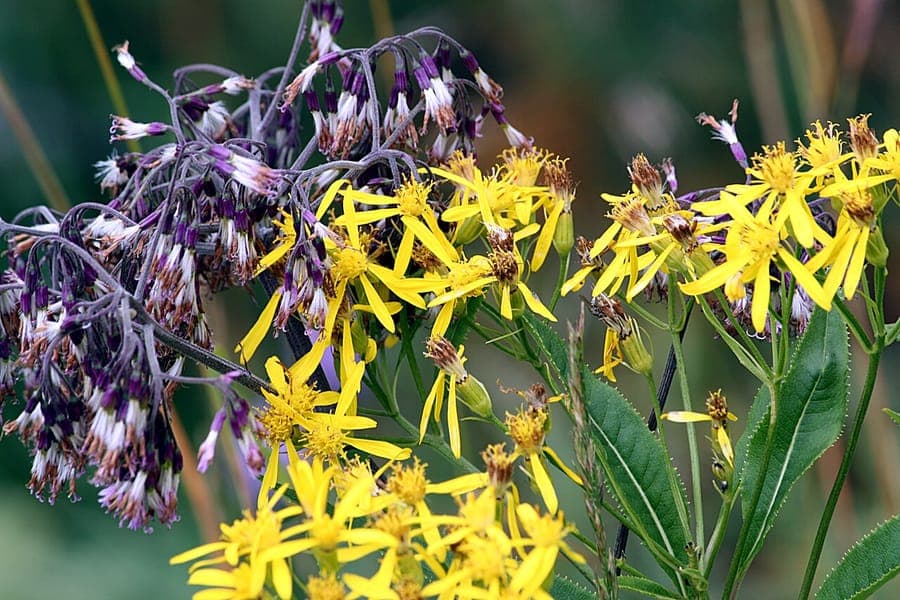
Hedwig Storch / CC BY-SA 3.0, via Wikimedia Commons
Alpine ragwort: complete guide
Senecio nemorensis
¿Quieres ver Alpine ragwort: complete guide en tu jardín?
1 minuto, sin tarjeta de crédito
Overview
Alpine ragwort (Senecio nemorensis) is an elegant and gracefully growing perennial that originated from the mountainous regions stretching from Central Europe through to Japan and Vietnam. This plant is particularly valuable for gardeners seeking reliable and attractive flowering plants for shaded locations. With its fine foliage and charming yellow flowers, Alpine ragwort adds a subtle charm to any front garden or perennial border.
Appearance and Bloom
This graceful plant reaches heights of approximately 50 to 80 centimeters and features soft, finely-cut dark green leaves. The plant is renowned for its numerous small yellow flowers that appear from June through August. The blooms grow in small, open clusters and attract bees and butterflies. The delicate leafy structure gives an airy appearance that perfectly suits modern garden designs with other shade-loving greenery.
Ideal Location
Alpine ragwort thrives excellently in partial shade to full shade. The plant feels most at home in woodland-like environments and shaded corners of your garden. This makes it ideal for planting under the canopy of large trees or along the shaded sides of buildings. Avoid direct hot afternoon sun, especially in warmer climates.
Soil
This plant is not demanding regarding soil quality, but performs best in well-draining, moist soils. Added compost or garden soil helps improve water retention. The plant tolerates acidic to neutral pH levels. For optimal growth, gardeners regularly add organic material to the base of the plant.
Watering
During the growing season, Alpine ragwort should be watered regularly, especially during dry periods. The soil should remain moist but not waterlogged. Once established, the plant is fairly drought-tolerant, though occasional watering during dry summers is beneficial. In winter months, watering can be reduced.
Diseño gratis
¿Quieres ver Alpine ragwort: complete guide en tu jardín? Crea un diseño gratis ahora.
Pruning
This plant requires minimal maintenance. Remove spent leaves and flowers to encourage more blooms. A light pruning in early spring helps keep the plant compact and full. After flowering, spent flower stems can be cut at ground level. Many gardeners leave seed heads standing in winter for bird food.
Maintenance Calendar
In spring (March-April), the plant can receive feeding with slow-release fertilizer. Regularly check for pests like aphids, though Alpine ragwort is generally very resistant. An annual renewal of mulch around the plant helps retain moisture. In October or November, dead stems can be cut back to ground level.
Winter Hardiness
Alpine ragwort is very hardy and can withstand temperatures down to -20 degrees Celsius. This makes it suitable for temperate climates throughout Europe. The plant disappears underground in winter and reappears in spring. In frosty winters, mulching around the base of the plant provides extra protection.
Companion Plants
Alpine ragwort combines well with other shade-loving perennials such as Baneberry (Actaea alba), Astilbe varieties, and various ferns. Foliage plants like Hosta varieties create beautiful contrasts with the delicate yellow flowers. Winter-green sedums and Epimedium species also work well as underplanting.
Conclusion
Alpine ragwort is a reliable and charming addition to shaded gardens. With its graceful appearance, long flowering period, and minimal maintenance requirements, it is an ideal choice for gardeners seeking elegance and ease. Grow this beautiful plant in your garden and enjoy years of yellow blooms in the shade. Available at major garden centers and online retailers worldwide.
¿Quieres ver Alpine ragwort: complete guide en tu jardín? Crea un diseño gratis ahora.
Sube una foto, elige un estilo y obtén un diseño fotorrealista con lista de plantas en menos de un minuto.
Sin tarjeta de crédito


Plantas similares
Calendula stellata: complete guide
Calendula stellata
Complete guide to Calendula stellata, the star-flowered marigold from Sicily: location, soil, watering and companion planting tips.
Korean chrysanthemum: complete guide
Chrysanthemum x rubellum
Chrysanthemum x rubellum is a hardy autumn perennial with single pink to copper flowers from August to November. Care and combinations.
Helianthus divaricatus: complete guide
Helianthus divaricatus
Helianthus divaricatus is a North American woodland sunflower with yellow summer blooms, ideal for naturalistic borders and shady edges.