
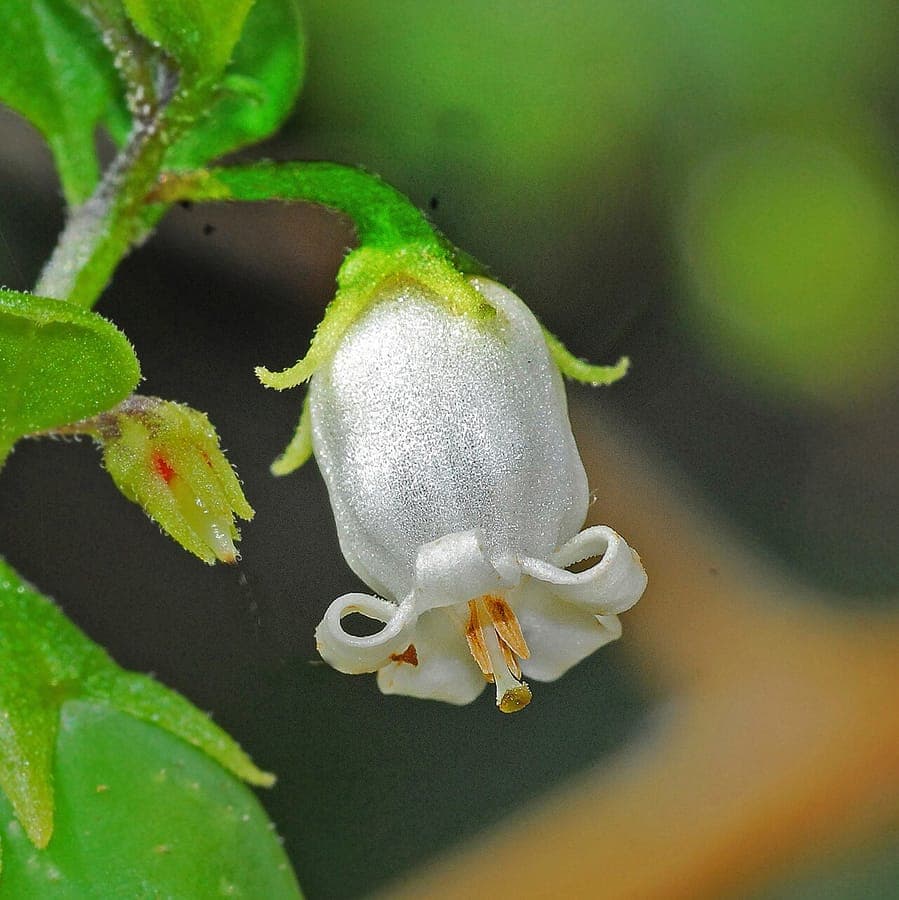
Hectonichus / CC BY-SA 4.0, via Wikimedia Commons
Lily of the valley vine: complete guide
Salpichroa origanifolia
¿Quieres ver Lily of the valley vine: complete guide en tu jardín?
1 minuto, sin tarjeta de crédito
Overview
Lily of the valley vine (Salpichroa origanifolia), also known as 'cock's eggs', is an exotic South American climber that is increasingly finding its way into European gardens. This is a plant with personality - elegant, delicate, sometimes fussy, always captivating.
The plant naturally comes from Peru, Bolivia, Brazil and other parts of South America. In its homeland it climbs against trees and shrubs, growing as a graceful, delicate vine. In Europe it typically behaves more as a semi-trailing plant, making it ideal for containers, hanging baskets and sheltered borders.
What makes lily of the valley vine special is its combination of delicate flowers, interesting fruits and overall refined elegance. This is not a coarse climber, but a refined vine for gardeners who appreciate subtlety.
Appearance and bloom
Lily of the valley vine is a herbaceous to semi-woody climber, usually not much taller than 1-2 meters in cultivation (though it can grow much taller in the wild). The plant grows with fine, slender stems that wind gracefully along support or trail gracefully if no support is present.
The leaves are small, fragrant and oregano-like in shape - hence the botanical name 'origanifolia'. They indeed smell faintly aromatic when rubbed. The foliage is fine and elegant.
The flowers are the highlight: small, white, tubular flowers that open delicately along the stems. They are not spectacularly large, but have an exquisite delicacy. The flowers smell lightly sweet - not strong, but pleasant.
Of particular importance are the fruits. These develop after bloom into small, round, green-yellow-orange little balls - hence the Spanish name 'huevito de gall' (little chicken eggs). These fruits are decorative but TOXIC - they must not be eaten.
Ideal location
Lily of the valley vine loves warm, protected and sunny. Place it against a south-facing wall, in a greenhouse, or in a warm, sheltered spot in full sun. In cold climates protection is essential - this is not a plant for exposed North Sea coasts.
The plant also grows well in containers, which is useful because it allows you to bring the plant indoors for winter. This is ideal for Dutch and German gardens.
Ensure the plant has wind protection - the fragile stems break easily in strong winds.
Diseño gratis
¿Quieres ver Lily of the valley vine: complete guide en tu jardín? Crea un diseño gratis ahora.
Soil
Lily of the valley vine has moderate requirements. Well-drained, fertile soil works well. pH can be neutral to slightly acidic. The plant prefers soil that is more moist than for many South American plants, so drainage is important but drying out is also not desired.
In pots: use potting soil with some extra nutrients. This helps support rich growth.
Mulching in gardens helps moisture retention and nutrition.
Watering
Lily of the valley vine prefers consistent moisture during the growing season. In hot, dry periods, water regularly. Do not overwater - well-drained soil but not completely dry.
In pots: water regularly during growing season. Winter: much less water, especially if plant is indoors and dormant.
In the first year water regularly until well-rooted.
Pruning
Lily of the valley vine responds well to regular shaping. After winter or when previous winter damage occurred, apply heavy pruning. This stimulates basal branching and denser growth.
German cut helps: remove thin, long shoots and cut them back to stronger stems. This stimulates forking.
During growing season gently pinch young shoots to stimulate branching.
Maintenance calendar
Spring: Plant when careful warming has occurred. Prune previous winter's wood. Begin regular watering. Support climbers.
Summer: Full care: regular water, feeding, support. Enjoy flowers. Fruits will develop.
Autumn: Begin reducing feeding. Water still important.
Winter: In protected climates: heavy mulching or burlap protection. In cold climates: bring plant indoors in pots, or heavy protection. Minimal water.
Winter hardiness
Lily of the valley vine is NOT winter hardy in most European climates. This is a frost-sensitive plant from tropical/subtropical regions. In the Netherlands, Belgium and Germany, the plant must be protected in winter or brought indoors.
In protected, warm locations (against very warm walls, in cities with much heat island effect), it might survive, but this is rare. Safest: grow in pots and move indoors in winter.
Companion plants
Lily of the valley vine associates well with:
- Clematis: Other refined climbers
- Jasmine: Tropical warmth-lovers
- Passiflora: Other exotic climbers
- Tender hostas: In pot containers
Conclusion
Lily of the valley vine is a plant for gardeners who love exotic elegance and are willing to take extra care in winter. It offers much: beautiful flowers, interesting fruits, refined shaping. Purchase seed or plants from specialized nurseries.
Photos and advice on gardenworld.app - create your South American corner with us!
¿Quieres ver Lily of the valley vine: complete guide en tu jardín? Crea un diseño gratis ahora.
Sube una foto, elige un estilo y obtén un diseño fotorrealista con lista de plantas en menos de un minuto.
Más de 10.000 jardines diseñados
Sin tarjeta de crédito


Plantas similares
Solanum dolichosepalum: complete guide
Solanum dolichosepalum
Discover Solanum dolichosepalum, an Andean nightshade with striking long sepals. Growing tips, hardiness, and companion planting for your patio.
Solanum ripense: complete guide
Solanum ripense
Discover Solanum ripense, a moisture-loving Andean nightshade for pond edges and conservatories. Growing tips, hardiness, and companions.
Solanum tomentosum: complete guide
Solanum tomentosum
Discover Solanum tomentosum, a thorny South African nightshade with felted leaves. Growing tips, hardiness, and companion planting ideas.