
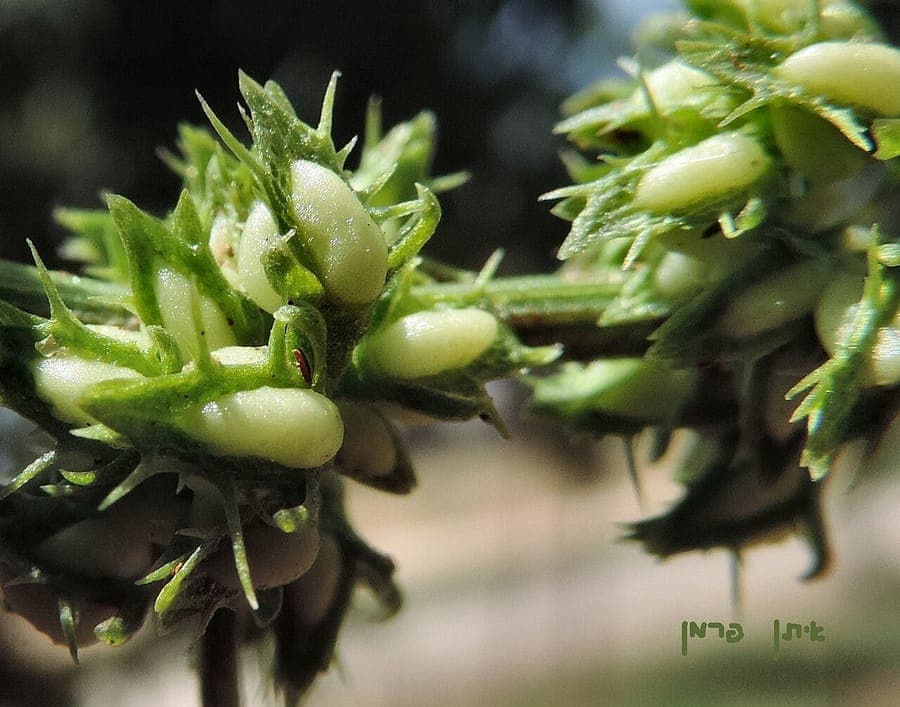
איתן פרמן / CC BY-SA 4.0, via Wikimedia Commons
Toothed dock: complete guide
Rumex dentatus
¿Quieres ver Toothed dock: complete guide en tu jardín?
1 minuto, sin tarjeta de crédito
Overview
Toothed dock (Rumex dentatus), also known as Aegean dock or dentate dock, is an interesting annual to biennial plant with an extensive distribution range from the Mediterranean to Asia. This species is particularly characterized by its finely toothed leaves - a characteristic that explains its scientific name. In many Asian and Mediterranean cultures, the plant is used as a vegetable and medicinal herb. With its adaptation to diverse climates and soils, it is a valuable addition to experimental food gardens and Mediterranean planting schemes.
Appearance and bloom
Toothed dock grows to approximately 30 to 60 cm height in a compact, sturdy form. The leaves are the most characteristic feature: they are lance-shaped to elliptic, 5 to 15 cm long, and have clearly visible fine teeth along the margins. The leaves are bright green and remain usually soft. In the summer months (July to September), small, inconspicuous flowers appear in scaly clusters. The fruits are small, about 2-3 mm, with three flanged segments that only moderately protrude.
Ideal location
Toothed dock thrives best in full sun in locations where at least six hours of direct sunlight fall daily. In warm climates, the plant appreciates some afternoon shade to prevent desiccation. The plant is flexible regarding wind exposure and grows well in open spots. In half-shaded locations, the plant also grows, but produces fewer leaves. Protection from strong, dry winds helps keep the plant vital.
Soil
Toothed dock grows in virtually all soil types, from sandy to clay soils. However, moist, humus-rich soils with moderate drainage are ideal for optimal leaf production. A pH range of 6.0 to 8.0 is preferred. For food cultivation, it is wise to work in organic material before planting. The plant tolerates poor soils better than waterlogging situations. In containers, use universal potting soil with extra compost.
Watering
During the growing season, the plant needs regular water, especially if you want to harvest leaves for food. Approximately 2 to 3 cm of water per week is sufficient. In moist periods, supplemental water can be reduced. Mulching helps retain moisture and suppresses competing weeds. Excess water can promote fungal diseases, so ensure good drainage and ventilation around the plant.
Diseño gratis
¿Quieres ver Toothed dock: complete guide en tu jardín? Crea un diseño gratis ahora.
Pruning
Pruning is not necessary for toothed dock itself, but regular leaf harvesting actually stimulates more leaf growth. Regularly clip young leaves from the top of the plant for food use; this promotes bushiness. Remove flowers if you do not want the plant to self-seed. Dead or damaged leaves can be removed throughout the season.
Maintenance calendar
May-June: Sow seeds directly outdoors or indoors in pots. June-September: Monitor growth and begin regular leaf harvesting. July-October: Continuous harvest of young, tender leaves. September-October: Let some plants form flowers for seed production. November-April: In temperate climates, plant dies back; in warm climates, plant may overwinter.
Winter hardiness
Toothed dock has limited winter hardiness and is native to warm regions. In temperate climates with demanding winters, the plant will die without protection. In mild coastal cities, young plants may sometimes overwinter, especially if lightly covered. For permanent cultivation in cold climates, consider container cultivation indoors or in a warm greenhouse. In warm climates, the plant can be persistent.
Companion plants
Toothed dock integrates well in Mediterranean herb gardens with other warm-loving docks and food plants. Combine with other sorrels, mint, oregano, and basil. This creates alternating flavor and texture combinations for food use. In warm regions, it grows well alongside other Asian vegetables.
Closing
Toothed dock is a flavorful, nutritious addition to warm gardens and experimental food schemes. With its mild flavor and toothed leaves, it is delicious in salads and soups. For seeds, we refer you to specialized seed suppliers in Asian vegetables and Mediterranean herb plants. Discover more food plant options on gardenworld.app. Add this useful plant to your food scheme and enjoy its refined character!
Explore more food plant schemes on gardenworld.app and discover recipes and applications.
¿Quieres ver Toothed dock: complete guide en tu jardín? Crea un diseño gratis ahora.
Sube una foto, elige un estilo y obtén un diseño fotorrealista con lista de plantas en menos de un minuto.
Más de 10.000 jardines diseñados
Sin tarjeta de crédito


Plantas similares
Ruby dock: complete guide
Rumex bucephalophorus
Discover Ruby dock, a Mediterranean species with striking winged fruits. Guide for cultivation in sunny, dry gardens with Mediterranean style.
Russian dock: complete guide
Rumex confertus
Discover Russian dock, a robust plant from Eastern Europe. Read our guide for cultivation in temperate climates and diverse soils.
Garden sorrel: complete guide
Rumex acetosa
Garden sorrel (Rumex acetosa) is a nutritious culinary herb with tangy leaves. Learn to grow, harvest and use it in cooking.