
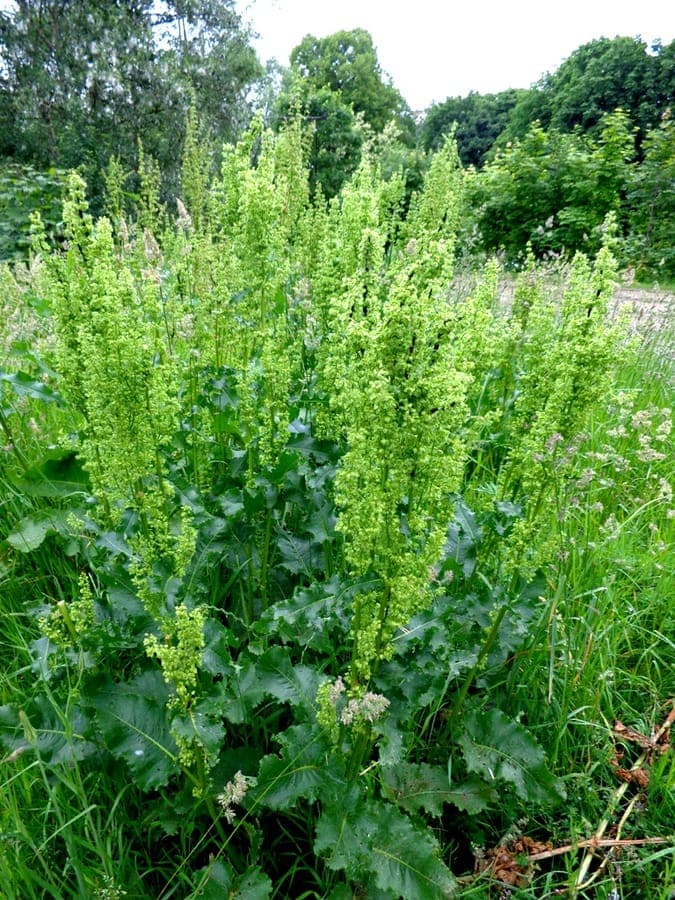
AfroBrazilian / CC BY-SA 3.0, via Wikimedia Commons
Russian dock: complete guide
Rumex confertus
¿Quieres ver Russian dock: complete guide en tu jardín?
1 minuto, sin tarjeta de crédito
Overview
Russian dock (Rumex confertus), also known as compact dock, is a robust, perennial plant native to Eastern Europe through Siberia. This dock distinguishes itself through its dense growth habit and compact flower arrangements. Historically, the plant was cultivated in some regions as a food crop and used for soups and salads, though it is less known today. With its adaptation to diverse soil types and climate conditions, it is an interesting addition to experimental garden schemes and Eastern European plant combinations.
Appearance and bloom
Russian dock grows to approximately 30 to 70 cm height, forming a bushy plant with sturdy leaves. The leaves are lance-shaped to elliptic, relatively small compared to other Rumex species, and green colored. The plant forms dense flower clusters in July through September, with small, crowded flowers that are greenish to reddish tinged. The fruits are characteristically small, about 3-4 mm, with three flanged segments that grow crowded together rather than spreading. This compact fruiting gives the plant its Latin name "confertus" (densely packed).
Ideal location
Russian dock grows well in full sun to half shade, showing some flexibility. In full sun, you get the most leaves and densest growth. In temperate climates with hot summers, the plant appreciates some afternoon shade to moderate heat. The plant is not fussy about wind exposure and can even tolerate windy spots. In woodland environments, it grows better under lightly filtered shade.
Soil
Russian dock is very flexible in soil type and grows in virtually all substrates from sandy to clay soils. Moist, humus-rich soils are optimal, but the plant tolerates drier conditions better than many other docks. A pH range of 5.5 to 8.0 is tolerated. In wet winters, good drainage is important. The plant grows excellently in prepared garden soils and can even thrive in somewhat poorer soil.
Diseño gratis
¿Quieres ver Russian dock: complete guide en tu jardín? Crea un diseño gratis ahora.
Watering
During the growing season, the plant deserves regular water, especially in drier locations or in dry summers. Approximately 2 to 3 cm of water per week is sufficient. In moist soils or during rainy periods, supplemental water can usually be omitted. Mulching around the base helps retain moisture and suppresses weeds. In winter, the plant tolerates wet conditions better than many other plants.
Pruning
Pruning is not really necessary for Russian dock, but light grooming can keep the plant neater. Remove dead leaves and flowers after blooming if you wish. Because this species grows densely, it can sometimes happen that the center becomes more humid. Light air thinning from the center can help prevent moisture problems. Avoid aggressive pruning, which damages the plant.
Maintenance calendar
April-May: Add organic material and prune dead winter wood. June-July: Monitor growth and blooming. July-September: Harvest leaves for food if desired. September-October: Let seeds fall for self-seeding or remove spent flowers. November-March: Plant rests; minimal maintenance required.
Winter hardiness
Russian dock is extremely winter hardy with occurrence through Siberia. The plant tolerates temperatures down to -20°C or lower. In temperate Northern European climates, it easily survives winters outdoors without protection. It dies back to ground level but regrows from the roots the following spring. Very extreme frosts can affect the roots, but this is rare.
Companion plants
Russian dock grows well with other Eastern European plants. Combine with other dock and sorrel species for interesting texture and leaf variation. Wild onion, quince plants, and other ground covers supplement well. This creates diverse, ecologically interesting combinations.
Closing
Russian dock is an undervalued plant with good hardiness and flexibility. Its Eastern European origin makes it ideal for gardens with a focus on that region. For seeds, we advise seeking seed suppliers with specialization in Eastern European herbs. Discover more plant options on gardenworld.app. Experiment with this interesting food crop and add characteristic Eastern European flavor to your garden!
Explore more Eastern European planting schemes on gardenworld.app and gain inspiration for your own garden space.
¿Quieres ver Russian dock: complete guide en tu jardín? Crea un diseño gratis ahora.
Sube una foto, elige un estilo y obtén un diseño fotorrealista con lista de plantas en menos de un minuto.
Más de 10.000 jardines diseñados
Sin tarjeta de crédito


Plantas similares
Toothed dock: complete guide
Rumex dentatus
Discover toothed dock, a Mediterranean and Asian food plant with characteristic toothed leaves. Growing guide for warm gardens.
Ruby dock: complete guide
Rumex bucephalophorus
Discover Ruby dock, a Mediterranean species with striking winged fruits. Guide for cultivation in sunny, dry gardens with Mediterranean style.
Garden sorrel: complete guide
Rumex acetosa
Garden sorrel (Rumex acetosa) is a nutritious culinary herb with tangy leaves. Learn to grow, harvest and use it in cooking.