
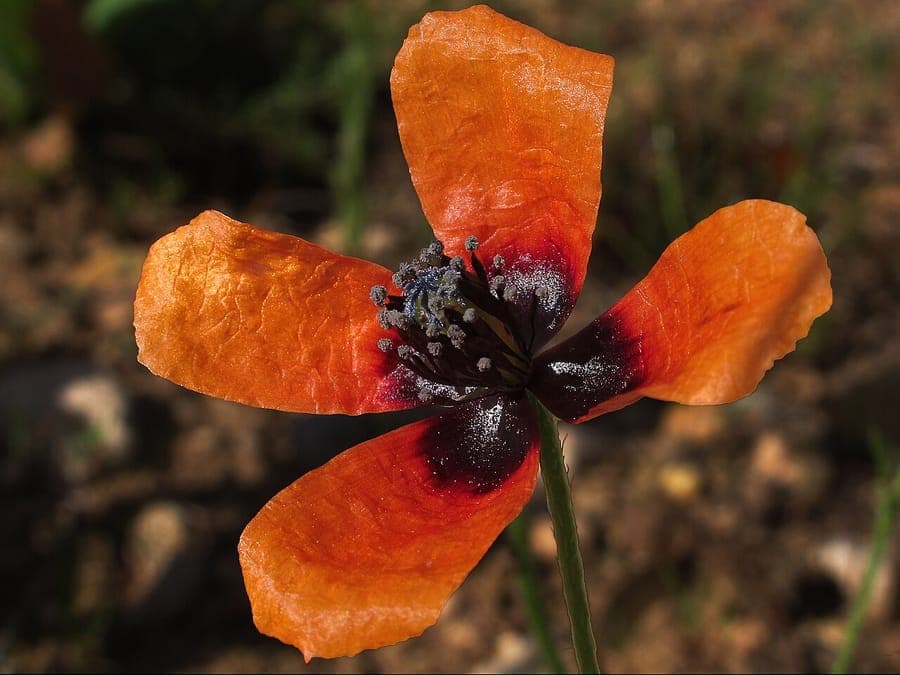
jacilluch / CC BY-SA 2.0, via Wikimedia Commons
Pale poppy: complete guide
Roemeria argemone
¿Quieres ver Pale poppy: complete guide en tu jardín?
1 minuto, sin tarjeta de crédito
Overview
The pale poppy (Roemeria argemone), also known as prickly poppy, is an elegant annual plant from the Mediterranean region and Europe. This beautiful plant distinguishes itself through its soft purple to pale lavender flowers and a very fine, hairy texture on stems and leaves. The plant reaches a height of 12 to 24 inches and is perfect for wildflower mixes, borders, and flower meadows. With its delicate flowers and airy growth habit, this poppy adds much grace to any garden landscape.
Appearance and Bloom
The pale poppy is characterized by its rough hairy stems and leaves that are completely covered with stiff hairs. This gives the plant an interesting tactile texture. The leaves are deeply divided and cut, creating a fine, feathery appearance. The flowers appear from April to June and have four soft purple to pale lavender petals with darker veins, giving the flowers a special character.
The flowers are fairly small but numerous, creating an attractive full appearance. After flowering, elongated seed capsules form that remain interesting until ripe.
Ideal Location
The pale poppy thrives best in full sun to partial shade. At least 4-5 hours of direct sunlight daily is ideal. The plant also accepts some more shade, although flowering will be somewhat less abundant. Plantings against south-facing walls or in open borders give beautiful results.
Soil
The pale poppy is not very fussy about soil composition. Well-draining soil is, however, highly appreciated. The plant grows best on poor to moderately fertile soils; overly nutrient-rich soils promote mainly leaf and stem growth at the expense of flowering. Slightly acidic to neutral pH is ideal.
Avoid wet soils as the plant is sensitive to root rot. Adding sand or gravel to the soil improves drainage.
Diseño gratis
¿Quieres ver Pale poppy: complete guide en tu jardín? Crea un diseño gratis ahora.
Watering
Once established, the pale poppy is very drought-tolerant and requires minimal maintenance regarding watering. Only during exceptionally long dry periods may supplemental water be needed. Overwatering should be avoided as it can lead to root rot.
Sow directly in the field where the plant is to grow, as it does not do well when pre-grown from seeds in pots.
Maintenance
The pale poppy requires minimal maintenance. Regularly removing spent flowers encourages longer blooming. If you want the plant to self-sow for next year, leave a few plants until the end of the season so the seed pods can mature.
No fertilizer is needed; a nutrient-poor soil even leads to better blooming.
Maintenance Calendar
March-April: Sow directly at location. April-June: Flowering period; enjoy the soft purple blooms. July-August: Seed pods form and ripen. August-September: Self-sown seeds form the next generation.
Winter Hardiness
The pale poppy is an annual plant and does not tolerate frost. In temperate climates, this plant is ideal for spring and summer plantings. In the Mediterranean region and other mild winters, the plant can sometimes even overwinter, but this is not reliable.
Companion Plants
The pale poppy combines beautifully with:
Other wildflowers: Cornflower, rudbeckia, and sunflower form cheerful wildflower mixes.
Light leafless plants: Gaura and linum provide an airy effect.
Ground covers: Lavender and santolina offer structure and contrast.
Summer bloomers: Nigella and adonis add depth to the color palette.
Final Thoughts
The pale poppy is a beautiful and easy plant for those who desire a natural, wildflower-like garden landscape. With its delicate purple flowers and minimal maintenance needs, this plant is ideal for ecological gardens and flower meadows. Sow them in mass for a spectacle of color and sway in the breeze.
Available at: Garden centers, seed suppliers
Want to learn more about this lovely wildflower? Visit gardenworld.app for more plant selection and seeds. Visit gardenworld.app for more plant selection and seeds.
¿Quieres ver Pale poppy: complete guide en tu jardín? Crea un diseño gratis ahora.
Sube una foto, elige un estilo y obtén un diseño fotorrealista con lista de plantas en menos de un minuto.
Sin tarjeta de crédito


Plantas similares
Papaver gorodkovii: complete guide
Papaver gorodkovii
Papaver gorodkovii, the arctic poppy, thrives from Alaska to Russia's Far East. Discover how to grow this rare, extremely cold-hardy rock garden treasure.
Papaver setiferum: complete guide
Papaver setiferum
Papaver setiferum is a hardy giant Caucasian poppy with fiery red blooms. Discover siting, soil, deadheading and winter hardiness.
Pale Poppy: complete guide
Papaver alboroseum
Discover pale poppy (Papaver alboroseum) - rare alpine poppy with white-pink flowers. Precious beauty from Kamchatka. Cultivation in alpine and rock gardens.