
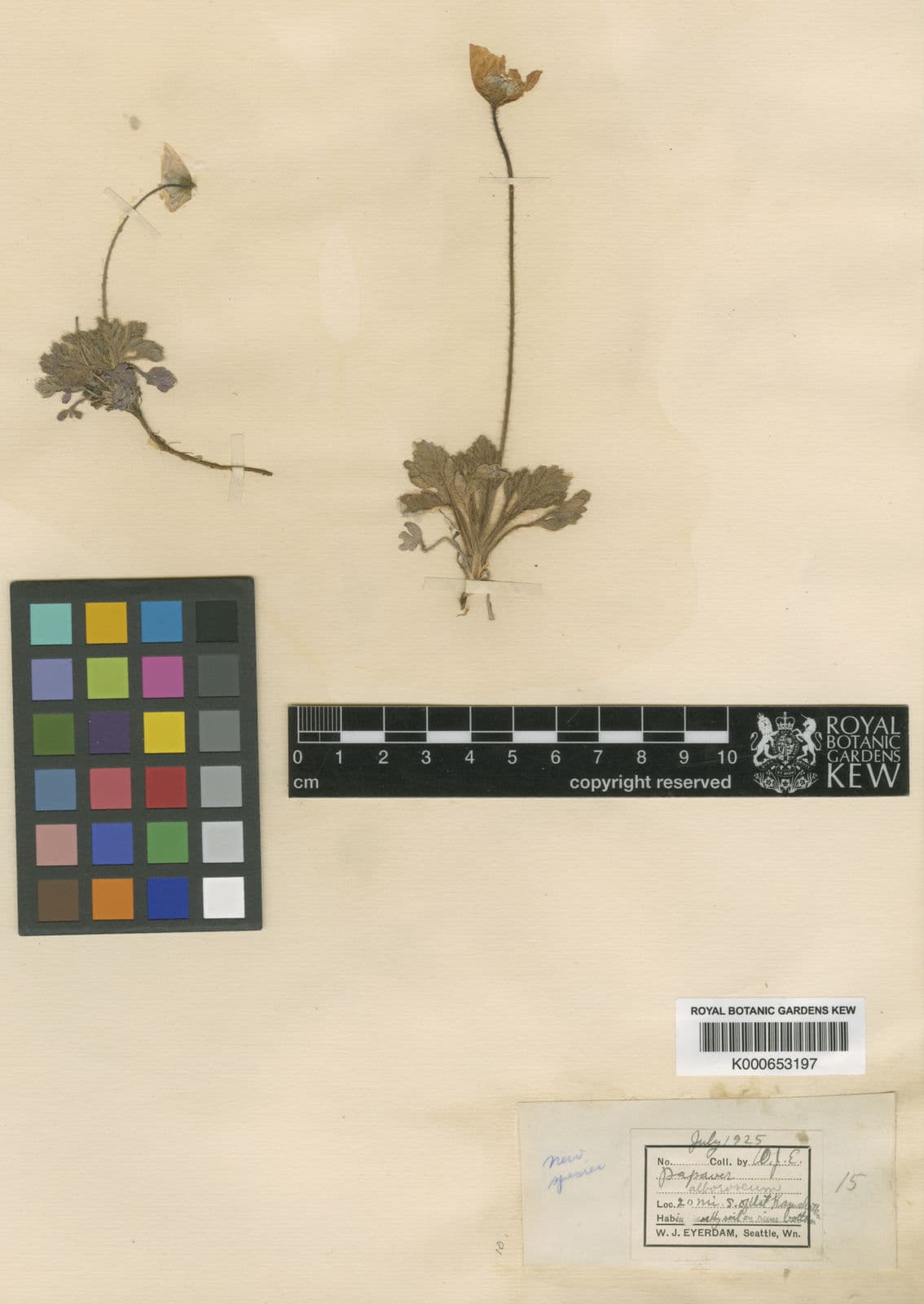
Pale Poppy: complete guide
Papaver alboroseum
¿Quieres ver Pale Poppy: complete guide en tu jardín?
1 minuto, sin tarjeta de crédito
Overview
The pale poppy (Papaver alboroseum), also called pale poppy, is a rare alpine poppy native to Kamchatka and the Kuril Islands. This plant from the poppy family (Papaveraceae) is a true treasure for lovers of alpine and rock garden plants. With its delicate white to soft pink flowers and fine foliage, this poppy creates a special accent in alpine troughs, rock gardens, and screes. Through gardenworld.app, you can discover how these rarities are the jewels of specialized plant collections.
Appearance and bloom
Papaver alboroseum grows as an herbaceous perennial with compact, bushy growth pattern. The plant reaches only 30-40 cm tall and forms tight rosette-like clumps. The leaves are finely divided, hair-like dissected, giving a fluffy, delicate appearance. Flowers are cream-white to pale pink with yellow stamens, about 4-5 cm diameter. Flowering typically occurs June to August. After blooming, characteristic poppy seed pods form. Self-seeding occurs occasionally but not excessively.
Ideal location
Pale poppy requires full sun to perform optimally - at least six to eight hours of direct sunlight. The plant tolerates light alpine shade well. Wind is no problem; indeed, good air circulation helps prevent fungal diseases. Plant in elevated locations where snow and water drain quickly. This poppy is ideal for rock gardens, alpine troughs, dry slopes, and gravel borders. In lowland gardens, this plant can thrive in containers on a sheltered patio.
Soil
Good drainage is essential for pale poppy - actually, you cannot make the soil too dry or too lean. A mixture of sharp gravel, sand, and humus-poor compost is ideal. Alpine soils are perfect. Avoid heavy, clayey soils or places where water can stand. pH range 5.5-7.5 is acceptable. In pots use grit-rich potting soil with 30-40% addition of extra grit or perlite.
Watering
During the growth and flowering period water regularly - but drainage is crucial. Water once the top 1-2 cm of soil feels dry. In winter, when growth slows, give almost no water - only enough to prevent roots from drying completely. This plant copes well with drought once established, but prefers regular moisture during the growing season. Drip irrigation is ideal. Never overwater.
Pruning
Minimal pruning required. Remove faded flowers to reduce possible self-seeding and keep the plant tidy. The plant holds its form well and requires little shaping. Damaged leaves can be carefully removed. In fall, as the plant dies back, remove dead material to prevent fungal disease.
Maintenance calendar
Spring (March-May): Check soil drainage. Gently mist to prevent fungus. Begin regular watering once growth becomes visible. Summer (June-August): Water regularly based on soil dryness. Remove faded flowers. Ensure air circulation. Fall (September-October): Reduce water as growth slows. Remove dead leaf material. Winter (November-February): Virtually no water. Plant rests.
Winter hardiness
Papaver alboroseum is extremely winter-hardy - zones 3-7 (-40 to -15 degrees Celsius). This alpine plant tolerates snow and frost exceptionally well. The main danger in lowland climates is winter or spring moisture causing root rot. Good drainage is the best protection. In areas with wet winters you can provide shelter with an alpine frame or raised trough. Snow actually provides protection.
Diseño gratis
¿Quieres ver Pale Poppy: complete guide en tu jardín? Crea un diseño gratis ahora.
Companion plants
Pale poppy combines excellently with other alpine plants:
- Other alpine poppies in complementary colors
- Sempervivum for structure and form
- Alpine phlox in purple and pink
- Armeria in pink tones
- Saxifraga species for contrast
- Alpine geraniums in diverse colors
- Sedums for form and drought resistance
These combinations create true alpine troughs of great beauty.
Propagation
Pale poppy is propagated almost exclusively from seed, since the plant develops a taproot that tolerates transplanting poorly. Sow fresh seed immediately after harvest in late summer (August-September) into a grit-rich seed mix; most alpine poppies require a period of cold stratification to germinate, so sowing outdoors in a cold frame or alpine frame often works better than sowing indoors. Germination typically occurs in early spring after several weeks of frost. Because the roots are so sensitive, transplant seedlings as early as possible, ideally before the second set of leaves appears, directly into their permanent pot or border position. Division is not recommended for this species since the plant does not form a separable rootstock. Some enthusiasts order seed from specialized alpine seed suppliers such as Jelitto or Alplains, which offer reliable, true-to-species seed collected from wild populations.
Pests and Diseases
Pale poppy has few specific diseases, but drainage problems are by far the greatest threat. Root rot, caused by Pythium or Phytophthora fungi, almost always results from overly wet, poorly draining soil, especially in winter; the only real remedy is prevention through excellent drainage. Powdery mildew can develop in humid, shaded conditions and appears as a white haze on the leaves; improve air circulation and remove affected foliage. Slugs can completely strip young seedlings in spring, so protect emerging seedlings with a physical barrier or organic slug pellets. Aphids occasionally appear on young shoots but rarely cause serious damage and are easily rinsed off with water. Because this poppy needs so little fertilizer, the plant generally remains strong and resistant as long as the soil stays dry and well-draining.
Related Species
Pale poppy belongs to a small group of dwarf alpine poppies that are often offered interchangeably by specialist growers. Papaver miyabeanum, the Japanese alpine poppy, closely resembles Papaver alboroseum but bears slightly smaller, more yellowish flowers and occurs naturally on the Kuril Islands and Sakhalin. Papaver burseri (formerly often listed as Papaver alpinum), native to the Alps and Carpathians, produces similarly white flowers but forms a more compact rosette and tolerates summer heat somewhat better. For gardeners wishing to build a collection of alpine poppies, combining these three closely related species is an appealing option, since they share similar soil and care requirements while differing subtly in flower color and form. When purchasing, it is worth checking the exact botanical name, since these species are frequently mixed up in the trade.
Closing
Pale poppy is a jewel for those who love alpine plants and have the space and care to accommodate it. With its delicate flowers and compact growth, it is a true collector's treasure. Seeds are available from specialized seed suppliers and alpine nurseries. Through gardenworld.app, you can integrate this rarity into your alpine plant collection and visualize how it fits in alpine borders and troughs.
¿Quieres ver Pale Poppy: complete guide en tu jardín? Crea un diseño gratis ahora.
Sube una foto, elige un estilo y obtén un diseño fotorrealista con lista de plantas en menos de un minuto.
Más de 10.000 jardines diseñados
Sin tarjeta de crédito


Plantas similares
Riverbank Lupine: complete guide
Lupinus rivularis
Discover riverbank lupine (Lupinus rivularis) - moisture-loving perennial with extended bloom. Flowers May-July in purple tones. Ideal for wet gardens and.
White Beardtongue: complete guide
Penstemon albidus
Discover white beardtongue (Penstemon albidus) - elegant perennial with white to cream flowers. Drought-resistant, perfect for prairie and dry gardens.