
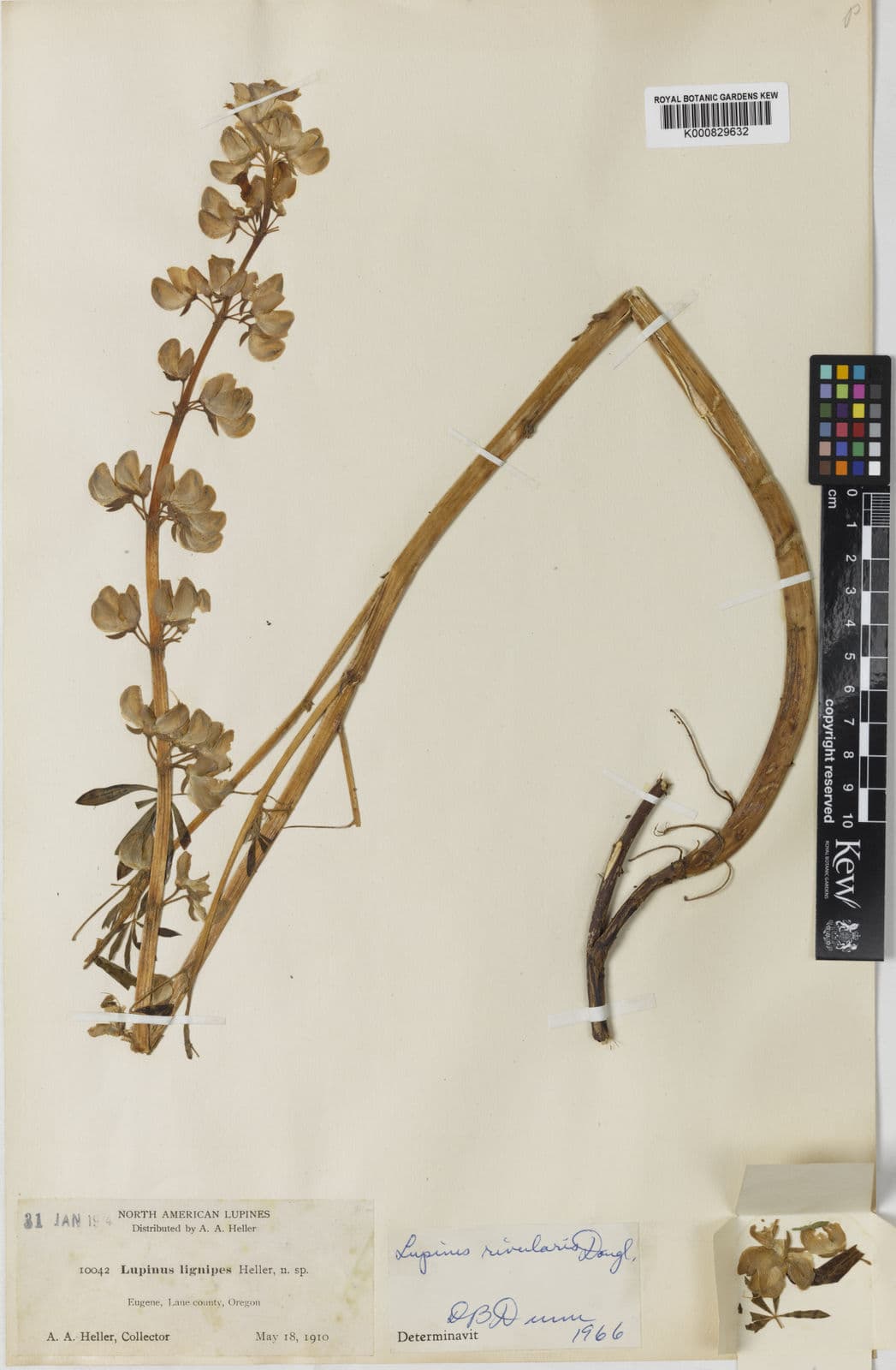
Riverbank Lupine: complete guide
Lupinus rivularis
¿Quieres ver Riverbank Lupine: complete guide en tu jardín?
1 minuto, sin tarjeta de crédito
Overview
The riverbank lupine (Lupinus rivularis), also called streambank lupine, is a beautiful perennial naturally found along waterways in the Pacific Northwest. This variety from the pea family (Fabaceae) grows from British Columbia to northern California and thrives particularly well on wetter locations than its drought-tolerant cousin, Oregon lupine. With its purple-pink flowers in dense spikes, this plant offers a dynamic way to embellish water edges and low-lying gardens. Through gardenworld.app, you can see how moisture-loving lupines are the perfect choice for gardens with seasonal wetness or permanent water runoff.
Appearance and bloom
Lupinus rivularis grows as a perennial with subshrub characteristics, reaching 80-100 cm tall in favorable conditions. The plant can become wider than Oregon lupine, forming compact, shrub-like clumps. The hand-shaped leaves consist of 8-10 narrow segments in grass-green to silvery-gray color. Flowers appear in erect, multi-tiered spikes in purple to pink tones, sometimes with creamy markings. Flowering extends from May to August, longer than many other lupine species. Self-seeding occurs readily, allowing the plant to naturalize.
Ideal location
Riverbank lupines perform best in locations with at least six hours of sunlight, but can tolerate partial shade better than many other lupines. This makes them ideal for waterside areas where trees provide partial shelter. Plant them along streams, ponds, or lagoon-like low-lying zones. The plant does not deteriorate quickly in windy conditions thanks to its more robust growth form. This species is a perfect choice for moist, low-lying gravel gardens.
Soil
Unlike its drought-preferring relatives, Lupinus rivularis thrives in moister soil conditions. Sandy to clayey soils with good organic matter are ideal. The plant tolerates seasonal moisture and can even survive short flooding periods. Slightly acidic to neutral soil (pH 5.5-7.0) is preferred. Add abundant organic matter - compost, fallen leaves - to improve moisture retention. In dry climates, apply extra mulch.
Watering
Riverbank lupine requires more water than Oregon lupine. During the growing season, water regularly - two to four times weekly depending on rainfall and soil type. The plant thrives in soil that remains consistently moist but not waterlogged. In winter, when growth slows, water less but do not allow it to dry completely. During extremely dry periods, provide extra water. Drip irrigation helps maintain even levels.
Pruning
Regularly remove spent flower spikes to stimulate extra blooms. After main flowering in July, you can cut back spent stems to about 20 cm for fall rebloom. This species benefits from self-seeding, allowing new plants to establish. Each spring, remove dead, damaged branches. Leave dead flower stems until late fall.
Maintenance calendar
Spring (March-May): Add organic compost around plant base. Check for winter damage. Begin regular watering once growth becomes visible. Summer (June-August): Deadhead flowers weekly. Adjust watering needs to rainfall. Check for stress signs. Additional feeding supports full growth. Fall (September-October): Allow flowers to set seed. Add fall compost. Gradually increase watering rhythm as rainfall increases. Winter (November-February): Minimal maintenance. Monitor moisture; plant should not dry out but also not become waterlogged.
Winter hardiness
Lupinus rivularis is winter-hardy in zones 4-8 (average minimum winter temperatures -30 to -10 degrees Celsius). In cold, wet winters, fungal disease can be problematic - ensure excellent drainage around plant base. In warm climates, the plant can grow in lower zones if adequate water is available. Spring mulch helps prevent frost damage.
Diseño gratis
¿Quieres ver Riverbank Lupine: complete guide en tu jardín? Crea un diseño gratis ahora.
Companion plants
Riverbank lupine pairs beautifully with other moisture-loving garden plants:
- Bistorta and Lychnis for rose-like tones
- Ferns for structure and texture
- Primulas in complementary colors
- Cardamine and other waterside companions
- Hostas for leaf form contrast
- Astilbe for feathery texture
- Water plants for partial shelter
These plant combinations create water-oriented gardens of true character. Gardenworld.app helps you visualize these pairings completely.
Propagation
Lupinus rivularis is propagated mainly from seed. Soak seeds for 24 hours in lukewarm water, or lightly nick the hard seed coat with sandpaper for better germination. Sow indoors in March or April in moist seed compost, or direct-sow outdoors in May at the final, moisture-retentive location. Germination typically takes 2 to 3 weeks at 16 to 20 degrees Celsius.
Unlike many other lupines, this species forms a somewhat shallower taproot and consequently tolerates careful transplanting of young seedlings better than Lupinus oreganus. Dividing mature plants remains risky, however; basal cuttings of 10 to 12 centimeters, taken from young spring shoots, root well in a moist, sandy cutting medium under plastic cover.
Because the plant self-seeds readily along moist banks, a naturally renewing colony often develops after a few seasons. Cultivars of the related Lupinus polyphyllus, such as 'Noble Maiden' or 'Gallery Blue', are sometimes offered at garden centers as a moisture-tolerant alternative, though they lack the robustness of the wild species.
Pests and Diseases
The moist location Lupinus rivularis prefers makes it somewhat more susceptible to fungal disease than its drought-loving relatives. Powdery mildew and rust can develop in stagnant, humid air; avoid planting too densely and leave adequate space between clumps. The lupine aphid (Macrosiphum albifrons) usually appears in June on young flower stalks; rinse off colonies with a strong water spray or use insecticidal soap.
Slugs are a persistent problem in moist gardens, feeding on young seedlings mainly at night; set slug traps or a copper barrier around vulnerable plants. Root rot is rare as long as the soil stays moist but not waterlogged; if saturation persists, the plant is best moved to a slightly higher spot with better drainage. Ladybugs and lacewings control aphids naturally and deserve a place in every moisture-loving border. Find more disease-prevention tips for moisture-loving perennials on gardenworld.app.
Inspect the border weekly between May and September for early signs of stress, such as drooping leaves during dry spells or yellowing lower foliage from excess moisture. Early intervention prevents a minor issue from escalating into a serious infestation affecting the entire planting. Mulching in early June with a 5-centimeter layer of shredded bark also helps regulate soil moisture and suppress fungal spore splash from rain.
Closing
The riverbank lupine is essential for those with water-edge or wet-zone gardens. With its robust growth and extended blooming period, it offers value throughout the season. This plant combines with many wild companions for authentic aquatic gardens. Seeds are available from reputable nurseries. Through gardenworld.app, you can integrate this lupine into your complete garden plan and see how it forms the perfect connection with water elements and other moisture-loving garden plants.
¿Quieres ver Riverbank Lupine: complete guide en tu jardín? Crea un diseño gratis ahora.
Sube una foto, elige un estilo y obtén un diseño fotorrealista con lista de plantas en menos de un minuto.
Más de 10.000 jardines diseñados
Sin tarjeta de crédito


Plantas similares
Oregon Lupine: complete guide
Lupinus oreganus
Discover Oregon lupine (Lupinus oreganus) - a robust perennial with purple flowers. Perfect naturalized planting for full sun. Care tips, cultivation and.
Longsepal Beardtongue: complete guide
Penstemon calycosus
Discover longsepal beardtongue (Penstemon calycosus) - beautiful perennial with lilac-blue flowers. For partial shade and moist soil. Ideal for naturalized.