
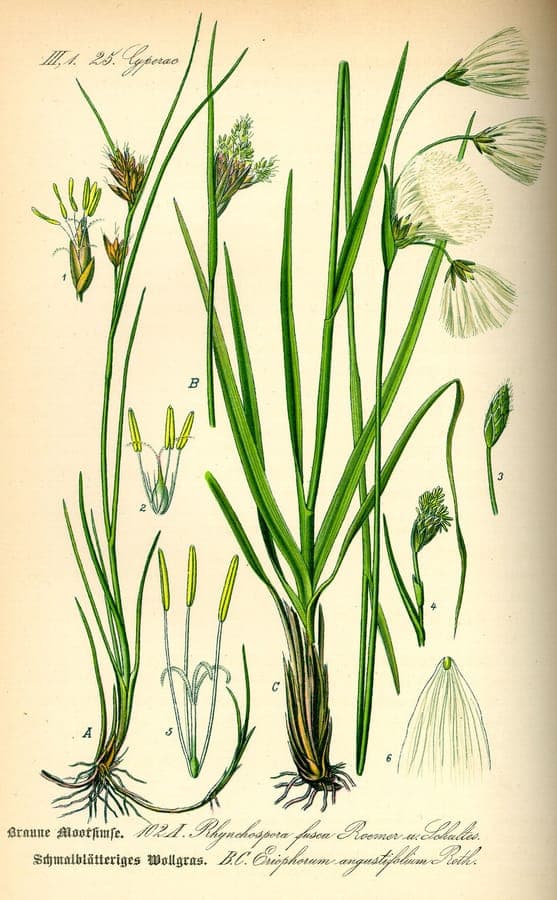
Wikimedia Commons / Public domain, via Wikimedia Commons
Brown beak-sedge: complete guide
Rhynchospora fusca
¿Quieres ver Brown beak-sedge: complete guide en tu jardín?
1 minuto, sin tarjeta de crédito
Overview
Brown beak-sedge (Rhynchospora fusca) is a close relative of white beak sedge, but with distinctly different character. This elegant sedge stands out for its dark brown to reddish-brown flower heads, lending it far more visual punch than its white cousin. Also a member of Cyperaceae, it grows in moist, acid-loving bogland environments.
Brown beak-sedge is perhaps less well-known than the white variant, yet appears on red lists of threatened species in many European wetlands. It forms a striking accent in wet gardens and attracts beneficial insects.
Appearance and Bloom
Brown beak-sedge grows somewhat more compactly than its white relative, typically reaching 15-30 centimeters. Foliage is grey-green and forms neat, dense tufts. Stems are finer and more delicately branched than the white species.
The flowers are the real showpiece. From May to July, dark brown to reddish-brown flower heads appear at branch tips. This dark colouration contrasts beautifully with lighter foliage, giving the plant striking graphic appeal. After flowering, seed development maintains the plant's visual interest well into winter.
Ideal Location
Brown beak-sedge thrives in wet to very wet conditions, similar to its white relative. It feels at home at pond margins, in rainwater catchments, and on moist bogland. It tolerates brief dry periods slightly better than white beak sedge, but remains a plant for permanent moisture.
Light is not critical; it grows in full sun or lightly shaded spots. In dense shade, growth becomes weaker. A sheltered location is beneficial due to its fine structure.
Soil
This sedge is strongly acid-loving and makes similar soil demands. Optimal pH ranges from 4.0 to 4.5. Standard garden soil is unsuitable; it demands acid, peat-rich substrates.
Peat-based planting medium, pure sphagnum peat, or specialized bogland compost are ideal. In calcium-rich soils, it will not thrive.
Diseño gratis
¿Quieres ver Brown beak-sedge: complete guide en tu jardín? Crea un diseño gratis ahora.
Watering
Traditional watering is not applicable. The plant must live permanently in moist conditions. Drought stress quickly leads to weakness and decline.
In containers, regular misting helps, but the growing medium must stay moist. Standing water is not a problem; the plant prefers it.
Pruning
Pruning is unnecessary. The plant grows naturally compact and self-shapes. After flowering, faded brown flower heads can be removed for aesthetic reasons, though they provide attractive winter structure. Dead leaf sections can be trimmed in March.
Maintenance Calendar
April-May: Growing season begins. Check soil moisture and acidity levels. May-July: Flowering period with brown flower heads. Enjoy the graphic appearance. August-October: Seed development. Leave dead material for winter structure. November-March: Dormancy under conditions of permanent moisture. March: Light cleanup of dead leaf sections.
Winter Hardiness
Brown beak-sedge is extremely winter-hardy, naturally occurring from France through Poland to the Baltic states. Frost poses no threat provided the plant remains moist. Leaf growth dies back, but roots survive under water.
Companion Plants
In bog gardens, combine brown beak-sedge effectively with:
- White beak-sedge (Rhynchospora alba) for striking colour contrast
- Davall's sedge (Carex davalliana) for additional texture
- Blunt-flowered rush (Juncus subnodulosus) for structural variation
- Aquatic plants at deeper levels for layering
Final Thoughts
Brown beak-sedge is a more refined variant for the discerning bog gardener. Its dark brown flower heads and compact growth make it ideal for smaller wet corners. Plan your complete bog or wetland garden confidently with gardenworld.app's design tools. This plant delivers genuine garden pleasure and ecological value in equal measure.
¿Quieres ver Brown beak-sedge: complete guide en tu jardín? Crea un diseño gratis ahora.
Sube una foto, elige un estilo y obtén un diseño fotorrealista con lista de plantas en menos de un minuto.
Más de 10.000 jardines diseñados
Sin tarjeta de crédito


Plantas similares
White beak sedge: complete guide
Rhynchospora alba
Discover white beak sedge, an elegant sedge for boggy areas. Learn about care, cultivation, and garden applications.
Davall's sedge: complete guide
Carex davalliana
Learn how to grow and care for Carex davalliana: ideal conditions, watering, pruning, and companion plants for this low-maintenance sedge.
Bluntflower Rush (Juncus subnodulosus): complete guide
Juncus subnodulosus
Discover everything about Bluntflower Rush (Juncus subnodulosus): appearance, ideal location, soil, watering, and winter hardiness. Perfect for wetlands and marshy soils.