
Wikimedia Commons / CC BY-SA 3.0, via Wikimedia Commons
Bluntflower Rush (Juncus subnodulosus): complete guide
Juncus subnodulosus
¿Quieres ver Bluntflower Rush (Juncus subnodulosus): complete guide en tu jardín?
1 minuto, sin tarjeta de crédito
Overview
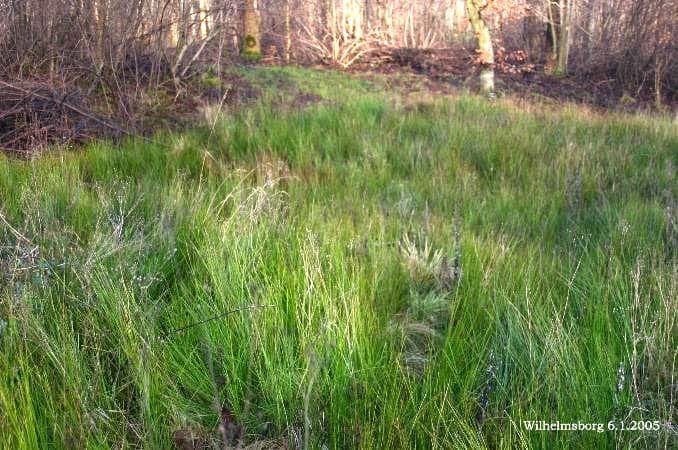
The Bluntflower Rush (Juncus subnodulosus) is a typical wetland plant naturally occurring in Europe and Asia, from the Mediterranean to northern Iraq. This rush species from the Juncaceae family thrives in permanently moist and marshy terrain. Growing 30-90 cm tall, the Bluntflower Rush forms loose tufts of green foliage with striking dark-brown to black flower clusters tightly pressed against the stem. This is a highly moisture-loving plant, yet less rigid and angular than its more common relative, the Squarrose Rush. It suits gardens with standard marshy conditions, ponds, and banks.
If you want to create an authentic, naturally wet garden, gardenworld.app is your destination. This platform helps you design gardens perfectly suited to marsh and moisture-loving plants. The Bluntflower Rush also contributes to local biodiversity and bird habitat.
Appearance & Bloom Cycle
The Bluntflower Rush distinguishes itself through its loose to upright growth habit and greenish foliage. The leaves are thinner and less rigid than those of related rush species. The plant reaches 30-90 cm height depending on moisture conditions. In July and August, striking, densely packed brown to black flowers appear as small balls pressed against the stem. The inflorescences are typical for rushes, with many tiny flowers in a compact, nodular form. After blooming, fine seeds develop.
The plant typically remains green year-round, although winter foliage may brown slightly. Despite its height, the plant is relatively fine-textured and transparent, thus not imposing in the garden landscape.
Ideal Location
The Bluntflower Rush grows optimally on permanently moist soils: along ditches, in ponds, and marshy areas. It thrives well in zones with standing water 15-30 cm deep. Sunlight is preferred, but half-shade is tolerated. USDA zones 6-8 are ideal; in the Netherlands and Belgium it grows without problems.
Geographically, this species is a true European marsh plant. In wetlands, reedlands, and polder landscapes, the plant feels at home.
Soil Type
The Bluntflower Rush grows on nutrient-rich, heavy clay and peat. A pH of 6.0-7.5 is appropriate (thus more neutral than the very acidic preference of the Squarrose Rush). The plant tolerates permanent water excess well, even waterlogging. Drainage is unnecessary; moisture retention is essential. Organic matter helps; add peat moss when planting on mineral soil.
Diseño gratis
¿Quieres ver Bluntflower Rush (Juncus subnodulosus): complete guide en tu jardín? Crea un diseño gratis ahora.
Watering
The Bluntflower Rush is highly moisture-loving and grows optimally with permanently moist or wet soil. Ensure water never recedes completely. With standing water of 10-30 cm the plant thrives perfectly. In extremely dry summers, extra water helps, but the plant is adaptable. In winter, water needs don't decrease much - keep soil permanently moist.
Tip: Place this rush at pond or ditch margins, or in drainage areas where water naturally collects.
Pruning & Maintenance
Pruning is unnecessary. The plant grows sinuous and naturally forms loose tufts. Dead foliage can be gently removed in early spring. Avoid heavy interventions. Transplanting can occur in March or October, but the plant is vigorous and doesn't need annual relocation.
Maintenance Calendar
January-February: Minimal maintenance. Plant is dormant but remains green. Ensure adequate water level.
March-April: Growing season begins. Remove previous year's dead foliage. Monitor water levels.
May-June: Growth accelerates. Stems stretch and extend.
July-August: Flowering period. Striking brown flower heads appear.
September-October: Blooming finished. Plant stays green. Maintain water levels.
November-December: Winter preparation. Minimal maintenance. Don't prune.
Winter Hardiness
Juncus subnodulosus is winter-hardy in USDA zones 6-8, making it highly suitable for the Netherlands and Belgium. Temperatures to -15°C are no problem. Plant can stand in water during frost periods without damage. No winter protection needed. Dead foliage aids insulation; don't remove it.
Companion Plants
The Bluntflower Rush thrives alongside:
- Other Sedges (Carex acutiformis, C. riparia) - complementary texture
- Common Reed (Phragmites australis) - for height and structure
- Water Mint (Mentha aquatica) - for fragrance
- Tansy Ragwort (Senecio jacobaea) - yellow flower clusters
- Yellow Flag Iris (Iris pseudacorus) - for color and contrast
Avoid highly nutrient-poor plant species; this rush enjoys some nutrients.
Conclusion
The Bluntflower Rush brings authentic marsh quality to your garden. With its green, sinuous stems and striking brown summer flowering, it's a strong focal point in wet areas. Whether you want to edge a pond or create a complete wetland - gardenworld.app helps you design a beautiful wet garden where the Bluntflower Rush takes center stage. This is the plant for those who love real nature in their backyard!
¿Quieres ver Bluntflower Rush (Juncus subnodulosus): complete guide en tu jardín? Crea un diseño gratis ahora.
Sube una foto, elige un estilo y obtén un diseño fotorrealista con lista de plantas en menos de un minuto.
Más de 10.000 jardines diseñados
Sin tarjeta de crédito


Plantas similares
Squarrose Rush (Juncus squarrosus): complete guide
Juncus squarrosus
Discover everything about Squarrose Rush (Juncus squarrosus): appearance, ideal location, soil, watering, and winter hardiness. Perfect for wetland gardens.
Path Rush (Juncus tenuis): complete guide
Juncus tenuis
Discover everything about Path Rush (Juncus tenuis): appearance, ideal location, soil, watering, and winter hardiness. Perfect for footpaths and wet areas.