
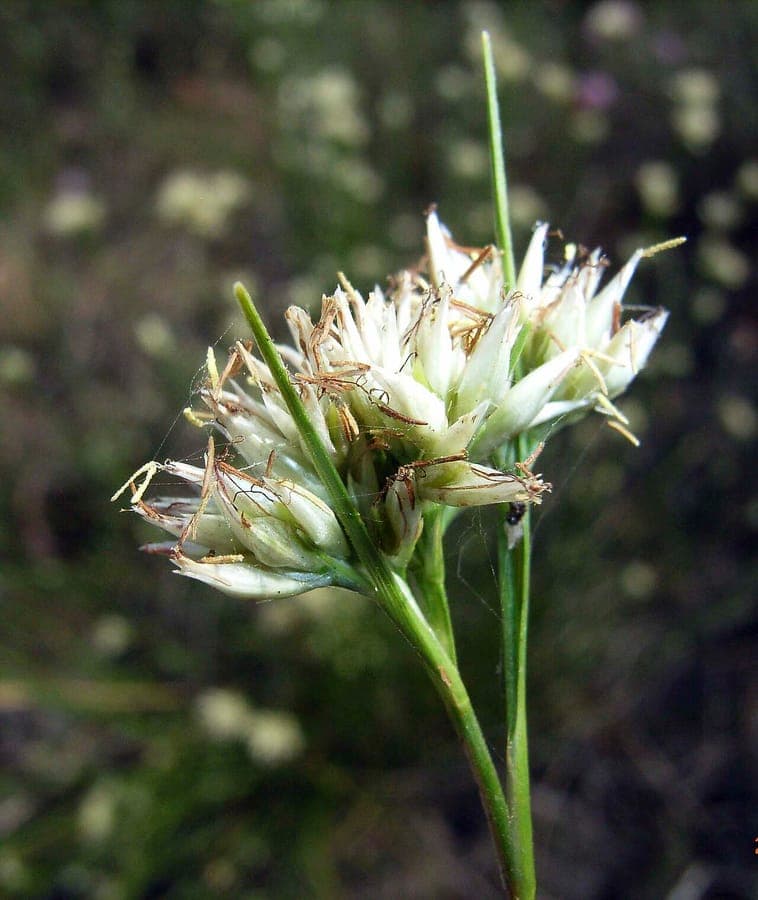
Elke Freese / CC BY-SA 3.0, via Wikimedia Commons
White beak sedge: complete guide
Rhynchospora alba
¿Quieres ver White beak sedge: complete guide en tu jardín?
1 minuto, sin tarjeta de crédito
Overview
White beak sedge (Rhynchospora alba) is an elegant, fine-textured sedge that thrives in moist, acid-loving conditions. This member of the Cyperaceae family is prized for its striking white flower heads that appear like tiny stars above the foliage. In nature, it inhabits lowland peat bogs and acidic wetlands across much of temperate Europe.
The white beak sedge is invaluable for ecological gardens. It attracts various bird species and contributes to bogland restoration. Although widespread in Europe, it has become scarce in many regions due to wetland drainage and habitat loss. Growing it in cultivated settings helps preserve this declining species.
Appearance and Bloom
This plant reaches heights of 20-40 centimeters and forms dense, grass-like tufts. The stems are delicately branched and thread-like, giving the plant an airy appearance. Foliage is grey-green and distinctly upright.
The flowers are truly the highlight. From June to September, characteristic white flower heads appear at the tips of slender branches. These ornamental white pompoms create a remarkable visual effect and are lovely in dried arrangements. After flowering, small brownish seeds develop, providing interest into autumn.
Ideal Location
White beak sedge requires wet to very wet conditions. It thrives in bog or wetland environments, such as pond margins, rainwater catchments, or specialized bog gardens. While preferring permanently moist ground, it can tolerate brief dry periods.
Light is not critical; the plant grows in full sun or partial shade. Full shade will reduce vigour. A sheltered position is beneficial, as slender stems can break in strong wind.
Soil
This sedge has a pronounced preference for acidic conditions. The optimal pH range is 4.0-4.5 (strongly acid). It thrives only on nutrient-poor, acidic peatland soils. In standard garden soil, it will struggle and decline rapidly.
Soil must contain acid peat material, ideally sphagnum or pure peat. Lime-rich soils are completely unsuitable. Wetland planting compost is a good alternative for container growing.
Diseño gratis
¿Quieres ver White beak sedge: complete guide en tu jardín? Crea un diseño gratis ahora.
Watering
Watering in the traditional sense is not applicable; wet feet are essential. This plant lives permanently in water or extremely wet conditions. The water table must remain high. This is precisely what makes its cultivation challenging in many gardens.
In containers, the growing medium must stay consistently moist. Drying out is fatal to the plant.
Pruning
Pruning is unnecessary. The plant grows naturally compact and self-shapes. Only remove dead leaf sections in spring. After flowering, faded flower heads can be gently removed if desired, though they provide winter structure and continued visual interest.
Maintenance Calendar
May-June: Check that soil remains sufficiently acidic and moist. Prevent drying. June-September: Enjoy the bloom and white flower heads. Monitor water quality. Autumn: No action needed; leave dead growth for winter structure. Winter: Plant remains submerged; no frost protection needed. February-March: After winter settling, lightly refresh the growing medium if needed.
Winter Hardiness
White beak sedge is extremely winter-hardy, naturally occurring in Northern Europe through Scandinavia and Russia. Frost poses no problem as long as the plant remains submerged. Leaf growth dies back, but roots remain alive beneath the ice.
Companion Plants
In bog gardens, combine white beak sedge effectively with other acid-loving wetland plants:
- Black sedge (Carex nigra) for contrasting dark foliage
- Soft rush (Juncus effusus) for grassy texture
- Sundews (Drosera species) for small highlights and fauna attraction
- Various bog-loving flowers for colour variety
In ponds, it pairs well with species like marsh St John's wort and water lilies at deeper levels.
Final Thoughts
White beak sedge is a genuine treasure for gardens with wet, acidic soils. It requires minimal maintenance and offers consistent ornamental value year after year. At gardenworld.app, you'll find design advice for integrating wetland plants into your garden plan. This plant adds ecological value and provides wildlife interest, making it the perfect choice for gardeners who wish to enhance nature. Plan your complete bog garden with confidence using gardenworld.app's design tools and recommendations.
¿Quieres ver White beak sedge: complete guide en tu jardín? Crea un diseño gratis ahora.
Sube una foto, elige un estilo y obtén un diseño fotorrealista con lista de plantas en menos de un minuto.
Más de 10.000 jardines diseñados
Sin tarjeta de crédito


Plantas similares
Brown beak-sedge: complete guide
Rhynchospora fusca
Discover brown beak sedge, an elegant sedge for moist gardens. Learn about cultivation, care, and garden uses.
Black sedge: complete guide
Carex nigra
Everything you need to know about Carex nigra: care, soil, planting tips, and ideal garden uses for wet areas.
Soft rush: complete guide
Juncus effusus
Juncus effusus - the most common rush for water gardens worldwide. Complete growing guide, care, and water-garden design integration.