
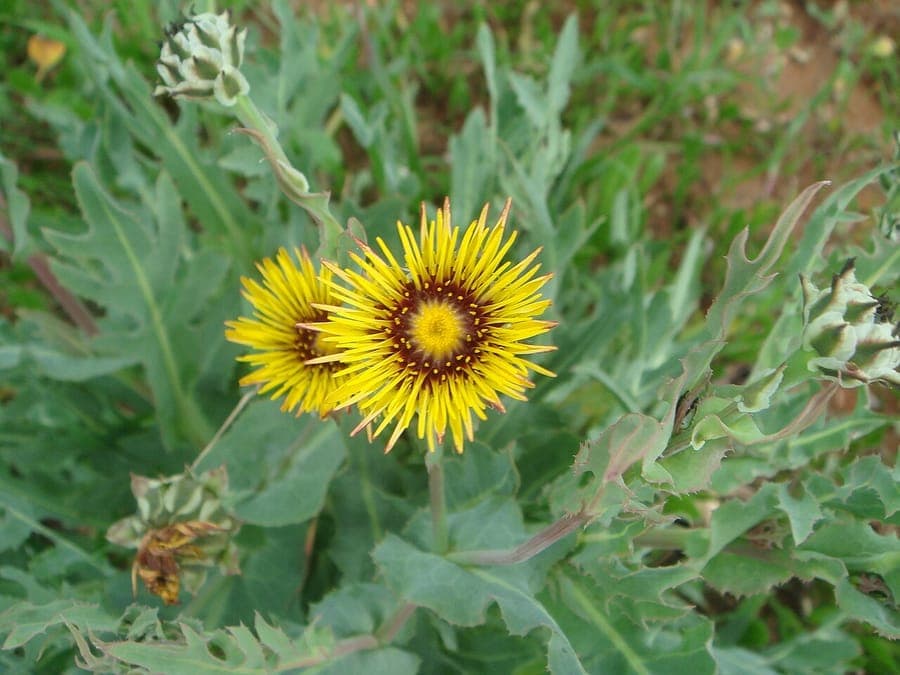
Xemenendura / CC BY-SA 4.0, via Wikimedia Commons
Reichardia picroides: complete guide
Reichardia picroides
¿Quieres ver Reichardia picroides: complete guide en tu jardín?
1 minuto, sin tarjeta de crédito
Overview
Reichardt picroides, commonly called common brighteyes or French scorzonera, is a sturdy herbaceous plant from the Asteraceae family. This Mediterranean native thrives in dry, sunny conditions throughout the Mediterranean basin and North Africa. With its cheerful yellow daisy flowers and weather-resistant nature, it's a practical choice for dry gardens, Mediterranean plantings, and for gardeners who value low-maintenance growth.
Reichardt picroides is a workhorse - not a showstopper beauty, but a reliable producer of summery yellow flowers with minimal effort.
Appearance and bloom
The plant forms loose, branched herbaceous masses reaching approximately 50 centimeters in height. Leaves are green, elongated, and typically somewhat rough or spiny-feeling. The flowers are characteristic of the Asteraceae family - yellow daisy flowers (actually composite blooms) about two centimeters across.
Bloom runs April through July, with peak flowering in May and June. Flowers attract beneficial insects and butterflies. The plant tolerates shade poorly, but in full sunlight it's a tireless bloomer.
Ideal location
Reichardt picroides is a sun-worshipper - performs best in full sunlight. Minimum six hours direct sun daily is ideal. Place it in warm, sunny locations, against south-facing walls, or on raised beds. This Mediterranean native tolerates dry conditions well and is perfect for rooftops, rock gardens, and dry steep slopes.
Soil requirements
The plant actually grows better in poor soil than rich, fertilized earth. Heavy clay is undesirable; the plant tolerates well-draining, sandy, or shell-like soils. Ideal pH ranges 7.5 to 8.0. In temperate climates, you might grow this plant in containers on a terrace or rockery.
Diseño gratis
¿Quieres ver Reichardia picroides: complete guide en tu jardín? Crea un diseño gratis ahora.
Watering
Reichardt picroides is drought-tolerant once established. Water generously when you first plant it (two to four weeks) until the root system is mapped out. After establishment, you can water as normally for a Mediterranean specimen - dry in summer, slightly moist in spring and fall.
Excessive water damages this plant. In rainy climates like the Netherlands, you'd be wise to consider raised beds or container growing to prevent waterlogging.
Pruning and maintenance
Reichardt picroides requires minimal intervention. Spent flowers can be removed, but this isn't necessary for plant health. In spring, stems can be lightly cut back to encourage more cohesive, compact growth.
The plant requires no formal pruning or training. Let it simply do its thing. Dead foliage and stems can be removed in autumn.
Maintenance calendar
April to May: Check water; plant will begin growth. June to July: Peak bloom; water only in extreme drought. August to October: Bloom fades; lightly cut back if desired. November to March: Minimal care; virtually no water needed.
Winter hardiness
Reichardt picroides is considerably less winter-hardy than many European garden plants. It's treated as tender annual in many parts of northern Europe. In Mediterranean zones (French Riviera, southern Spain, Greece, southern Italy), it survives outdoors. In the Netherlands, you'd treat it as annual or grow in containers for protected overwintering.
In warmer climate zones (USDA 9-11), it's a perennial plant.
Companion plants
Reichardt picroides combines well with other Mediterranean plantings:
- Helichrysum: silvery foliage against yellow flowers
- Lavandula: purple flowers and complementary texture
- Salvia: yellow flowers and herbaceous forms
- Euphorbia: dark foliage with yellow flowers
Closing
Reichardt picroides is an underrated Mediterranean plant for dry, sunny gardens. While less cold-hardy than many alternatives, its water-sparing and flower-abundant growth under ideal conditions rewards every effort. In southern Europe, it remains a native preference. For more Mediterranean and drought-tolerant planting ideas, visit gardenworld.app.
¿Quieres ver Reichardia picroides: complete guide en tu jardín? Crea un diseño gratis ahora.
Sube una foto, elige un estilo y obtén un diseño fotorrealista con lista de plantas en menos de un minuto.
Sin tarjeta de crédito


Plantas similares
Calendula stellata: complete guide
Calendula stellata
Complete guide to Calendula stellata, the star-flowered marigold from Sicily: location, soil, watering and companion planting tips.
Korean chrysanthemum: complete guide
Chrysanthemum x rubellum
Chrysanthemum x rubellum is a hardy autumn perennial with single pink to copper flowers from August to November. Care and combinations.
Helianthus divaricatus: complete guide
Helianthus divaricatus
Helianthus divaricatus is a North American woodland sunflower with yellow summer blooms, ideal for naturalistic borders and shady edges.