
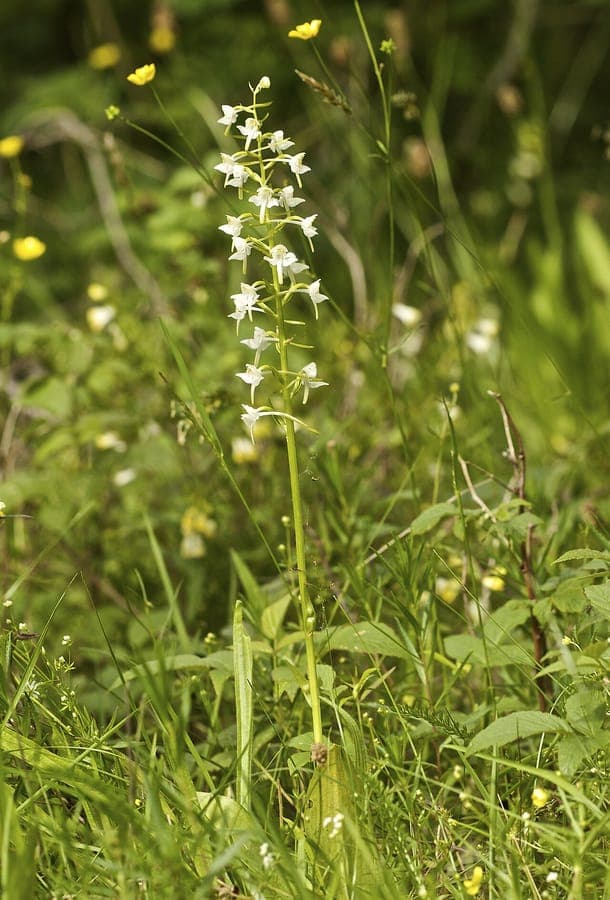
Jörg Hempel / CC BY-SA 3.0 de, via Wikimedia Commons
Greater Butterfly-Orchid: complete guide
Platanthera chlorantha
¿Quieres ver Greater Butterfly-Orchid: complete guide en tu jardín?
1 minuto, sin tarjeta de crédito
Overview
Greater butterfly-orchid (Platanthera chlorantha) is an impressive forest-dwelling orchid thriving from Europe to northern Iran in natural partial shade and humus-rich woodland soils. With more robust presence than its relative lesser butterfly-orchid, this plant offers a more forgiving option for naturalistic gardens and woodland edges. The striking green-yellow flowers with pleasant fragrance make it a valuable addition for those with patience and orchid cultivation knowledge.
Appearance and Bloom
Greater butterfly-orchid forms two large, prominent basal leaves (10-25 cm long) from which a sturdy flower stem rises to 50 cm tall. From June to July, green-yellow flowers appear in a dense, elongated spike - they're larger than lesser butterfly-orchid and have two long spurs. The blooms release pleasant, sweet fragrance especially evenings. After flowering, seed pods form containing microscopically fine seeds. This plant also dies back after seed-set and re-emerges from small tubers next spring.
Ideal Location
Greater butterfly-orchid prefers partial to light shade - roughly 2-4 hours of morning light, no harsh midday sun. In full sun foliage scorches, but excessive shade prevents blooming. Ideally it grows under light deciduous trees (birch, maple) with dappled light and high moisture. The plant tolerates moderate wind. Very windy, dry locations are unsuitable.
Soil
Greater butterfly-orchid demands very well-draining, humus-rich soil with abundant organic matter. The plant grows best in humus-rich woodland soils with high moss and leaf litter content. pH should be slightly acidic to neutral (5.0-6.5). In gardens, amend soil with up to 60% rotted leaves, birch bark, decomposed wood, or special orchid mix. Completely avoid artificial fertilizers. Heavy clay must be broken with sand and organic material. Good drainage is essential for plant health.
Diseño gratis
¿Quieres ver Greater Butterfly-Orchid: complete guide en tu jardín? Crea un diseño gratis ahora.
Watering
Moisture balance remains critical for survival. During growth (April-May), moisture must stay even - water carefully with rainwater. In summers (post-blooming) slightly drier is acceptable, but never completely dry. In containers monitor regularly - keep growing medium moderately to modestly moist. In very dry periods, weekly watering may be needed. Stagnation and waterlogging are equally harmful as drought - ensure perfect balance and excellent drainage.
Pruning
No pruning is required. Leave flower stems standing until seed ripens and falls (July-August). Gently remove dead foliage in September. Damaged or diseased leaves can be removed immediately. The plant will naturally withdraw after seed-set.
Maintenance Calendar
January-February: Plant dormant; carefully check moisture. March-April: Plant from containers; intensively monitor moisture. May-June: Promote blooming through constant, gentle moisture. July-August: Seeds ripen; gradually reduce watering. August-September: Remove dead foliage; seeds fall. October-November: Plant dormant; maintain minimal moisture. December: Protect container tubers against frost.
Winter Hardiness
Greater butterfly-orchid is hardy to -15 to -18 degrees Celsius in well-drained woodland soils. In containers be more careful with winter moisture. Snow isn't problematic. Young plants in first two years deserve protection with dry leaf mulch. In extremely dry winters, add minimal water amounts to prevent tuber desiccation.
Companion Plants
Greater butterfly-orchid fits partial shade woodland edges with other delicate flowers: wood anemone, violets, woodland forget-me-not, and other moisture-loving woodland flora. Avoid dominant perennials claiming space. Partner with native, humus-rich groundcovers like ivy and evergreen ferns. The plant wants quiet, well-draining environment.
Closing Thoughts
Greater butterfly-orchid is for patient gardeners who treasure botanical rarities. This protected plant is precious and requires knowledge and care. Obtaining plants can be challenging - work with specialty orchid retailers or conservation organizations. Gardenworld.app helps devise suitable plant combinations for shaded forest gardens. Give greater butterfly-orchid an ideal partial-shade location and you'll be rewarded with green-yellow, fragrant blooms attracting insects.
¿Quieres ver Greater Butterfly-Orchid: complete guide en tu jardín? Crea un diseño gratis ahora.
Sube una foto, elige un estilo y obtén un diseño fotorrealista con lista de plantas en menos de un minuto.
Más de 10.000 jardines diseñados
Sin tarjeta de crédito


Plantas similares
Lesser Butterfly-Orchid: complete guide
Platanthera bifolia
Lesser butterfly-orchid is delicate European orchid with fragrant white flowers and two basal leaves. Ideal for naturalistic borders, shade, and moist woodland soils. Learn cultivation and protection.
Orchis militaris: complete guide
Orchis militaris
Military orchid with rosy-pink flowers blooming May-June. Extremely hardy and ideal for sunny grassland.
Cephalanthera rubra: complete guide
Cephalanthera rubra
Red helleborine is a protected orchid with delicate pink-red flowers. A woodland treasure for part-shade gardens with well-drained, neutral soils.