
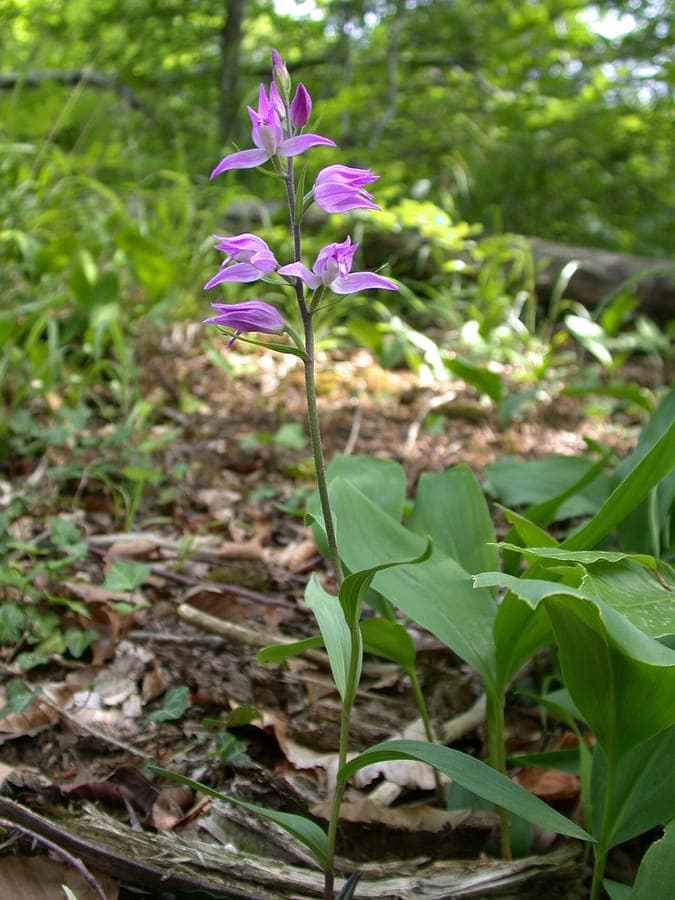
Olivier Pichard / CC BY-SA 3.0, via Wikimedia Commons
Cephalanthera rubra: complete guide
Cephalanthera rubra
¿Quieres ver Cephalanthera rubra: complete guide en tu jardín?
1 minuto, sin tarjeta de crédito
Overview
Cephalanthera rubra, commonly known as red helleborine, is a protected orchid from the Orchidaceae family. This slender, graceful plant grows to 20-50 cm and flowers with characteristic pink to red-violet blooms. It's a true gem for connoisseurs of subtle wildflora and protected natural values.
Appearance and Bloom Cycle
Red helleborine features narrow, lance-shaped leaves elegantly arranged along the stem. The flowers are the highlight: soft pink to deep red-violet, exquisitely formed with pronounced lips. They appear from May through June in dense racemes at the plant's apex.
Each flower reaches approximately 2-3 cm in length and possesses a refined, almost bird-like appearance. Bloom period is fleeting, typically 2-3 weeks, requiring careful observation to fully appreciate.
After blooming, interesting seed pods form that patiently await favorable dispersal.
Ideal Location
Red helleborine thrives in part-shade to light shade, such as beneath deciduous trees or along woodland edges. Some sun in early spring is welcome, before trees fully leaf out. Full sun is unsuitable and can exhaust the plant.
Place this orchid in sheltered corners, beneath low-branching trees, or in naturalistic woodland environments. The plant feels most at home in moderated conditions.
Soil Requirements
The key is well-drained, humus-rich soil with stable moisture. The ideal pH range is neutral to slightly alkaline (6.5-7.5), distinguishing this species from the more acid-loving Cephalanthera longifolia.
A mixture of potting soil, leaf mold, and coarse sand improves drainage. Heavy clay soils are problematic.
Diseño gratis
¿Quieres ver Cephalanthera rubra: complete guide en tu jardín? Crea un diseño gratis ahora.
Watering
Red helleborine needs evenly moist, but not waterlogged soil. Regular rainfall or hand-watering is essential during the growing season. After blooming and during maturation, moisture can be slightly reduced, but complete drought is harmful.
If grown outdoors in open ground, provide supplemental water during dry summers.
Pruning and Maintenance
Minimal maintenance required. After blooming, let the plant quietly complete seed production. Only in autumn, when all foliage has withered, remove dead parts.
Self-propagation is difficult; best achieved through delicate seed under highly sterile conditions.
Maintenance Calendar
Spring (April-May): Monitor, provide water, manage moisture Summer (June-August): Maintain shade, water regularly during drought Autumn (September-October): Retain moisture, leave seed heads Winter (November-March): Minimal water, dormancy
Winter Hardiness
Cephalanthera rubra is hardy to USDA zone 4 (-34°C). In Netherlands, Belgium, and France, it survives winters without protection. Underground structures survive and regrow in spring.
Companion Plants
Red helleborine thrives alongside:
- Woodland ferns (Dryopteris, Polystichum)
- Solomon's seal (Polygonatum)
- Dwarf holly (Ilex)
- Forest mosses (Polytrichum, Hypnum)
Light-dappled understory beneath mature deciduous trees yields best results.
Closing Remarks
Cephalanthera rubra is an orchid for the patient, discerning grower who appreciates refinement. Finding this plant is challenging; specialized nurseries occasionally offer specimens. In many countries, this orchid is protected; wild collection is prohibited.
With gardenworld.app, design subtle woodland gardens where red helleborine blooms discreetly. Patience is essential; success hinges on careful soil preparation and moisture management.
Try gardenworld.app to design your forest refuge, where this elegant orchid flourishes.
¿Quieres ver Cephalanthera rubra: complete guide en tu jardín? Crea un diseño gratis ahora.
Sube una foto, elige un estilo y obtén un diseño fotorrealista con lista de plantas en menos de un minuto.
Más de 10.000 jardines diseñados
Sin tarjeta de crédito

