
Wikimedia Commons / CC BY-SA 3.0, via Wikimedia Commons
Cephalanthera longifolia: complete guide
Cephalanthera longifolia
¿Quieres ver Cephalanthera longifolia: complete guide en tu jardín?
1 minuto, sin tarjeta de crédito
Overview
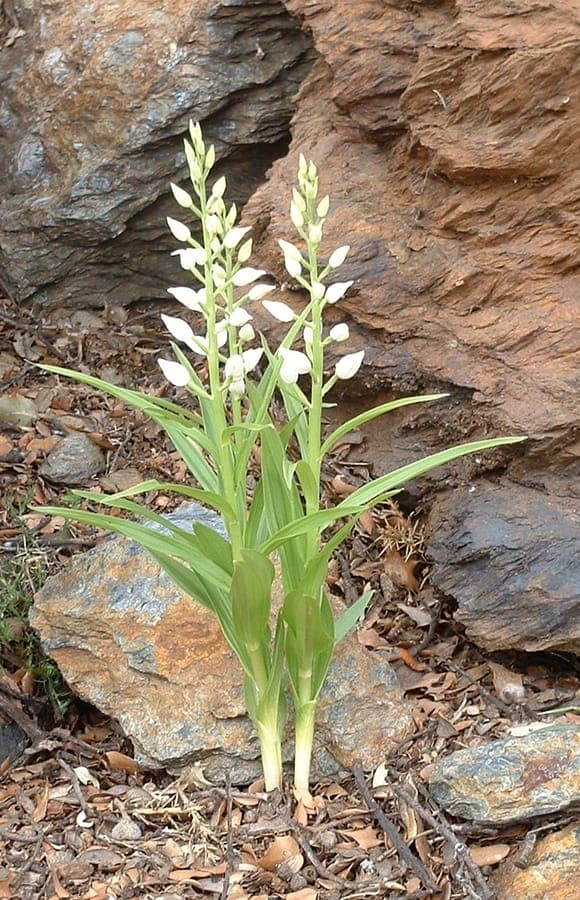
Cephalanthera longifolia, known as narrow-leaved helleborine or white helleborine, is a rare, protected orchid from the Orchidaceae family. This elegant, European native orchid flowers with discrete white blooms and reaches 20-50 cm tall. For devotees of subtle natural beauty and woodland ecosystems, this is an absolute treasure.
Appearance and Bloom Cycle
Narrow-leaved helleborine features narrow, lance-shaped leaves arranged along the entire stem, creating a graceful silhouette. Flowers appear in April through May, small but elegant, approximately 1.5 cm across, pure white to soft yellow. They cluster densely in a raceme-like inflorescence at the plant's apex.
Each flower has a subtle, nearly colorless appearance that doesn't shout for attention - exactly what connoisseurs prefer. Bloom period is brief, typically 2-3 weeks, requiring careful observation.
Ideal Location
Narrow-leaved helleborine thrives in deep shade to partial shade beneath mature trees or along woodland edges. The plant tolerates additional light in early spring before trees leaf out. Full sun is unsuitable; the plant wilts here.
Place this orchid in sheltered garden corners, beneath deciduous trees, or in the half-shade of walls. The plant feels at home in woodland-like environments.
Soil Requirements
The crucial requirement is humus-rich, well-draining soil that remains consistently moist without waterlogging. Acidic to slightly acidic soil (pH 5.5-6.5) is ideal, though some populations thrive on neutral substrates.
Amend soil generously with leaf mold, compost, and other organic materials before planting. A mulch layer of fallen leaves helps maintain soil texture.
Diseño gratis
¿Quieres ver Cephalanthera longifolia: complete guide en tu jardín? Crea un diseño gratis ahora.
Watering
Narrow-leaved helleborine needs evenly moist soil throughout the growing season. This isn't the same as wet; waterlogging and stagnation are harmful. During dry periods, supplement water carefully.
During dormant seasons, moisture requirements decrease, but the plant must never completely dry out.
Pruning and Maintenance
This plant requires minimal maintenance. After blooming, allow the plant to follow its natural cycle. Only in autumn, when foliage has completely withered, remove dead parts.
Allow seed to fall for natural regeneration, though propagating from seed is challenging.
Maintenance Calendar
Spring (March-May): Monitor, occasional watering, moisture checks Summer (June-August): Maintain shade, regular water during dry spells Autumn (September-October): Retain moisture, remove dead foliage Winter (November-February): Minimal water, dormancy
Winter Hardiness
Cephalanthera longifolia is hardy to USDA zone 5 (-28°C) and survives without issue in most European regions. In severe winters, above-ground parts may die, but underground structures survive and regrow in spring.
Companion Plants
Narrow-leaved helleborine thrives alongside:
- Woodland mosses
- Ferns (Polystichum, Dryopteris)
- Solomon's seal (Polygonatum)
- Dwarf holly cultivars
Ensure companion plants don't grow too vigorously and overshadow the delicate orchid.
Closing Remarks
Narrow-leaved helleborine is for the true plant devotee who appreciates subtle elegance. Finding this plant requires specialized nurseries, and protected status in many regions means wild collection is prohibited. With gardenworld.app, design woodland shade gardens where narrow-leaved helleborine plays a quiet, natural role. Patience, careful soil preparation, and attention to moisture are keys to success.
Use gardenworld.app to craft your woodland haven, with this orchid as its hidden jewel.
¿Quieres ver Cephalanthera longifolia: complete guide en tu jardín? Crea un diseño gratis ahora.
Sube una foto, elige un estilo y obtén un diseño fotorrealista con lista de plantas en menos de un minuto.
Más de 10.000 jardines diseñados
Sin tarjeta de crédito

