
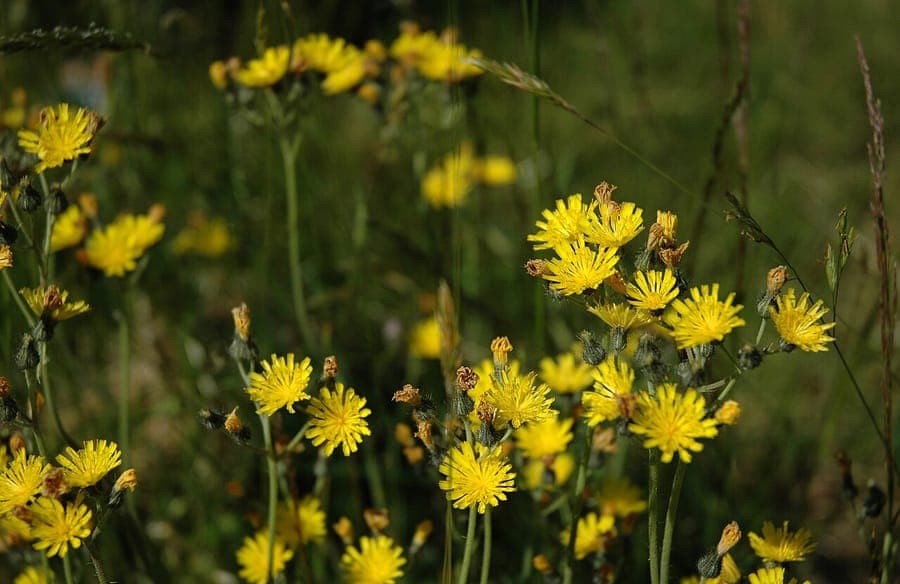
Konstantin Ryabitsev from Montréal, Canada / CC BY-SA 2.0, via Wikimedia Commons
Pilosella caespitosa: complete guide
Pilosella caespitosa
¿Quieres ver Pilosella caespitosa: complete guide en tu jardín?
1 minuto, sin tarjeta de crédito
Overview
Pilosella caespitosa, also known as Yellow fox-and-cubs or Meadow hawksbeard, is a modest yet attractive plant from the Asteraceae family. This plant grows naturally in Europe to Central Siberia and the Caucasus. With its sunny yellow flowers and compact, clumping root system, it offers a useful element for wild gardens and borders.
The plant grows slowly to moderately and forms dense leafy rosettes that grow 10 to 20 centimeters high. Despite its modest size, the yellow flowers are a source of nectar for many insects. This is a true European plant with a long natural history in gardens.
Appearance and Bloom
Yellow fox-and-cubs has narrow, hairy light green leaves that grow in dense rosettes. The leaves are elongated and hairy, with a clearly visible midvein. These form compact clumps at the base of the plant, contributing to its attractiveness.
In late spring to early summer, thin, upright flower stems appear with single to several yellow flowers. The flowers are about 1.2 to 1.5 centimeters in diameter and have an excellent yellow color. They bloom for several weeks and attract bees, butterflies, and other pollinating insects.
Ideal Location
Pilosella caespitosa grows best in full sun to partial light. Place this plant where it receives four to six hours of direct sunlight daily. Full sun promotes optimal flowering and compact growth.
The plant is very hardy and suitable for USDA zones 3-7, which includes virtually all Dutch gardens. It can grow on sheltered mountain slopes or in dry, sandy soils, making it ideal for various garden situations.
Soil
Yellow fox-and-cubs is not very particular about soil type. It grows well in sandy, loamy, and even clay soils. The plant prefers a pH between 5.5 and 7.5, but also tolerates somewhat basic soils.
The plant prefers well-draining soils and does poorly in wet, muddy soil. Mixing sand, gravel, or fine bark into heavy soil helps improve drainage.
Diseño gratis
¿Quieres ver Pilosella caespitosa: complete guide en tu jardín? Crea un diseño gratis ahora.
Watering
Once established, Yellow fox-and-cubs is very drought-tolerant. However, provide regular water during the first growing season to develop good roots. Once established, extra water is only needed during very prolonged dry periods.
Ensure the soil does not become waterlogged; this can be harmful. Plant on raised beds or slopes for optimal drainage.
Pruning
Minimal pruning is needed. Remove spent flower stems after blooming to promote neatness and encourage more flowering. In late autumn, old leaves can be removed in preparation for winter.
The plant naturally forms itself into a compact shape and requires no regular pruning.
Maintenance Calendar
Spring (March-May): Inspect plant for winter damage. Remove dead leaves. Water regularly during dry periods.
Summer (June-August): Enjoy yellow flowers. Cut spent flower stems after blooming. Water minimally except in dry periods.
Autumn (September-October): Plant slows down. No pruning needed. Leave leaves for winter protection.
Winter (December-February): Plant is mostly dormant. May appear green in mild winters. No maintenance needed.
Winter Hardiness
Yellow fox-and-cubs is very hardy and can survive all Dutch winters. The plant remains mostly green and will have a neat appearance even in harsh winters. No protection needed.
Companion Plants
Combine with other alpine and mountain plants such as saxifrage and alpine phlox. In normal gardens, plant alongside other Pilosella species and low-growing sedum. Low-growing geranium also works well.
Closing
Pilosella caespitosa is an excellent choice for gardeners who prefer modest, maintenance-friendly plants with charm. With its yellow flowers, winter hardiness, and flexibility in growing conditions, it makes a valuable addition to wild, alpine, and formal gardens.
Find this plant at local garden centers or specialized plant nurseries. Plant rosettes 20 to 30 centimeters apart in groups for best effect. Enjoy years of blooming with minimal maintenance. More information on GardenWorld.app.
¿Quieres ver Pilosella caespitosa: complete guide en tu jardín? Crea un diseño gratis ahora.
Sube una foto, elige un estilo y obtén un diseño fotorrealista con lista de plantas en menos de un minuto.
Más de 10.000 jardines diseñados
Sin tarjeta de crédito

