
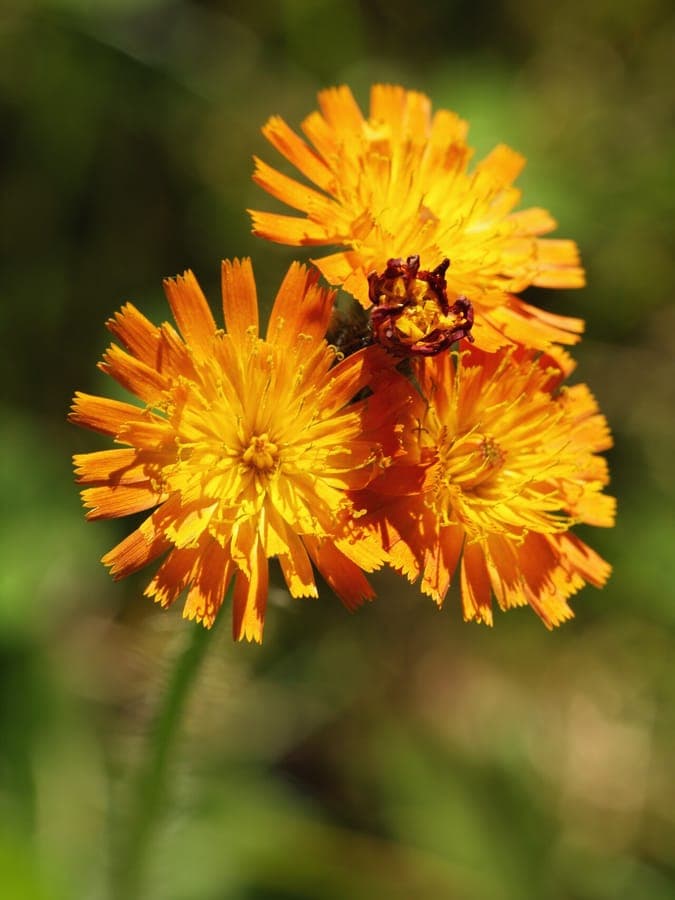
Jörg Hempel / CC BY-SA 3.0 de, via Wikimedia Commons
Pilosella aurantiaca: complete guide
Pilosella aurantiaca
¿Quieres ver Pilosella aurantiaca: complete guide en tu jardín?
1 minuto, sin tarjeta de crédito
Overview
Pilosella aurantiaca, also known as Fox-and-cubs or Orange Hawksbeard, is a charming plant from the Asteraceae (daisy family). This plant occurs naturally in Europe and the Mediterranean region. With its vivid orange-red flowers and tough growing habit, it makes an excellent ground cover for gardens of all sizes.
The plant forms dense colonies via underground runners and grows 15 to 30 centimeters high. Despite its minimal maintenance requirements, it attracts insects and adds color to any lawn or border. It is also known as a lawn pest because it can form colonies when left uncontrolled.
Appearance and Bloom
Fox-and-cubs has rosette-like, hairy green leaves with hairy stems. The leaves form compact rosettes at the base of the plant. In spring and early summer, the plant produces thin, unbranched or slightly branched flower stalks with clusters of vibrant orange-red flowers.
Each flower is about 1 to 1.5 centimeters in diameter and blooms for many weeks. The numerous flowers on each stalk create a spectacular flower display. After blooming, the flowers produce seed heads with feathery hairs that are dispersed by wind.
Ideal Location
Pilosella aurantiaca thrives in full sun to partial light positions. Place this plant where it receives at least four hours of direct sunlight daily. Full sun promotes optimal flowering, although the plant can also grow in partial shade.
The plant is extremely hardy and suitable for USDA zones 3-8, which includes virtually all Dutch gardens. This plant is also salt-tolerant, making it suitable for coastal and urban garden situations.
Soil
Fox-and-cubs is extremely flexible with soil requirements. It grows in sandy, clay, or loamy soils and even tolerates poor, depleted soil. A pH range of 4.5 to 8.5 is acceptable. This plant prefers dry to normally wet soils and does poorly in constantly wet soil.
No preparation is usually necessary. Simply plant directly into existing garden soil. The plant will adapt and grow vigorously.
Diseño gratis
¿Quieres ver Pilosella aurantiaca: complete guide en tu jardín? Crea un diseño gratis ahora.
Watering
Once established, Fox-and-cubs is very drought-tolerant and requires minimal water. Provide regular water during the first growing season to help establishment. After that, water is only needed during prolonged dry periods.
Limited water also helps restrict self-seeding and spread. Plant groups on raised beds or slopes where drainage is natural, preventing waterlogging and fungal problems.
Pruning
Minimal pruning is needed. Cut flower stalks after blooming to encourage more flowering and limit unwanted seed dispersal. Cut old leaves in spring if a clean appearance is desired.
Avoid aggressive pruning; the plant thrives on growing slowly.
Maintenance Calendar
Spring (March-April): Remove old leaves. Plant new rosettes in prepared beds. Water regularly.
Summer (May-August): Enjoy spectacular orange-red flowers. Cut flower stalks after blooming. Water sparingly.
Autumn (September-October): Plant begins to slow down. No pruning needed. Leave leaves for winter protection.
Winter (December-February): Plant is mostly dormant. May remain green in mild winters. No maintenance.
Winter Hardiness
Fox-and-cubs is extremely hardy and can survive all Dutch winters. The plant remains green and will flower in mild winters. No special protection is needed.
Companion Plants
Combine with other low-growing plants such as sedum and phlox. In wild gardens, it grows well alongside other Pilosella species and other nectar-rich plants. It attracts butterflies and bees.
Closing
Pilosella aurantiaca is a wonderful choice for gardeners seeking a colorful, low-maintenance ground cover. With its vivid orange-red flowers, tough growing habit, and tolerance for diverse conditions, it makes a great addition to wild and formal gardens.
Find this plant at specialty garden centers. Plant rosettes 30 centimeters apart in groups for maximum impact. Enjoy years of summer flowering. More information on GardenWorld.app.
¿Quieres ver Pilosella aurantiaca: complete guide en tu jardín? Crea un diseño gratis ahora.
Sube una foto, elige un estilo y obtén un diseño fotorrealista con lista de plantas en menos de un minuto.
Más de 10.000 jardines diseñados
Sin tarjeta de crédito


Plantas similares
Pilosella caespitosa: complete guide
Pilosella caespitosa
Learn how to care for Yellow fox-and-cubs. Tips for growth, flowering and use in gardens across Europe.
Picris hieracioides: complete guide
Picris hieracioides
Learn how to care for Hawksbeard. Tips for growth, flowering and use in natural and wild gardens.