
Wikimedia Commons / Public domain, via Wikimedia Commons
Picris hieracioides: complete guide
Picris hieracioides
¿Quieres ver Picris hieracioides: complete guide en tu jardín?
1 minuto, sin tarjeta de crédito
Overview
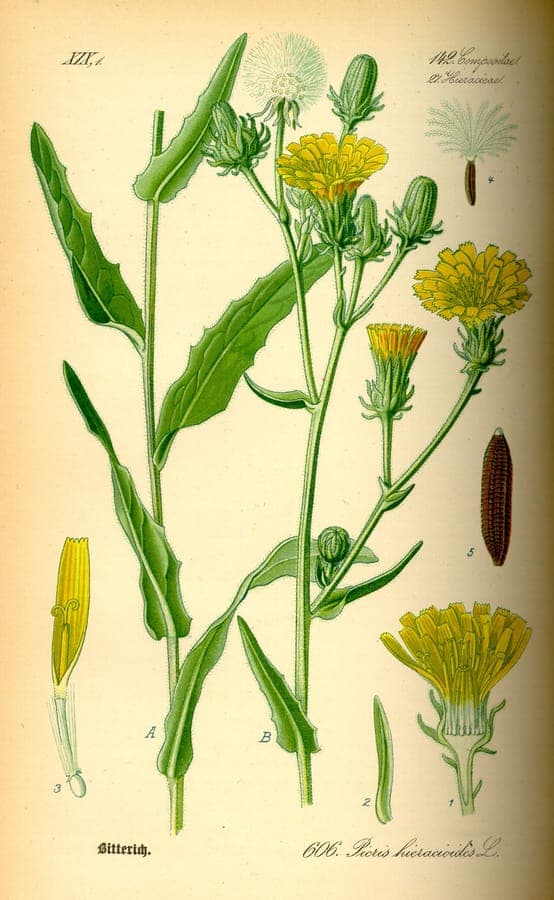
Picris hieracioides, commonly known as Hawksbeard or Ox-tongue Hawksbeard, is a fascinating member of the Asteraceae (daisy family). This biennial or short-lived perennial plant grows naturally in temperate Eurasian regions and produces yellow flowers that attract nectar-loving insects. With full growth, this plant can reach heights of up to 80 centimeters.
Hawksbeard is a robust plant that easily adapts to many soil and climate conditions. It is popular in wild gardens, meadows, and as a medicinal herb. The plant has a deep taproot system that makes it extremely drought-tolerant.
Appearance and Bloom
Hawksbeard has rough, dark green leaves with sharp edges that grow in a rosette. These leaves have a characteristic thistle-like shape with spiny edges. The plant produces a hollow, hairy stem that branches and carries many small yellow flowers.
The flowers are about 1.5 centimeters in diameter and appear from May to September. Each flower consists of numerous thin, yellow petals that give an attractive appearance. After flowering, the blooms produce seed heads that are dispersed by wind, promoting self-seeding.
Ideal Location
Picris hieracioides thrives in full sun to partial light conditions. Place this plant where it receives at least four to six hours of direct sunlight daily. This promotes full flowering and compact growth.
The plant is extremely hardy and grows throughout Europe from south to north. It is suitable for USDA zones 3-9, meaning it grows in virtually all Dutch climates. This plant can grow in ditches as well as on raised beds.
Soil
Hawksbeard is not particular about soil type. It grows well in sandy, clay, and loamy soils as long as drainage is acceptable. The plant prefers slightly acidic to neutral pH (6.0-7.5), but also tolerates more basic soils.
Poor soils are not a problem; this plant thrives in rough conditions. No special preparation is needed. Simply plant directly into garden soil.
Diseño gratis
¿Quieres ver Picris hieracioides: complete guide en tu jardín? Crea un diseño gratis ahora.
Watering
Once established, Hawksbeard is very drought-tolerant due to its long taproot system. Provide regular water during the first growing season to develop strong roots. Once established, supplemental water is only needed during prolonged dry periods.
Excessive water can be harmful and may stimulate fungal diseases. This is a plant for dry to normal conditions, not for wet soil.
Pruning
Minimal pruning is needed. Remove dead or damaged leaves and flowers as needed. This promotes cleaner appearance and stimulates more flowering. After blooming, remove seed heads if you want to prevent self-seeding, or leave them for natural reproduction.
The plant will form itself without aggressive pruning.
Maintenance Calendar
Spring (March-April): Plant seeds directly or seedlings outside after last frost. Water regularly.
Summer (June-August): Enjoy yellow flowers. Water sparingly. Cut spent flowers for more blooms.
Autumn (September-October): Leave seed heads for self-seeding next year. Remove old leaves.
Winter (December-February): Plant is dormant. No maintenance needed. Seeds can overwinter in soil.
Winter Hardiness
Hawksbeard is very hardy and can overwinter in virtually all Dutch regions. Biennial plants will produce seed and die at the end of the second growing season. Once established, it will self-seed in subsequent years.
Companion Plants
Combine Hawksbeard with other wildflowers such as cherry herb, coltsfoot, and wildflowers. In formal gardens, it can be used as an accent in borders. It attracts butterflies, bees, and other insects.
Closing
Picris hieracioides is an excellent choice for gardeners seeking robust, low-maintenance plants. With its yellow flowers, drought tolerance, and natural growth pattern, it makes a valuable addition to wild and natural gardens.
Find seeds or young plants at local garden centers. Plant them directly into soil in early spring or fall. This plant will provide years of nectar and self-seeding. For more information, visit GardenWorld.app.
¿Quieres ver Picris hieracioides: complete guide en tu jardín? Crea un diseño gratis ahora.
Sube una foto, elige un estilo y obtén un diseño fotorrealista con lista de plantas en menos de un minuto.
Más de 10.000 jardines diseñados
Sin tarjeta de crédito


Plantas similares
Pilosella aurantiaca: complete guide
Pilosella aurantiaca
Discover Fox-and-cubs care. Tips for growth, flowering and use in wild and border gardens.
Pilosella caespitosa: complete guide
Pilosella caespitosa
Learn how to care for Yellow fox-and-cubs. Tips for growth, flowering and use in gardens across Europe.