
Wikimedia Commons / Public domain, via Wikimedia Commons
Physalis philadelphica: complete guide
Physalis philadelphica
¿Quieres ver Physalis philadelphica: complete guide en tu jardín?
1 minuto, sin tarjeta de crédito
Overview
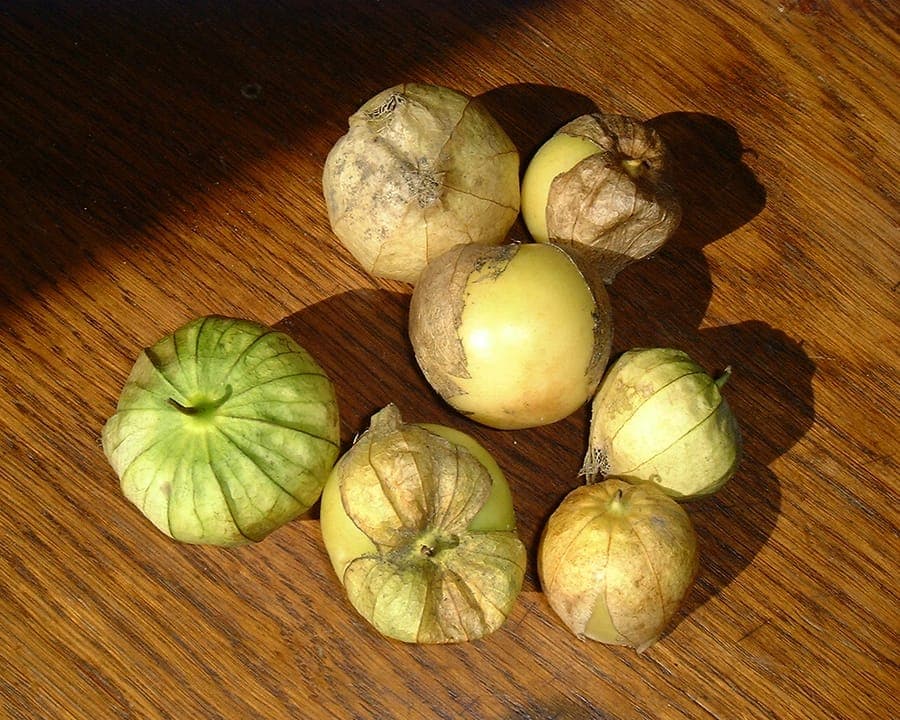
The Mexican husk-tomato (Physalis philadelphica), also known as tomatillo or physalis, is a vegetable-producing plant from the Solanaceae family native to Mexico and Central America. This useful plant produces green or yellow fruits enclosed in papery husks, very similar to the Peruvian ground-cherry but larger and more tart-flavored.
Unlike its relative, the Peruvian ground-cherry, the Mexican husk-tomato is much more used in culinary tradition, especially for salsas and other Mexican sauces. The plant is also relatively easy to grow in warm-climate gardens and produces abundant fruits. This makes it an excellent choice for gardeners who want to grow their own vegetables and experiment with international recipes.
Appearance and bloom
Physalis philadelphica grows as a herbaceous shrub, usually 60 to 120 centimeters tall, which is larger than its relative Physalis peruviana. The plant has sturdy, thick stems and broader leaves that feel rougher than those of Peruvian ground-cherry.
The flowers are small, yellowish-green, and grow slowly in clusters. These flowers are striking because they appear in groups rather than individually. After pollination, fruits form in papery husks that are larger than those of the Peruvian variant.
The fruits themselves grow to about 3 to 5 centimeters in diameter and are usually green, although some cultivars produce yellow fruits. The papery husk becomes thin and web-like as the fruit ripens, indicating that the fruit is ready for harvest.
Ideal location
Physalis philadelphica grows best in warm, sunny locations, just like the Peruvian variant. At least 6 to 8 hours of direct sunlight per day is essential for optimal growth and fruit production.
The plant is somewhat more robust than the Peruvian ground-cherry and can better tolerate variable weather conditions. However, it is still important to provide shelter from strong winds, as the thick stems are larger and can break under extreme stress.
In colder climates, this plant can also be grown in pots. The plant, however, can tolerate slightly colder conditions than Physalis peruviana, so in some temperate climates it can overwinter outdoors with protection.
Soil
The plant thrives in well-draining, fertile soil, just like its relative. A mixture of garden soil, sand and compost (in a 2:1:1 ratio) is ideal. The plant can grow in nutrient-rich soil because this promotes fruit production.
The pH can be neutral to slightly acidic (pH 6.0-7.0). In areas with very poor soil, add generous amounts of organic material before planting. This plant is somewhat more tolerant of heavier soils than Physalis peruviana.
Mulching around the plant not only helps improve moisture retention, but also helps keep the soil cooler in very hot environments.
Diseño gratis
¿Quieres ver Physalis philadelphica: complete guide en tu jardín? Crea un diseño gratis ahora.
Watering
The Mexican husk-tomato needs regular water, especially during the growing season. The soil must remain moist but not waterlogged. Water deeply and less frequently rather than shallowly and frequently.
This plant is slightly more drought-tolerant than Physalis peruviana because it has broader leaves that can absorb more water when watered. However, still provide consistent watering, especially when the plant is flowering and fruiting.
In very hot periods, daily watering may be needed. Regularly check if the soil is moist before watering.
Pruning and maintenance
Physalis philadelphica grows larger and bushier than Physalis peruviana, so careful pruning can be beneficial to keep the plant more compact.
Remove dead or diseased foliage regularly. This improves air circulation and helps prevent fungal infections. In early spring, the plant can be pruned for shape.
Regularly check for insect pests, especially since this larger plant offers more surface area to parasitic insects. Biological control is usually effective.
Maintenance calendar
March to April: Sow seeds or plant young plants. Add fertilizer.
May to June: Growth and flowering begin. Water regularly.
July to August: Peak of fruit production. Frequent harvesting needed.
September to October: Harvest continues. Prepare plant for winter.
Winter hardiness
The Mexican husk-tomato is slightly hardier than Physalis peruviana and can survive short periods of light frost (to about -2 degrees Celsius), especially if well established.
In cold climates, however, the plant will not overwinter and must be treated as an annual crop or brought indoors. In mild Mediterranean climates, the plant can overwinter outdoors with thick mulch protection.
Many gardeners treat this as an annual crop for safety, since the plant grows well from seed each year.
Companion plants
The Mexican husk-tomato combines perfectly with other warm-loving vegetables such as peppers, eggplant and tomatoes. These vegetables have identical growing and watering requirements.
Herbs such as coriander, cilantro and oregano also grow beautifully alongside this plant, creating an authentic Mexican garden experience. This combines the vegetables with the herbs used in traditional recipes.
Other tropical fruits and vegetables can also be grown together in warm-climate gardens.
Closing
The Mexican husk-tomato is an exceptional vegetable for warm gardens, with versatile fruits that can be used in many traditional Mexican recipes. For best results, ensure plenty of sun, regular watering and feeding. The fruits can be eaten fresh, cooked in salsas, or preserved for later use.
Vegetable gardeners and lovers of Mexican cuisine will certainly appreciate this plant. For seeds or plant material, visit local garden centers. Gardenworld.app also offers inspiration for creating themed vegetable gardens. Enjoy growing this versatile and delicious vegetable in your garden.
¿Quieres ver Physalis philadelphica: complete guide en tu jardín? Crea un diseño gratis ahora.
Sube una foto, elige un estilo y obtén un diseño fotorrealista con lista de plantas en menos de un minuto.
Más de 10.000 jardines diseñados
Sin tarjeta de crédito


Plantas similares
Solanum dolichosepalum: complete guide
Solanum dolichosepalum
Discover Solanum dolichosepalum, an Andean nightshade with striking long sepals. Growing tips, hardiness, and companion planting for your patio.
Solanum ripense: complete guide
Solanum ripense
Discover Solanum ripense, a moisture-loving Andean nightshade for pond edges and conservatories. Growing tips, hardiness, and companions.
Solanum tomentosum: complete guide
Solanum tomentosum
Discover Solanum tomentosum, a thorny South African nightshade with felted leaves. Growing tips, hardiness, and companion planting ideas.