
Wikimedia Commons / Public domain, via Wikimedia Commons
Tomatillo: complete guide
Physalis ixocarpa
¿Quieres ver Tomatillo: complete guide en tu jardín?
1 minuto, sin tarjeta de crédito
Overview
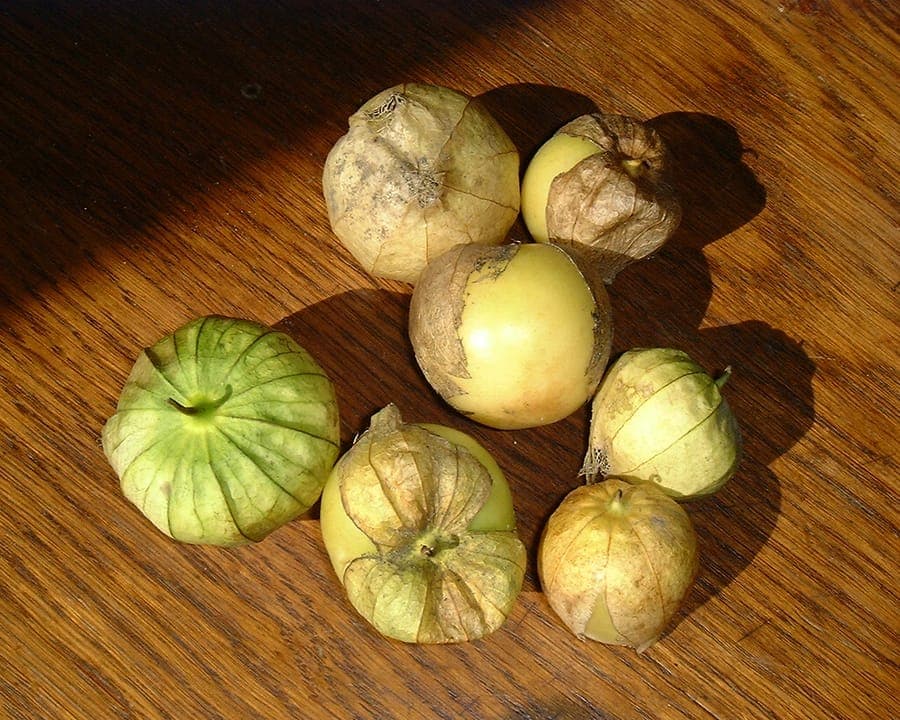
The Tomatillo (Physalis ixocarpa), also called Coqueret or Mexican husk-tomato, belongs to the Solanaceae family. This annual vegetable plant originates from Mexico. The plant is recognized for its unique fruits, enclosed within a papery husk (calyx), that remain green when harvestable. Tomatillos are popular in Mexican cuisine and easy to grow in temperate climates.
Appearance and bloom
The Tomatillo grows as a sprawling shrub 1 to 1.5 meters tall and wide. The leaves are large, green, and slightly rough to the touch. The flowers are small, yellow or greenish-white, hidden among the foliage. Fruits appear after flowering and develop within papery husks. When ripe, fruits measure approximately 2-3 centimeters diameter, light green and firm. The papery husk splits when the fruit is mature.
Ideal location
The Tomatillo thrives best in warm, sunny locations with well-draining soil. The plant requires warm weather and grows best when average temperatures remain above 15 degrees Celsius. Protection from strong wind is important as branches become heavy with fruit.
Soil
This plant grows best in rich, organic matter-containing soil. Add compost or rotted manure when planting. The plant accepts various pH levels but grows better in neutral to slightly acidic soil. Good drainage is essential to prevent root rot.
Diseño gratis
¿Quieres ver Tomatillo: complete guide en tu jardín? Crea un diseño gratis ahora.
Watering
The Tomatillo requires regular water, especially during growth and fruiting. Water at ground level deeply but not daily. Excess water can cause root rot. Drip irrigation systems are ideal. In dry periods, water daily.
Pruning
Pruning promotes better fruiting. Remove the growing tip of young plants when 30 centimeters tall to encourage branching. Remove dead or damaged leaves regularly. You can remove lower leaves to improve air circulation.
Maintenance calendar
April-May: Seed sowing indoors. May-June: Transplanting and staking. June-July: Flowers and first fruits. July-August: Harvesting green tomatillos. August-September: Final harvest before frost.
Winter hardiness
The Tomatillo is not winter-hardy. It dies as soon as frost appears. In temperate climates it must be replanted annually. In warm regions it can grow perennially if protected from frost.
Companion plants
The Tomatillo grows well with other summer vegetables such as tomato, pepper, and eggplant. Avoid planting together with other Solanaceae relatives that share similar pest diseases. Basil and other herbs help. Flowering shrubs attract pollinators.
Closing
The Tomatillo is a fantastic choice for home vegetable growers wanting to try exotic crops. With careful attention, this plant yields abundantly. Find seedlings at garden centers, or sow your own. Try Mexican recipes with your own tomatillos. Learn more on gardenworld.app.
Discover more plant guides on gardenworld.app.
¿Quieres ver Tomatillo: complete guide en tu jardín? Crea un diseño gratis ahora.
Sube una foto, elige un estilo y obtén un diseño fotorrealista con lista de plantas en menos de un minuto.
Más de 10.000 jardines diseñados
Sin tarjeta de crédito


Plantas similares
Solanum dolichosepalum: complete guide
Solanum dolichosepalum
Discover Solanum dolichosepalum, an Andean nightshade with striking long sepals. Growing tips, hardiness, and companion planting for your patio.
Solanum ripense: complete guide
Solanum ripense
Discover Solanum ripense, a moisture-loving Andean nightshade for pond edges and conservatories. Growing tips, hardiness, and companions.
Solanum tomentosum: complete guide
Solanum tomentosum
Discover Solanum tomentosum, a thorny South African nightshade with felted leaves. Growing tips, hardiness, and companion planting ideas.