
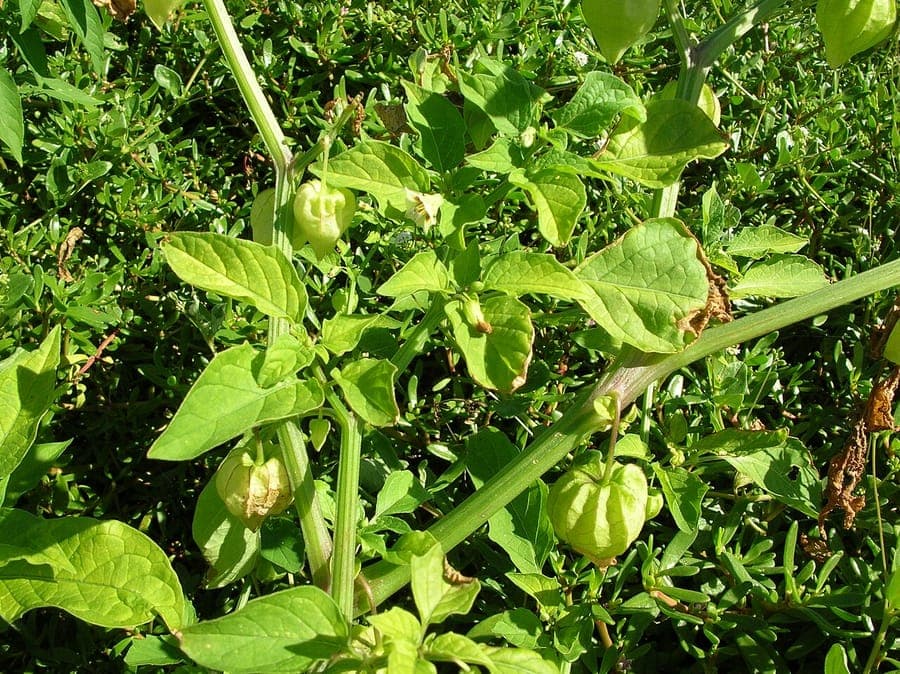
Forest & Kim Starr / CC BY 3.0, via Wikimedia Commons
Physalis angulata: complete guide
Physalis angulata
¿Quieres ver Physalis angulata: complete guide en tu jardín?
1 minuto, sin tarjeta de crédito
Overview
Physalis angulata, also known as balloon-cherry or ground-cherry, is a tropical plant from the Americas with natural range extending from tropical to subtropical America. This plant from the Solanaceae family (tomato family) is beloved for its decorative lantern-shaped fruits inside which small, yellowish berries grow. Although tropical in origin, this plant can also be grown in temperate climates, especially in containers.
The plant is interesting for both ornamental and vegetable gardens, with the bonus of edible fruits.
Appearance and growth
Physalis angulata is an irregularly growing plant that reaches 30 to 60 centimeters tall. The stems are angular (hence the name "angulata") and hairy. The leaves are large, irregularly lobed, and about 5 to 10 centimeters long.
The flowers are small, yellow with a dark spot in the center, and grow in the leaf axils. After flowering, the characteristic lantern-shaped fruits form: thin, net-like covering that becomes round as the fruit ripens.
The fruits are first green, then yellow when ripe. The berries inside are small, round, yellowish berries that taste sweet. The plant blooms from summer to fall and thus produces fruits for a long time.
Ideal location
Physalis angulata wants warmth and full sunlight. Plant it in the warmest spot in your garden or on a south-facing terrace. The plant also grows well in containers that you can move to warmer places.
In cooler climates, you can grow the plant as an annual (summer plant) or in containers that you move indoors in winter. At least 6 to 8 hours of direct sunlight is ideal.
Provide shelter from strong wind as the thin stems can break.
Soil and potting
Physalis angulata grows well in normal, well-draining potting soil or garden soil. In pots use universal potting soil mixed with 20% sand or perlite for better drainage. The plant is not picky about pH.
In garden soil add compost for better water retention. The plant appreciates nutrient-rich soil. Repotting is not necessary, or only if the plant becomes very large.
Watering
Ensure the soil stays evenly moist during the growing season. Water regularly, especially if it is warm and dry. Avoid watering from above as this can promote diseases.
In very dry periods water daily. As it gets cooler and growth slows, water less. In dormancy (if you overwinter the plant indoors) water minimally.
Excessive moisture in winter can cause root rot.
Feeding
Feeding is optional but helps with fruit formation. Give balanced fertilizer (10-10-10 or similar) in half strength every 2 to 3 weeks when the plant is actively growing (May to September).
Too much nitrogen promotes leaf growth at the expense of fruit. A feeding with more phosphorus (e.g. 5-10-5) at the beginning of flowering helps fruit set.
Diseño gratis
¿Quieres ver Physalis angulata: complete guide en tu jardín? Crea un diseño gratis ahora.
Pruning
Pruning is not necessary but you can remove excess growth if the plant becomes too large. Pinch the tops of young plants in May to promote branching.
Remove dead leaves and diseased parts. If your plant sets many fruits, you can remove some leaves so more light reaches the fruits.
Maintenance calendar
March-April: Start seed indoors. Place seedlings carefully outside after frost passes. May-June: Plant in garden or container. Start regular watering. Optional feeding. July-August: Flowering and fruit formation. Regular water. Optional feeding. September-October: Peak of fruit harvest. Reduce water gradually. November-December: Move containers to warm location. Minimal water. End of season. January-February: Plant may die off or go dormant. Start new seed.
Winter hardiness
Physalis angulata is a tropical plant and not winter hardy. The plant dies at freezing temperatures (below 0 degrees). In cooler climates you will treat the plant as an annual.
If you want to save the plant, place it in a warm, bright room in fall (minimum 10 degrees). Give minimal water. In spring you can move it outside again or grow new from seed.
You can save seed for next season.
Pests and diseases
The plant can be affected by whitefly, spider mites, and aphids, especially if it is warm and dry. Regular spraying helps preventively. With infestation use ecological control (sprays based on insect seed oil).
Diseases are usually caused by too much moisture. Ensure good air circulation and water preferably at the base.
Companion plants
Physalis angulata combines well with other tropical vegetables and fruit plants. In ornamental gardens it looks beautiful with yellow-blooming plants such as begonia and lantana.
In containers it can stand alone or with hanging plants as connection. The lantern-shaped fruits look beautiful as background for low-growing plants.
Food and use
The berries of Physalis angulata are edible and have a pleasant sweet-sour taste. They contain much vitamin C. Eat them raw when yellow and falling out of the lantern. They can also be used for jam or liqueur.
Closing
Physalis angulata brings tropical color and flavor to your garden. The decorative fruits make it both ornamental and food plant. In gardenworld.app you can integrate this interesting crop into your garden design.
Use gardenworld.app to incorporate exotic vegetables and ornamental plants in your garden plan with Physalis angulata.
¿Quieres ver Physalis angulata: complete guide en tu jardín? Crea un diseño gratis ahora.
Sube una foto, elige un estilo y obtén un diseño fotorrealista con lista de plantas en menos de un minuto.
Más de 10.000 jardines diseñados
Sin tarjeta de crédito


Plantas similares
Solanum dolichosepalum: complete guide
Solanum dolichosepalum
Discover Solanum dolichosepalum, an Andean nightshade with striking long sepals. Growing tips, hardiness, and companion planting for your patio.
Solanum ripense: complete guide
Solanum ripense
Discover Solanum ripense, a moisture-loving Andean nightshade for pond edges and conservatories. Growing tips, hardiness, and companions.
Solanum tomentosum: complete guide
Solanum tomentosum
Discover Solanum tomentosum, a thorny South African nightshade with felted leaves. Growing tips, hardiness, and companion planting ideas.