
Mason Brock (Masebrock) / Public domain, via Wikimedia Commons
Phlox pilosa: complete guide
Phlox pilosa
¿Quieres ver Phlox pilosa: complete guide en tu jardín?
1 minuto, sin tarjeta de crédito
Overview
Phlox pilosa, commonly known as Prairie phlox, is an early spring bloomer native to North America. This elegant, low-growing perennial grows naturally in prairies, meadows, and forest edges from Canada to Mexico. Prairie phlox is celebrated for its early, colorful blooming in shades of pink, purple, red, white, and sometimes bicolor varieties.
This is a valued plant for front yard designs where early spring color is desired. With bloom periods from April to May, Phlox pilosa brings life to gardens precisely when other plants are still dormant. The plant is also compact in growth, making it ideal for borders and edging.
Appearance and bloom
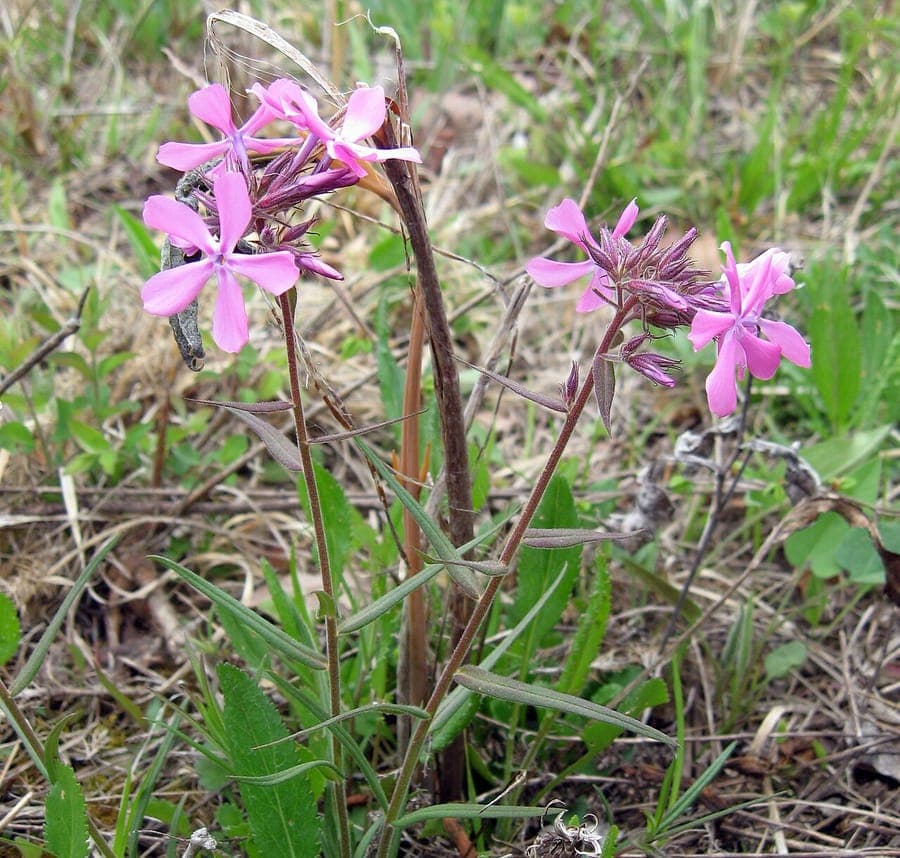
Phlox pilosa grows low and compact, typically reaching only 20 to 40 centimeters in height. The name "pilosa" refers to the hairy or rough texture of the stems. The plant forms creeping mats or tufts with narrow leaves.
Flowers appear in dense, colorful clusters and are four to five millimeters across. They have five rounded petals in numerous colors: deep pink, brick red, purple, white, and sometimes bicolor varieties. The fragrance of the flowers is subtle but pleasant. The bloom period begins in April through May, making this one of the earliest phlox species.
Ideal location
Phlox pilosa thrives best in full sun to light afternoon shade. The plant tolerates shade better than some other phlox species. However, full sun ensures optimal blooming and more compact growth.
The plant is perfect for rock garden designs, borders, and front edges of flower beds. The short growth also makes it suitable for container planting. Position it in visible spots where you can appreciate the beautiful spring color.
Soil
Phlox pilosa thrives on well-draining soil with preference for sandy to gravelly soils. The plant tolerates drier soil better than other phlox, making it suitable for drought-prone gardens. pH preference is neutral to slightly acidic (pH 6.0-7.0).
In very clay soils, add sand or gravel to improve drainage. This is essential as the plant is sensitive to waterlogging in winter. Mulch is not recommended as it can retain moisture and promote stem rot.
Diseño gratis
¿Quieres ver Phlox pilosa: complete guide en tu jardín? Crea un diseño gratis ahora.
Watering
Phlox pilosa is drought-tolerant once established. In the first growing season, water regularly until the plant is well-rooted. Thereafter, the plant can usually rely on rainfall, except in severe drought.
During the growing season, occasional watering is beneficial, especially if soil feels very dry. Avoid overhead watering as it can promote diseases. In winter, watering should be minimal.
Pruning
Phlox pilosa requires minimal pruning. After blooming, faded flower clusters can be carefully removed, although this is not essential. In early spring, any damaged material from the previous season can be removed.
The plant can occasionally be divided every 3-4 years to maintain vigor and ensure compactness.
Maintenance calendar
April-May: Enjoy the blooms, water if dry. June-September: Minimal maintenance, check drought tolerance. October-November: Minimal pruning, prepare for winter. December-March: Winter dormancy; check for waterlogging in wet winters.
Winter hardiness
Phlox pilosa is very hardy, down to approximately minus 30 degrees Celsius. It survives cold winters without problems. However, in very wet winters, problems may occur due to moisture sensitivity. Good drainage is thus essential for survival in wet winter areas.
Companion plants
Phlox pilosa works well with other small spring bloomers. Combine it with sedum, dianthus, creeping phlox, and small shrubs like dwarf conifers. The compact form also makes it suitable for alpine gardens.
In rock gardens, it can be combined with sedums, sempervivums, and small alpine grasses.
Closing
Phlox pilosa is a delightful small spring-blooming perennial that brings early season color. It is low-maintenance, drought-tolerant, and suitable for diverse garden designs. With well-draining soil and at least six hours of sunlight, this plant will provide early purple and pink tones for years.
Discover more spring bloomers on gardenworld.app for your front yard design!
¿Quieres ver Phlox pilosa: complete guide en tu jardín? Crea un diseño gratis ahora.
Sube una foto, elige un estilo y obtén un diseño fotorrealista con lista de plantas en menos de un minuto.
Más de 10.000 jardines diseñados
Sin tarjeta de crédito


Plantas similares
Phlox alyssifolia: complete guide to Alyssum-leaf Phlox
Phlox alyssifolia
Alyssum-leaf phlox is a compact alpine pink bloomer from North America. Discover care, location and all growing requirements.
Phlox richardsonii: complete guide to Richardson's Phlox
Phlox richardsonii
Richardson's phlox is an arctic bloomer exceptionally robust. Learn cultivation in extreme conditions and complete care guide.
Polemonium foliosissimum: complete guide
Polemonium foliosissimum
Polemonium foliosissimum is a vigorous Rocky Mountain perennial with blue-purple summer flowers that attract pollinators and thrive in borders.