
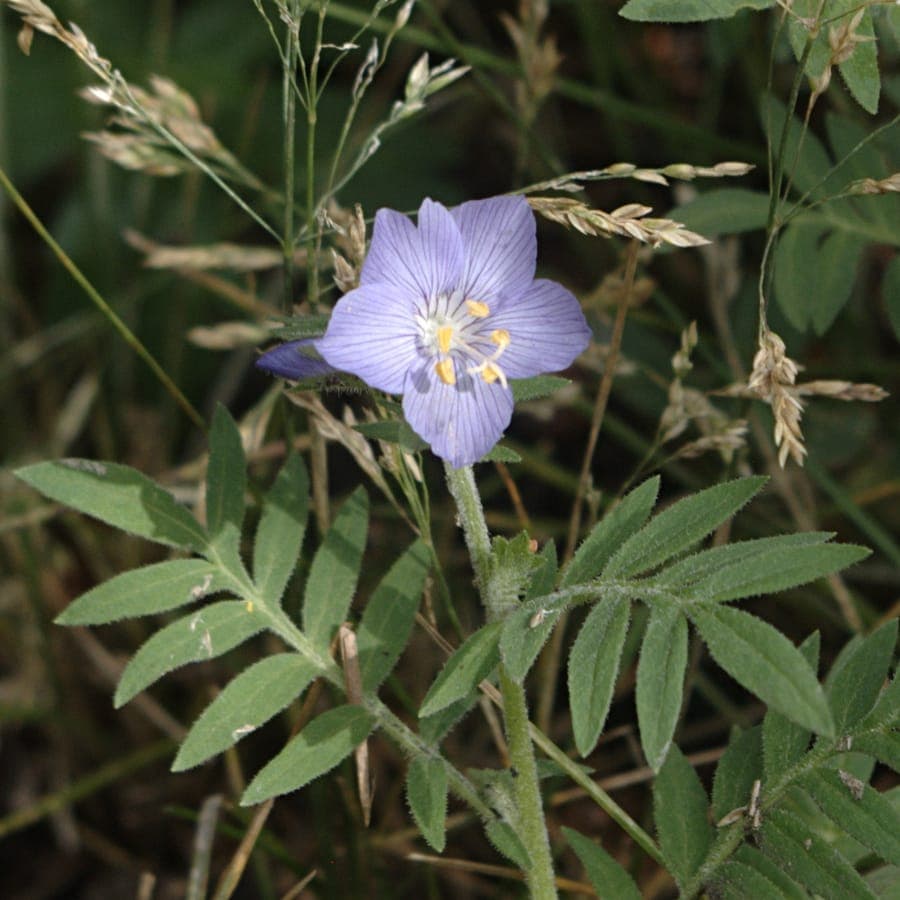
JerryFriedman / CC BY-SA 3.0, via Wikimedia Commons
Polemonium foliosissimum: complete guide
Polemonium foliosissimum
¿Quieres ver Polemonium foliosissimum: complete guide en tu jardín?
1 minuto, sin tarjeta de crédito
Overview
Polemonium foliosissimum is a robust and striking herbaceous perennial native to the mountain ranges of the western United States, including Arizona, Colorado, Idaho, Nevada, New Mexico, Utah, and Wyoming. Within the family Polemoniaceae it stands out as one of the larger and more floriferous species, now increasingly appreciated in European gardens for its reliability and ecological value. The plant grows to a height of 60 to 90 centimetres, forming dense upright clumps of pinnate foliage crowned with generous spikes of blue to blue-purple flowers throughout the summer. The species name 'foliosissimum' translates to 'most leaved', a direct reference to the exceptional density of the pinnately divided foliage that makes the plant attractive even before it comes into flower. Polemonium foliosissimum is a genuine workhorse of the herbaceous border, combining visual appeal, wildlife value, and longevity. Visit gardenworld.app for personalised garden design services that help you integrate perennials like this one into a coherent and beautiful planting plan.
Appearance and bloom
The flowers of Polemonium foliosissimum are bell-shaped, five-petalled, and range from clear mid-blue to rich blue-purple, depending on growing conditions and the particular plant. They are borne in dense terminal clusters on upright stems well above the foliage, creating a vertical accent in the border from June through August. The prominent yellow stamens within each flower provide a striking contrast to the blue petals and serve as highly visible landing platforms for visiting bees and bumblebees. The foliage is the other outstanding feature: long pinnate stems carry numerous small oval leaflets that cover the entire length of each stem, giving the plant an exceptionally lush and almost tropical appearance. The foliage has a light, pleasant fragrance when touched. After the main flowering period, small seed capsules develop that self-sow freely in the garden, gently spreading the plant over time to create larger naturalistic colonies.
Ideal location
Polemonium foliosissimum performs best in full sun to light partial shade. In its native mountain meadow habitats it grows in open, bright conditions with cool summers and well-distributed rainfall. In lowland gardens in temperate Europe, a position that receives full sun in the morning and some afternoon shade is often ideal, particularly in warmer continental climates where summer temperatures regularly exceed 30 degrees Celsius. In cooler maritime climates such as those found across much of the Netherlands, Belgium, and northern France, full sun exposure all day is perfectly acceptable. The plant tolerates a range of light conditions better than many herbaceous perennials, making it versatile across different garden situations. It works well in mixed borders, cottage garden plantings, wildflower meadows, pond-side plantings, and even in large containers. For a complete seasonal design that uses Polemonium foliosissimum alongside compatible plants, gardenworld.app provides expert personalised plans.
Soil
The ideal soil for Polemonium foliosissimum is moist, well-drained, and moderately fertile. The plant tolerates a wide pH range from 6.5 to 8.0, making it adaptable to most standard garden soils without the need for major amendment. In its natural mountain habitat it grows in well-structured soils with a good humus layer built up from years of leaf litter and organic decomposition. When planting in the garden, incorporate well-rotted compost or manure to improve soil structure and moisture retention. Avoid extremely heavy clay soils without prior improvement and dry, nutrient-poor sandy soils. An annual mulch of composted bark or garden compost applied around the base in spring is highly beneficial for moisture retention, weed suppression, and improving the long-term soil biology. Good drainage is important as the roots will not tolerate prolonged waterlogging, even though the plant needs consistent moisture throughout the growing season.
Watering
Polemonium foliosissimum has moderate water requirements that reflect its mountain meadow origins, where reliable summer moisture is part of the natural annual cycle. In the garden, keep the soil consistently moist but not waterlogged throughout the growing season. During dry periods in summer, water deeply and regularly, allowing the soil to dry slightly between sessions but never completely. A thick mulch layer of 5 to 8 centimetres around the base dramatically reduces water loss from the soil surface and helps maintain the even moisture conditions the plant prefers. Newly planted specimens in their first growing season need closer attention and more frequent watering until they establish a strong root system. Once established, the plants become noticeably more drought-tolerant, though they will flower more generously and for longer if kept consistently moist. Water at the base of the plant rather than over the foliage to reduce the risk of fungal issues.
Diseño gratis
¿Quieres ver Polemonium foliosissimum: complete guide en tu jardín? Crea un diseño gratis ahora.
Pruning
Pruning Polemonium foliosissimum is straightforward and primarily serves to extend the flowering season and maintain a tidy appearance. During the main flowering period, regularly deadhead spent flower spikes by cutting them back to the nearest healthy lateral shoot or leaf node. This encourages the formation of new flowering stems and can extend the total blooming period by several weeks. After the main flowering season concludes in late summer, cut the whole plant back to a low rosette of basal foliage. This basal growth remains attractive throughout autumn and early winter. In spring, remove the previous year's old stems as soon as fresh new growth begins to emerge. If you wish to collect seed or allow the plant to self-sow in the garden, leave some spent flower heads to ripen naturally before cutting back. Polemonium foliosissimum self-sows reliably and the seedlings are easy to manage.
Maintenance calendar
January-February: the plant is dormant as a low basal rosette; leave old stems in place to protect the crown from late frost. March-April: new growth emerges; remove old dead stems cleanly; apply a balanced slow-release fertiliser and a fresh layer of mulch around the base. May: rapid growth phase; the pinnate foliage develops quickly into a lush mound; ensure consistent moisture is maintained. June-July: peak flowering; blue-purple flower spikes attract bees, bumblebees, and butterflies; deadhead regularly to extend the bloom season. August: flowering slows; cut back spent stems; fresh basal foliage will regenerate through late summer and autumn. September-October: allow any desired seed heads to ripen before cutting back to the basal rosette. November-December: the plant is fully dormant; leave the dead stems until spring to provide a little additional crown protection. For a comprehensive planting plan, consult gardenworld.app for ideas and personalised advice.
Winter hardiness
Polemonium foliosissimum is extremely hardy. In its Rocky Mountain homeland it endures winters far colder than anything found in northwest Europe, surviving temperatures well below -20 degrees Celsius under a protective layer of snow. In the milder climates of the Netherlands, Belgium, France, and Germany, it overwinters without any protection whatsoever and reliably returns each spring. The plant dies back completely above ground in autumn, then re-emerges from its root system with vigour in spring. Even in regions with harsh winters, no special measures are needed beyond leaving the dead top growth in place until early spring. This exceptional cold hardiness, combined with the plant's ornamental qualities and wildlife value, makes Polemonium foliosissimum one of the most dependable perennials available for temperate gardens at any level of experience.
Companion plants
Polemonium foliosissimum integrates beautifully with a wide range of herbaceous perennials that share its preference for moist, moderately fertile soils and open to partly shaded positions. Geranium magnificum provides a complementary blue-purple colour range at a somewhat lower height. Aquilegia species overlap in bloom time, creating a longer continuous season of blue and purple tones. For height and vertical structure, Veronicastrum virginicum and Actaea species make excellent companions at the back of the border. Astrantia major provides textural contrast with its distinctive collared flowers. In damper parts of the border, Primula candelabra hybrids or Ligularia species make natural neighbours. Grasses such as Molinia caerulea add movement and autumn colour. The unifying principle for companion selection is moist, reasonably fertile soil and an open position, with the combined planting creating a rich and naturalistic border that stays attractive from late spring through to the first frosts of autumn.
Closing thoughts
Polemonium foliosissimum is a genuinely outstanding herbaceous perennial that deserves a place in any garden where colour, wildlife value, and reliability matter. The exceptional lushness of its pinnate foliage, the quality of its blue-purple summer flowers, the way it attracts bees and bumblebees in large numbers, and its ability to self-sow gently into available gaps all make it a plant that improves any border it inhabits. Its extreme winter hardiness and adaptability to a wide range of soil pH values further add to its practical value for gardeners across a wide range of climatic conditions. Whether you are designing a formal English-style mixed border, a naturalistic prairie planting, or a relaxed cottage garden, this Rocky Mountain native will reward you with beauty and ecological richness season after season. Use gardenworld.app to get a personalised garden design and see exactly how Polemonium foliosissimum can play a leading role in your outdoor space.
¿Quieres ver Polemonium foliosissimum: complete guide en tu jardín? Crea un diseño gratis ahora.
Sube una foto, elige un estilo y obtén un diseño fotorrealista con lista de plantas en menos de un minuto.
Más de 10.000 jardines diseñados
Sin tarjeta de crédito


Plantas similares
Phlox alyssifolia: complete guide to Alyssum-leaf Phlox
Phlox alyssifolia
Alyssum-leaf phlox is a compact alpine pink bloomer from North America. Discover care, location and all growing requirements.
Phlox richardsonii: complete guide to Richardson's Phlox
Phlox richardsonii
Richardson's phlox is an arctic bloomer exceptionally robust. Learn cultivation in extreme conditions and complete care guide.
Skunkweed: complete guide
Navarretia squarrosa
Everything about Navarretia squarrosa, California stinkweed - a pungent annual wildflower from the Pacific coast with small purple blooms.