
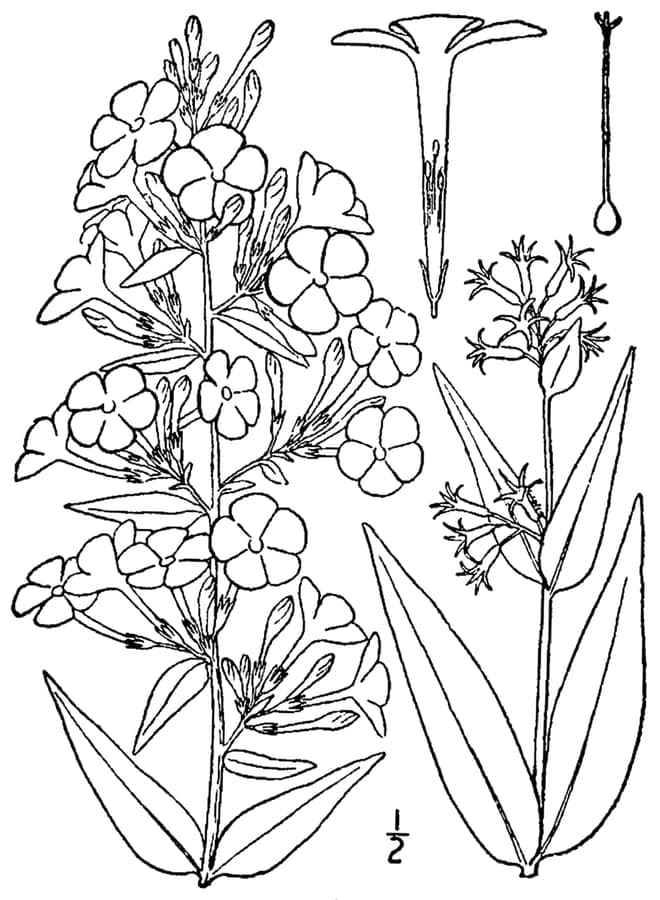
Britton, N.L., and A. Brown. 1913. An illustrated flora of the northern United States, Canada and the British Possessions. 3 vols. Charles Scribner's Sons, New York. Vol. 3: 54. Courtesy of Kentucky Native Plant Society. Scanned by Omnitek Inc. / Public domain, via Wikimedia Commons
Phlox maculata: complete guide
Phlox maculata
¿Quieres ver Phlox maculata: complete guide en tu jardín?
1 minuto, sin tarjeta de crédito
Overview
Phlox maculata, commonly known as Meadow phlox, is an enchanting flowering perennial native to North America. This elegant flowering plant grows naturally in wetlands and meadows from North Carolina to Minnesota. Meadow phlox is renowned for its dense flower clusters in shades of pink, purple, red, and white, blooming abundantly from July through September.
In gardens, Phlox maculata is a reliable performer delivering not only colorful blooms but also delightful fragrance. This makes it a beloved choice for flower garden designs that combine visual beauty with aromatic quality. The plant attracts butterflies and other pollinators, making it excellent for ecological gardens.
Appearance and bloom
Phlox maculata forms neat, upright clusters with smooth green leaves and dark-spotted stems - hence the name "maculata" (spotted). The plant typically reaches heights of 45 to 80 centimeters, depending on growing conditions.
The flower arrangements are narrow, dense pyramidal clusters. Each cluster consists of numerous small, five-petaled flowers in shades of deep red, purple, pink, lilac, and sometimes white. The flowering period extends from July through September, providing extended summer display. Fragrances are intense, especially in evening, attracting pollinators.
Ideal location
Phlox maculata flourishes in full sun to partial shade. At least five to six hours of direct sunlight daily promotes good flowering. In very hot, dry summers, light afternoon shade actually helps the plant retain more moisture.
Plant this flower in visible locations where you can enjoy its fragrance, such as along garden paths, in flower borders, or near windows. The compact form makes it suitable for medium-sized gardens.
Soil
Phlox maculata thrives best in fertile, well-draining soil. Before planting, incorporate organic matter such as compost, peat, or aged manure. The plant prefers neutral to slightly acidic soil with pH around 6.0 to 7.0.
While the plant enjoys moisture, soil should not be waterlogged. In heavy clay soils, add extra compost and possibly sand for improved drainage. A thick mulch layer helps retain moisture and protects roots.
Diseño gratis
¿Quieres ver Phlox maculata: complete guide en tu jardín? Crea un diseño gratis ahora.
Watering
Phlox maculata enjoys consistent moisture. Water deeply and regularly, especially during growth and flowering periods. Soil should not dry out completely; inconsistent watering can lead to poor flowering and diseases like powdery mildew.
A drip system or soaker hose is ideal for watering this plant, as overhead watering can promote foliar diseases. During hot summers, daily light watering may be necessary, while cooler periods may require less frequent watering.
Pruning
Deadheading spent flowers encourages extended blooming. Pinch back faded flower clusters as soon as they fade. This stimulates the plant to produce more blooms.
In early spring, the plant can be cut back to about 15-20 centimeters above ground. This creates a more compact, bushier plant. At season's end (October-November), cut the plant back entirely to ground level.
Maintenance calendar
May: Water young plants well, apply mulch. Remove weak stems. July-September: Water regularly, remove spent flower clusters. October-November: Cut plant back to ground level, apply fresh compost. December-April: Winter dormancy; check occasionally for moisture (not too wet).
Winter hardiness
Phlox maculata is reliably hardy to about minus 30 degrees Celsius and suitable for many temperate climate zones. The plant survives cold winters well and returns early in spring. A mulch layer (5-7 centimeters) in autumn helps during extreme frost, especially in far northern regions.
In severe winters, some stems may suffer damage, but the plant will certainly recover in the next growing season.
Companion plants
Phlox maculata grows well with other summer bloomers. Combine it with rudbeckias, coreopsis, salvias, and echinaceas for a colorful summer flower display. The vertical growth of phlox makes it a perfect middle or background flower.
Varied plantings work well: low-growing fronts of nepeta or catmint, followed by phlox in the middle, and taller background plants like helenium or delphinium.
Closing
Phlox maculata is a reliable, fragrant flowering plant that delivers color and aromatic interest throughout the summer season. With consistent water, well-draining soil, and full sun location, this plant will bloom continuously for decades. Its attractiveness to butterflies and pollinators makes it invaluable for ecologically responsible gardens.
Want more tips about flower garden design? Visit gardenworld.app for further inspiration!
¿Quieres ver Phlox maculata: complete guide en tu jardín? Crea un diseño gratis ahora.
Sube una foto, elige un estilo y obtén un diseño fotorrealista con lista de plantas en menos de un minuto.
Más de 10.000 jardines diseñados
Sin tarjeta de crédito


Plantas similares
Phlox alyssifolia: complete guide to Alyssum-leaf Phlox
Phlox alyssifolia
Alyssum-leaf phlox is a compact alpine pink bloomer from North America. Discover care, location and all growing requirements.
Phlox richardsonii: complete guide to Richardson's Phlox
Phlox richardsonii
Richardson's phlox is an arctic bloomer exceptionally robust. Learn cultivation in extreme conditions and complete care guide.
Polemonium foliosissimum: complete guide
Polemonium foliosissimum
Polemonium foliosissimum is a vigorous Rocky Mountain perennial with blue-purple summer flowers that attract pollinators and thrive in borders.