
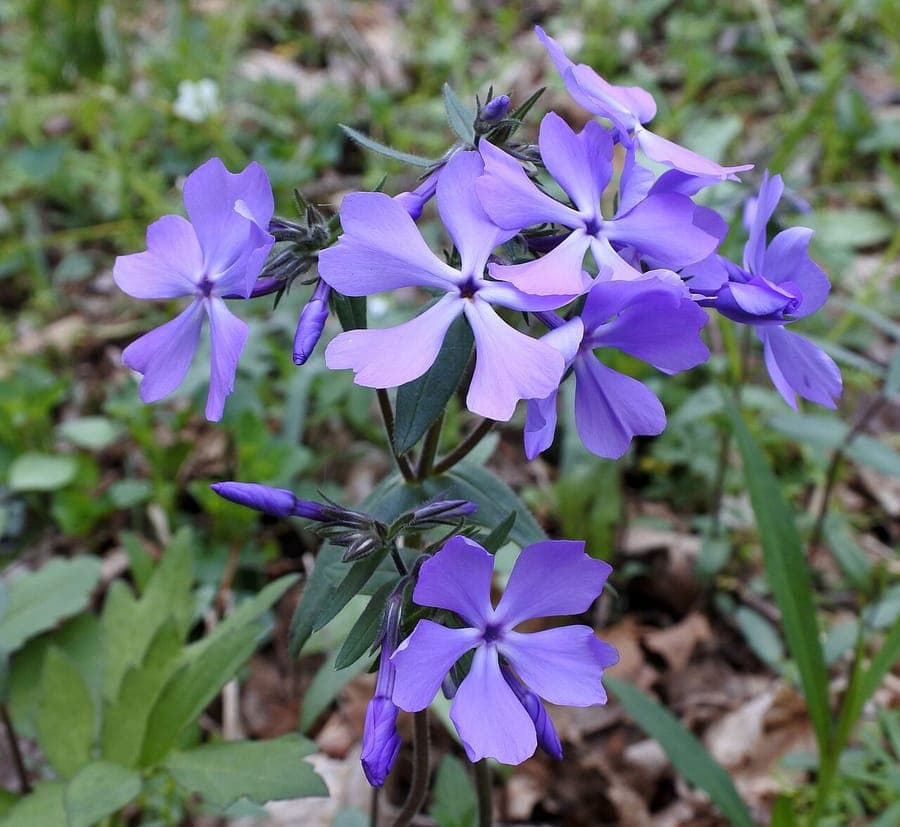
Wilson44691 / CC0, via Wikimedia Commons
Phlox divaricata: complete guide
Phlox divaricata
¿Quieres ver Phlox divaricata: complete guide en tu jardín?
1 minuto, sin tarjeta de crédito
Overview
Phlox divaricata, commonly known as forest phlox or wild blue phlox, is a native woodland plant from eastern Canada and the eastern part of North America. This charming plant is known for its soft blue to purple flowers that appear in spring. It is an excellent choice for shaded gardens with moist soil, where many other plants struggle.
This species is a herbaceous perennial that grows in woodland conditions. In garden situations, it creates complete carpets of bloom from May to June. It is highly suitable for natural or woodland-style gardens and continues to grow in the same location for many years.
Appearance & bloom
Phlox divaricata typically reaches 30 to 45 centimeters in height. The plant has narrow, lance-shaped leaves that are present during the growing season. In autumn, they turn yellow and disappear completely.
The flowers are small, approximately 2 to 3 centimeters in diameter, but appear in numerous small tubes that group into panicles. The color varies from pale lavender to deep blue-purple, depending on the cultivar. They have a pleasant, gentle fragrance. The blooming period is May to July, at its peak in May.
Ideal location
Phlox divaricata grows best in partial to full shade. In full sun it grows well, but flowers fade faster. The plant is perfect for under deciduous trees or in wooded parts of the garden. Shade is important, especially in warm climates.
A spot with protection from midday sun is ideal. The plant is not bothered by wind, as it grows low.
Soil
Phlox divaricata prefers moist, humus-rich soil. The plant grows in woodland soil, so add organic material such as leaf mold, compost, or peat mix. A pH between 6.0 and 7.0 is ideal.
The plant tolerates muddy or wet situations better than many other phloxes. Ensure drainage is reasonable to prevent root rot.
Watering
Phlox divaricata prefers consistently moist soil, especially during the growing season. Water regularly and ensure the soil does not dry out completely. Mulch around the base with leaf mold or compost to retain moisture.
During dry spells in summer, water more frequently. In autumn and winter, reduce watering as the plant dies back naturally and enters dormancy.
Diseño gratis
¿Quieres ver Phlox divaricata: complete guide en tu jardín? Crea un diseño gratis ahora.
Pruning
Minimal pruning is needed. After flowering, you can deadhead spent flowers to tidy up the garden. However, leaving the seed heads can attract wildlife and look natural. In autumn, as the foliage dies back naturally, you can clear away the dead material to keep the garden clean.
No major cutting back is necessary as the plant naturally sheds its foliage in winter.
Maintenance calendar
Spring (April-May): Monitor emerging shoots. Water regularly. Apply dilute liquid fertilizer once monthly. Flowers appear and bloom. Summer (June-August): Keep soil moist. Deadhead if desired. Watch for powdery mildew in humid conditions. Water during dry spells. Fall (September-November): Allow foliage to die back naturally. Water less as dormancy approaches. Clear dead material in late autumn. Winter (December-March): Plant is dormant. No maintenance needed. Protect emerging shoots if severe frost forecast.
Winter hardiness
Phlox divaricata is very hardy, tolerating temperatures down to -25 degrees Celsius (USDA zone 3). In all regions of the Netherlands, Belgium, France, and Germany, it survives winter without protection. It is one of the hardiest phlox species and needs no special winter care.
Companion plants
Pair Phlox divaricata with other shade-loving woodland plants like hellebores, epimedium, or hosta. Combine with spring bulbs like wood anemones or erythronium for a layered spring display. Ferns provide textural contrast. Other good companions include ajuga, tiarella, and woodland creeping plants.
Closing
The forest phlox is an invaluable plant for shady, moist gardens and woodland settings. Its delicate blue flowers and reliable hardiness make it a mainstay of many shade gardens. Plant it and enjoy decades of spring color with minimal effort.
Find Phlox divaricata at nurseries specializing in shade plants and native species. For comprehensive garden design guidance, visit gardenworld.app. At gardenworld.app, discover how to create beautiful, naturalistic shade gardens with plants like this lovely phlox.
¿Quieres ver Phlox divaricata: complete guide en tu jardín? Crea un diseño gratis ahora.
Sube una foto, elige un estilo y obtén un diseño fotorrealista con lista de plantas en menos de un minuto.
Más de 10.000 jardines diseñados
Sin tarjeta de crédito


Plantas similares
Phlox alyssifolia: complete guide to Alyssum-leaf Phlox
Phlox alyssifolia
Alyssum-leaf phlox is a compact alpine pink bloomer from North America. Discover care, location and all growing requirements.
Phlox richardsonii: complete guide to Richardson's Phlox
Phlox richardsonii
Richardson's phlox is an arctic bloomer exceptionally robust. Learn cultivation in extreme conditions and complete care guide.
Polemonium foliosissimum: complete guide
Polemonium foliosissimum
Polemonium foliosissimum is a vigorous Rocky Mountain perennial with blue-purple summer flowers that attract pollinators and thrive in borders.