
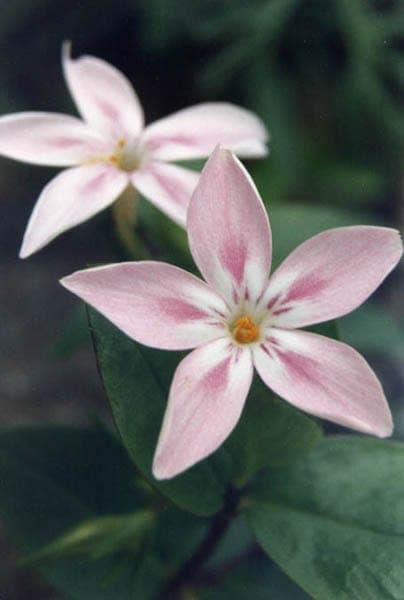
Ghislain118 (AD) http://www.fleurs-des-montagnes.net / CC BY-SA 3.0, via Wikimedia Commons
Northern Phlox: complete guide
Phlox adsurgens
¿Quieres ver Northern Phlox: complete guide en tu jardín?
1 minuto, sin tarjeta de crédito
Overview
Northern phlox (Phlox adsurgens) is a charming shrubby perennial native to Oregon and northern California. This low-growing alpine treasure develops naturally on rocky mountain slopes among conifers and larger shrubs. Despite its North American heritage, northern phlox adapts remarkably well to European gardens when planted in well-draining soil. The plant is renowned for producing masses of pink flowers from May through July. This compact, spreading beauty excels in rock gardens, containers, and alpine plant compositions.
Appearance and Bloom
Northern phlox forms low, spreading mats of narrow green foliage. In late spring and early summer, abundant clusters of pink to rose flowers burst into bloom. Each flower measures approximately 1.5 centimeters across and arranges into spectacular flower heads. Blooming typically lasts four to six weeks, attracting butterflies, bees, and other pollinators. After flowering ceases, attractive green foliage persists into late autumn.
Ideal Location
Northern phlox thrives in full sun to light shade. Provide minimum four to six hours of direct daily sunlight. In warm, southern climates, light afternoon shade is welcome. Good air circulation matters to prevent fungal issues. Position plants on slopes or raised areas where water cannot accumulate. South, west, or east-facing locations work best.
Soil
Well-draining soil is absolutely essential. Use a mix of light potting compost, coarse sand, and perlite. Soil pH should range between 5.5 and 7.5. In gardens, plant on raised beds or thoroughly amend soil with gravel and sand. Heavy clay soils must be avoided. Plants fail quickly in waterlogged conditions.
Watering
During growing season (May through September), water regularly but not excessively. The plant prefers moist but not saturated soil. Allow moisture to evaporate between waterings. When the top two centimeters of soil feel dry, resume watering. From October to April, water minimally. Excess moisture in cold periods promotes fungal issues and plant decline.
Diseño gratis
¿Quieres ver Northern Phlox: complete guide en tu jardín? Crea un diseño gratis ahora.
Pruning
After blooming (August), gently deadhead spent flower clusters. This sometimes encourages a second, lighter flowering. In early spring (March), remove winter-dead plant material. Always maintain the plant's natural, spreading form. Harsh pruning results in sparse growth the following season.
Maintenance Calendar
April: inspect for winter damage and remove dead material. May-June: enjoy abundant blooming and provide consistent moisture. July-August: remove spent flowers and monitor for drought. September-October: reduce watering gradually as winter approaches. November-March: minimal maintenance with sparse watering.
Winter Hardiness
Northern phlox exhibits limited winter hardiness. In northern Netherlands and Germany, plants may suffer frost damage below -5 degrees Celsius. In southern Netherlands, Belgium, and southern Germany, plants overwinter outdoors in protected locations. Many gardeners move potted specimens indoors to unheated frames or shelters. Mulch garden plants with dry leaf litter for protection.
Companion Plants
Northern phlox combines attractively with other alpine plants and rock garden residents. Silver-foliaged plants, sedums, and other mountain dwellers make pleasant companions. In containers, dwarf conifers and other compact plants integrate well. The phlox shines beautifully in dry stonework and small-space gardens.
Closing Thoughts
Northern phlox offers gardeners an exceptional alpine choice. Despite limited cold hardiness in northern regions, abundant pink flowers reward all effort. For alpine plant enthusiasts and collectors seeking something special, this species delivers pure garden joy. Order your northern phlox from Intratuin or Gamma today and experience botanical delight. Discover more guides on gardenworld.app.
¿Quieres ver Northern Phlox: complete guide en tu jardín? Crea un diseño gratis ahora.
Sube una foto, elige un estilo y obtén un diseño fotorrealista con lista de plantas en menos de un minuto.
Más de 10.000 jardines diseñados
Sin tarjeta de crédito


Plantas similares
Phlox alyssifolia: complete guide to Alyssum-leaf Phlox
Phlox alyssifolia
Alyssum-leaf phlox is a compact alpine pink bloomer from North America. Discover care, location and all growing requirements.
Phlox richardsonii: complete guide to Richardson's Phlox
Phlox richardsonii
Richardson's phlox is an arctic bloomer exceptionally robust. Learn cultivation in extreme conditions and complete care guide.
Polemonium foliosissimum: complete guide
Polemonium foliosissimum
Polemonium foliosissimum is a vigorous Rocky Mountain perennial with blue-purple summer flowers that attract pollinators and thrive in borders.