
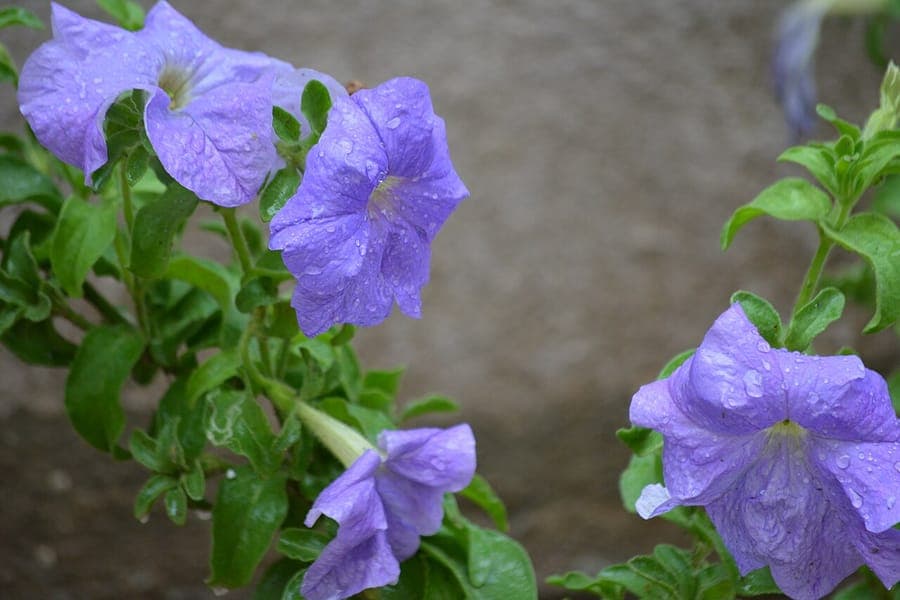
Sarbast.T.Hameed / CC BY-SA 4.0, via Wikimedia Commons
Petunia integrifolia: complete guide
Petunia integrifolia
¿Quieres ver Petunia integrifolia: complete guide en tu jardín?
1 minuto, sin tarjeta de crédito
Overview
Petunia integrifolia, commonly known as violet-flower petunia, is a frost-sensitive annual plant from the Solanaceae family originating from southern Brazil to northeast Argentina. This compact plant is beloved by gardeners for its abundant flowering and is widely used in containers, window boxes, and borders. The plant grows as a low herb to small shrub and blooms continuously from May through October with intensely colored flowers ranging from violet to purple. Well-maintained specimens can reach 30 to 50 centimeters in height and spread 40 to 60 centimeters wide.
The plant is not winter hardy and will die at the first frost, meaning you need to replant it each year. However, the rapid growth and prolific flowering make this effort worthwhile. On gardenworld.app, we frequently design front gardens where petunias play a key role as a color palette during late summer, both in flower beds and hanging baskets.
Appearance and Bloom
Petunia integrifolia distinguishes itself through its characteristic violet colored flowers with a funnel-shaped flower crown. The blooms are approximately 3 to 4 centimeters in diameter and appear in considerable quantities throughout the entire growing season. Compared to many hybrid petunias, this species is more compact and densely branched, resulting in a more natural, bushy growth habit.
The leaves are oval, dark green, and smooth. They measure 4 to 8 centimeters long and feature fine texture. The leaf feels sticky due to numerous small hairs that serve a protective wax-crystal function. This natural protection makes the plant somewhat resistant to dry weather compared to many hybrid varieties.
The flower form is highly attractive to pollinators. Butterflies, bees, and bumblebees find the violet-flower petunia irresistible. This makes the plant valuable for pollinator-friendly garden designs.
Ideal Location
Petunia integrifolia thrives optimally in warm, sunny locations. Ensure the plant receives at least 6 to 8 hours of direct sunlight daily. The more sun, the more abundant the flowering will be. In partial shade, the plant will grow but produce significantly fewer flowers.
If you live in a region with very hot summers, light afternoon shade (from a tree or pergola) can be beneficial to prevent leaf scorching. In the Netherlands and Belgium, however, full sun is almost always present without risks.
The plant is sensitive to strong winds. Place your petunias in sheltered spots, such as against a south-facing wall, near a hedge, or under low trees. Heavy rain can damage flowers, so some protection is welcome.
For container growing: ensure the pot has at least 20 to 25 centimeters depth and stands in full sun. Dark pots absorb more heat, which petunias appreciate, but ensure proper drainage.
Soil Type
Petunia integrifolia grows best in nutrient-rich, well-draining soil with a pH between 6.0 and 7.0. Clay and heavy loamy soils are not suitable unless you improve them significantly with organic matter. The plant is sensitive to waterlogging and does not tolerate wet feet.
Before planting petunias in your front garden, work the planting area with well-rotted compost or leaf mold. This improves both structure and nutrients. Add some sand if the soil is very clayey.
In containers, use potting soil specially formulated for flowering annuals. This is lighter and more draining than regular garden soil. You can also make your own mix: 50% garden compost, 30% peat moss (or coco-fiber), and 20% perlite.
Work in several handfuls of slow-release fertilizer during planting, so the plant receives nutrition throughout summer without much attention needed.
Diseño gratis
¿Quieres ver Petunia integrifolia: complete guide en tu jardín? Crea un diseño gratis ahora.
Watering
Petunia integrifolia needs regular water during the growing season, especially during dry periods. Water at the base, not over the foliage, to prevent fungal diseases. Check the soil: it should not dry out completely but should not stay wet.
In practice, this means watering when the top centimeter of soil feels dry. In warm periods, this may be necessary daily. In cooler, wetter weeks (May, September), you may not need to water at all.
For container growing: check daily if water is needed. Pots dry out much faster than planted ground. Ensure water drains well from drainage holes; otherwise, root rot develops.
Mulching (covering with 5 centimeters of dark compost) between planted specimens reduces water evaporation and suppresses weeds. Avoid placing mulch directly against stems.
Pruning
The violet-flower petunia grows very compactly and needs less pruning than many hybrid varieties. Still, regular pinching in the first weeks stimulates a denser plant. Pinch off the growing tips once the plant reaches 15 to 20 centimeters high, and repeat two weeks later.
After the summer peak (mid-August), you can cut the plant back hard to about two-thirds of its original height. This stimulates new growth and flowering in September and October. Use sharp pruning shears and disinfect them between cuts with alcohol.
If the plant becomes too leggy (long thin stems), correct this by regularly deadheading (removing spent flowers). This also stimulates more flowering and directs plant energy to new blooms instead of seed production.
Maintenance Calendar
May: Place seedlings outdoors once frost risk has passed. Pinch off growing tips. June to August: Water regularly, apply liquid fertilizer monthly, remove spent flowers. August-September: Prune, continue watering. October: Remove before first frost, compost or discard. November-April: Not applicable (plant dies in frost).
Winter Hardiness
Petunia integrifolia is absolutely not winter hardy. The plant dies at the first night frost (below 0 degrees Celsius). In the Netherlands, this typically occurs by late October or early November. So you can really only count on May through October for blooms.
Want to overwinter petunias? This is only possible in a warm greenhouse (minimum 10 degrees Celsius) and not really practical at home. Most gardeners buy new seedlings or young plants each year, which is cost-effective given the price.
Alternatives for persistent color after October: plant asters, chrysanthemums, or autumn flowers in September. These bloom until first frost and provide the same color impact.
Companion Plants
Petunia integrifolia combines beautifully with:
- Lobelia (hanging or trailing blue flowers)
- Bacopa (fine silvery flowers)
- Silver leaf plants (silvery foliage contrast)
- Tagetes (yellow and orange)
- Lavender (purple flowers, fragrance)
- Salvia (blue or red flowers)
- Dianthus (pink and white delicate flowers)
In borders, pair petunias nicely with dark-leaved sunflowers, dark-foliage plants (Iresine), or centaurea.
Conclusion
Petunia integrifolia is a classic summer bloomer that provides years of pleasure with minimal effort. The violet-flower variety adds particular color and remains compact, making it perfect for front garden and container growing. Provide full sun, well-draining soil, and regular water, and you'll have a flowering machine from May through October.
Want to transform your front garden into a blooming paradise? Incorporate petunias through gardenworld.app designs. Our team can create custom seasonal plantings centered around petunias. Discover how vibrant colors can transform your garden on gardenworld.app.
¿Quieres ver Petunia integrifolia: complete guide en tu jardín? Crea un diseño gratis ahora.
Sube una foto, elige un estilo y obtén un diseño fotorrealista con lista de plantas en menos de un minuto.
Más de 10.000 jardines diseñados
Sin tarjeta de crédito


Plantas similares
Solanum dolichosepalum: complete guide
Solanum dolichosepalum
Discover Solanum dolichosepalum, an Andean nightshade with striking long sepals. Growing tips, hardiness, and companion planting for your patio.
Solanum ripense: complete guide
Solanum ripense
Discover Solanum ripense, a moisture-loving Andean nightshade for pond edges and conservatories. Growing tips, hardiness, and companions.
Solanum tomentosum: complete guide
Solanum tomentosum
Discover Solanum tomentosum, a thorny South African nightshade with felted leaves. Growing tips, hardiness, and companion planting ideas.