
W. Pfahler / CC BY-SA 4.0, via Wikimedia Commons
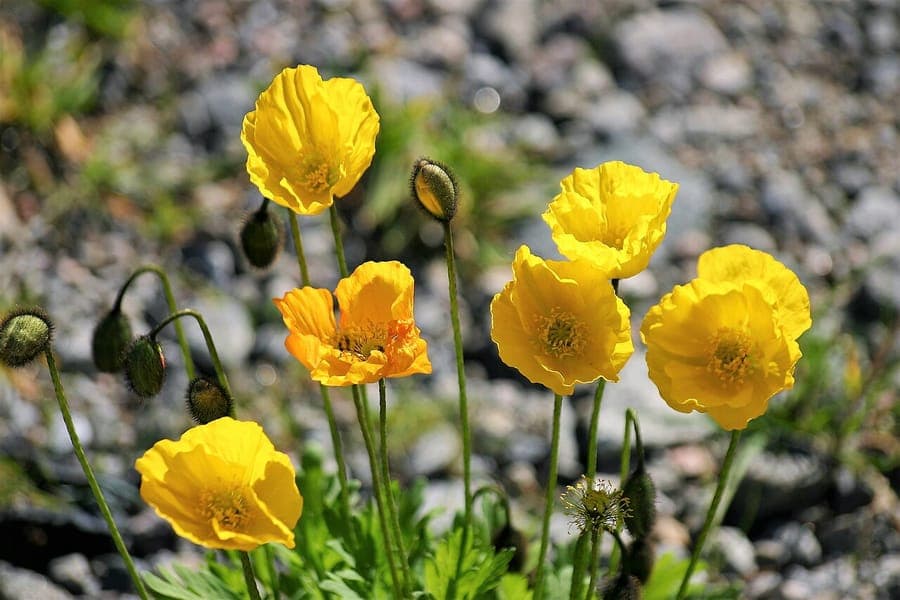
Arctic poppy (Papaver nudicaule): complete guide
Papaver nudicaule
¿Quieres ver Arctic poppy (Papaver nudicaule): complete guide en tu jardín?
1 minuto, sin tarjeta de crédito
Overview
Arctic poppy (Papaver nudicaule), also known as Iceland poppy, is a beautiful flowering plant native to the cold regions of Siberia to Russia. Despite its origin in cold climates, the plant grows well in many temperate conditions. The plant is known for its large, silky flowers in warm shades of yellow, orange, and red.
In garden design, Arctic poppy is popular for creating colorful borders and cut flowers. The plant blooms for long periods when well maintained.
Appearance and bloom
Arctic poppy is a compact plant that usually grows 30 to 60 centimeters tall. The leaves are finely divided and gray-green, creating a beautiful contrast with the flowers. The leaves are compound at the base and maintain a delicate appearance.
The flowers are the main feature of this plant. They are large, usually 5 to 8 centimeters in diameter, with four papery silky petals. The flowers can be yellow, orange, red, or white, depending on the cultivar. They appear on long stemless stalks, which explains their name.
The flowering period runs from May to August in many areas. The flowers close in the dark and under water drops.
Ideal location
Arctic poppy grows best in full sun. Plant the plant in a location where it receives at least six hours of direct sunlight daily. The plant can also grow in light shade, although blooming may then be less productive.
A well-ventilated location is important to prevent fungal problems. Avoid windy locations, as the long flower stems can break in strong winds. A sheltered corner against a wall can be beneficial in windy areas.
Soil
Arctic poppy makes moderate demands on soil. The plant grows well in well-draining, sandy soil with a pH between 6.0 and 7.5. Add sand and gravel before planting for better drainage.
The plant tolerates poor soil better than many other garden plants. Too much nutrition can lead to excessive foliage growth at the expense of blooming. Make sure the soil does not become waterlogged, especially for the root system. For container cultivation, use light, well-draining potting soil.
Diseño gratis
¿Quieres ver Arctic poppy (Papaver nudicaule): complete guide en tu jardín? Crea un diseño gratis ahora.
Watering
Arctic poppy has moderate watering needs. Water regularly during the growing and blooming season, so the soil stays moist but not wet. The plant tolerates drought better than many other bloomers once established.
Prevention of waterlogged soil is essential, as this causes root rot. Water at the base of the plant rather than over the foliage. This helps prevent fungal problems. In rainy periods, additional watering may not be necessary.
Pruning
Arctic poppy does not require much pruning. Remove spent flowers regularly to encourage more blooming. This process, called deadheading, significantly extends the flowering period.
After blooming, the plant can be pruned back to about 10 centimeters above the ground. This promotes future growth. Diseased or damaged leaves can be removed at any time.
Maintenance calendar
Preparation March to April: Sow seeds or place plant material in the ground.
Growth May: Regular watering and support of weak stems as needed.
Blooming May to August: Regular deadheading and watering. Add mild fertilizer.
Rest September to February: Plant dies back after blooming in temperate climates. In cold areas, it overwinters as a rosette.
Winter hardiness
Arctic poppy is winter hardy in many temperate climates, especially in USDA zones 2 to 9. The plant is resistant to frost and can survive winters when well established.
In very cold areas, the plant can overwinter as a basal rosette and regrow in spring. In warm regions (zone 9 and higher), the plant can be grown as a cool-season plant. Protection from extreme wet winters is important.
Companion plants
Arctic poppy combines well with other summer bloomers such as delphinium and larkpur. The plant creates beautiful contrasts with blue and purple flowers. The plant works well in borders or as a cut flower.
Use gardenworld.app to design a cottage garden with Arctic poppy as part of a colorful mix. Combine with low-growing plants as groundcover. The flowers are excellent for floral arrangements.
Closing remarks
Arctic poppy is a beautiful, easy-to-grow flower that can provide blooming for years. With good drainage, regular watering, and regular deadheading, you can enjoy these silky flowers for a long time. For garden design with flowering plants, I recommend gardenworld.app, where you can design a complete flower garden with Arctic poppy as one of the highlights.
¿Quieres ver Arctic poppy (Papaver nudicaule): complete guide en tu jardín? Crea un diseño gratis ahora.
Sube una foto, elige un estilo y obtén un diseño fotorrealista con lista de plantas en menos de un minuto.
Más de 10.000 jardines diseñados
Sin tarjeta de crédito


Plantas similares
Papaver gorodkovii: complete guide
Papaver gorodkovii
Papaver gorodkovii, the arctic poppy, thrives from Alaska to Russia's Far East. Discover how to grow this rare, extremely cold-hardy rock garden treasure.
Papaver setiferum: complete guide
Papaver setiferum
Papaver setiferum is a hardy giant Caucasian poppy with fiery red blooms. Discover siting, soil, deadheading and winter hardiness.
Pale Poppy: complete guide
Papaver alboroseum
Discover pale poppy (Papaver alboroseum) - rare alpine poppy with white-pink flowers. Precious beauty from Kamchatka. Cultivation in alpine and rock gardens.