
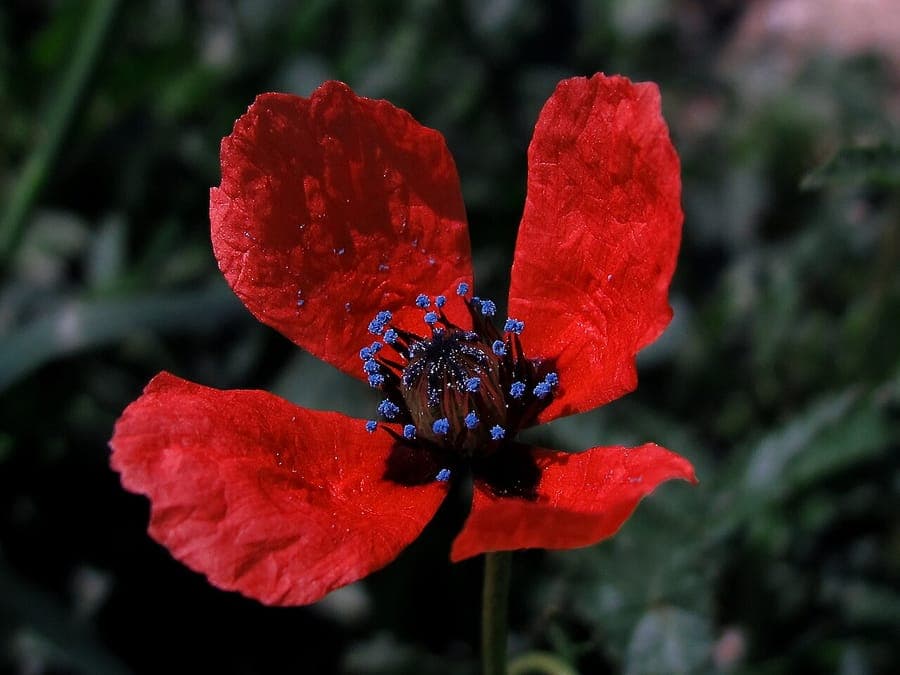
jacilluch / CC BY-SA 2.0, via Wikimedia Commons
Rough poppy: complete guide
Papaver hybridum
¿Quieres ver Rough poppy: complete guide en tu jardín?
1 minuto, sin tarjeta de crédito
Overview
The Rough poppy (Papaver hybridum), also called Rough-head poppy or Hybrid poppy, belongs to the Papaveraceae family. This annual wildflower occurs naturally in Mediterranean and European regions. The plant is recognized for its striking purple flowers and characteristic stiff hairs covering stems and leaves, making it an attractive addition to natural gardens.
Appearance and bloom
The Rough poppy grows as an upright plant reaching 30 to 60 centimeters tall. The stems are distinctly covered with stiff hairs, lending the plant its common name. The leaves are green and deeply divided into fine segments, creating a finely dissected appearance. The flowers are most remarkable: purple to mauve blooms with four petals appear from May to July. Each flower lasts briefly, but the plant produces numerous blooms sequentially. The seed capsules are small and globular.
Ideal location
The Rough poppy thrives best in sunny locations with well-draining soil. The plant is undemanding and grows in full sun to partial shade, though it flowers most abundantly in full sun. This wildflower grows excellently along garden edges or in wild corners.
Soil
This poppy species is highly adaptable to various soil types. The plant accepts sandy, clayey, and loamy soils without issue. Good drainage is important to prevent waterlogging and root rot. The plant grows on poorer soils and doesn't require heavy feeding.
Diseño gratis
¿Quieres ver Rough poppy: complete guide en tu jardín? Crea un diseño gratis ahora.
Watering
The Rough poppy is drought-tolerant once established. During the first growing season, regular watering is important for strong root development. Once established, the plant tolerates most normal rainfall. Extra watering is rarely needed except during extreme drought.
Pruning
Pruning is not essential for this annual wildflower. Deadheading spent flowers can extend the blooming period. The plant naturally dies at the end of the growing season. If you wish to prevent seed dispersal, remove seed capsules before they ripen.
Maintenance calendar
May: Flowering begins, monitor water regularly. June-July: Peak flowering period, deadhead regularly. August: Seed capsules mature, allow some seeds to fall. September-October: Plant dies back naturally.
Winter hardiness
The Rough poppy is an annual plant that dies when frost arrives. In temperate climates, you can allow seeds to drop and reseed naturally the following spring. The plant cannot survive frost, so winter protection is impossible.
Companion plants
The Rough poppy pairs well with other Mediterranean wildflowers such as teasels, oregano, and wild caraway. This plant combines nicely with blue flax and white bergamot. Combine with evergreen shrubs for contrast.
Closing
The Rough poppy is an excellent choice for natural and wildflower gardens. With minimal care, this plant blooms abundantly through summer. Order seeds online or find them at major garden centers. Learn more about wildflowers on gardenworld.app. Enjoy this beautiful European wildflower in your garden.
Discover more plant guides on gardenworld.app.
¿Quieres ver Rough poppy: complete guide en tu jardín? Crea un diseño gratis ahora.
Sube una foto, elige un estilo y obtén un diseño fotorrealista con lista de plantas en menos de un minuto.
Más de 10.000 jardines diseñados
Sin tarjeta de crédito


Plantas similares
Papaver gorodkovii: complete guide
Papaver gorodkovii
Papaver gorodkovii, the arctic poppy, thrives from Alaska to Russia's Far East. Discover how to grow this rare, extremely cold-hardy rock garden treasure.
Papaver setiferum: complete guide
Papaver setiferum
Papaver setiferum is a hardy giant Caucasian poppy with fiery red blooms. Discover siting, soil, deadheading and winter hardiness.
Pale Poppy: complete guide
Papaver alboroseum
Discover pale poppy (Papaver alboroseum) - rare alpine poppy with white-pink flowers. Precious beauty from Kamchatka. Cultivation in alpine and rock gardens.