
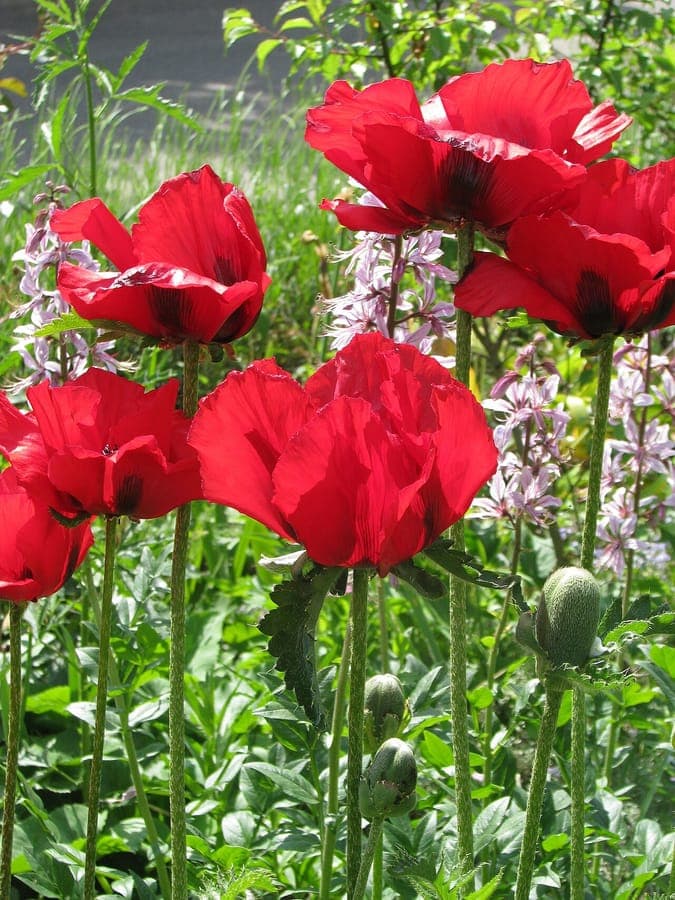
peganum from Small Dole, England / CC BY-SA 2.0, via Wikimedia Commons
Papaver bracteatum: complete guide
Papaver bracteatum
¿Quieres ver Papaver bracteatum: complete guide en tu jardín?
1 minuto, sin tarjeta de crédito
Overview
Papaver bracteatum, better known as Armenian poppy, Oriental poppy or medicinal poppy, is an impressive perennial plant native to Iran, Turkey and the Caucasus. This plant is known for its gigantic, scarlet-red flowers and strong growth vigour. Unlike many other poppy species, this poppy is winter-hardy and returns each spring from the roots.
Papaver bracteatum is among the most beautiful flowering plants for borders and is becoming increasingly popular in modern gardens. The flowers are ideal for cut flowers and can last weeks in water. A mature plant can live for more than twenty years.
Appearance and bloom
Papaver bracteatum forms a majestic plant reaching 80 to 120 cm tall. The plant grows upright with sturdy, grey-green hairy stems that require no further support.
The leaves are deeply incised, almost fern-like, approximately 15 to 25 cm long, with a grey-green colour. They form dense growth lower on the stem and gradually disappear upwards.
The flowers are absolutely spectacular. Gigantic flowers of 15 to 20 cm in diameter dominate the top of the plant. The flowers display an intense scarlet-red colour with black blotches at the base of the petals, creating a dramatic contrast. Each flower consists of four to six thin, silky petals with very fine texture.
Flowering occurs in May to June. Each plant produces only a few flowers per season, but each is truly impressive. The flowers close in the afternoon and reopen the next morning, remaining open for several days.
After flowering, large, grey-green seed pods of approximately 3 to 4 cm diameter develop, which are decorative in themselves.
Ideal location
Papaver bracteatum grows best in full sun. At least 6 hours of direct sunlight daily is required for optimal growth and flowering. In shadier locations, the plant will grow but will flower sparsely.
The plant tolerates light wind but appreciates protection from strong, rough winds.
Soil
Papaver bracteatum grows well in almost all soils as long as well-drained. The plant prefers porous soil with good water permeability. Heavy clay soils should be improved with sand or gravel.
A pH between 6.0 and 7.5 is ideal. The plant also grows on slightly acidic soils. On very nutrient-rich soils, much foliage grows but few flowers; the plant actually thrives on less fertile soils.
Diseño gratis
¿Quieres ver Papaver bracteatum: complete guide en tu jardín? Crea un diseño gratis ahora.
Watering
Once established, Papaver bracteatum is fairly drought-tolerant. The deep roots extract water from deeper soil layers. Regular watering during the growing season promotes growth, but excessive watering should be avoided.
Young plants in their first season should be watered carefully. Mature plants need minimal watering.
Stagnant water is very harmful; ensure excellent drainage, especially in winter.
Pruning
Papaver bracteatum requires little pruning. The plant naturally grows into a neat shape. Remove dead or damaged leaves in spring.
Faded flowers can be removed, although this is not necessary. Seed pods can be left for decoration and seed collection.
In autumn, wilting leaves can be removed as the plant goes dormant.
Maintenance calendar
Spring (March-May): Plant grows out of winter dormancy and begins to flower. Initial watering. Seedlings can be grown in containers.
Summer (June-July): Flowering reaches its peak. Drought tolerance increases as plant matures.
Autumn (August-October): Plant goes dormant. Leaves discolour and die off. Seed pods ripen.
Winter (November-February): Plant rests completely. Minimal activity. Ensure drainage.
Winter hardiness
Papaver bracteatum is fully winter-hardy to USDA zone 3 (-40 degrees Celsius). This is a true perennial plant that returns year after year. The plant dies back completely above ground in winter and reappears in spring.
Even heavy snow load cannot damage the plant because there are no parts above ground.
Companion plants
Papaver bracteatum is a beautiful specimen plant but also combines well with many other perennials. Plant it together with other plants that flower at different seasons.
Good combinations include:
- Larkspur (Delphinium)
- Daylily (Hemerocallis)
- Phlox (Phlox)
- Sage (Salvia)
- Sedum
- Lavender (Lavandula)
- Shasta daisy
The large flowers of Papaver bracteatum form a spectacular centrepiece of borders.
Closing thoughts
Papaver bracteatum is a top choice for lovers of large, striking flowers. The perennial, long-lived nature of this plant, combined with winter-hardiness, makes it an investment that pays dividends for years. This plant is available as roots and seed from specialist garden and seed suppliers.
Plant a few specimens in groups of three to five for best effect in borders. For more inspiration and plant selection, visit gardenworld.app.
¿Quieres ver Papaver bracteatum: complete guide en tu jardín? Crea un diseño gratis ahora.
Sube una foto, elige un estilo y obtén un diseño fotorrealista con lista de plantas en menos de un minuto.
Más de 10.000 jardines diseñados
Sin tarjeta de crédito


Plantas similares
Papaver gorodkovii: complete guide
Papaver gorodkovii
Papaver gorodkovii, the arctic poppy, thrives from Alaska to Russia's Far East. Discover how to grow this rare, extremely cold-hardy rock garden treasure.
Papaver setiferum: complete guide
Papaver setiferum
Papaver setiferum is a hardy giant Caucasian poppy with fiery red blooms. Discover siting, soil, deadheading and winter hardiness.
Pale Poppy: complete guide
Papaver alboroseum
Discover pale poppy (Papaver alboroseum) - rare alpine poppy with white-pink flowers. Precious beauty from Kamchatka. Cultivation in alpine and rock gardens.