
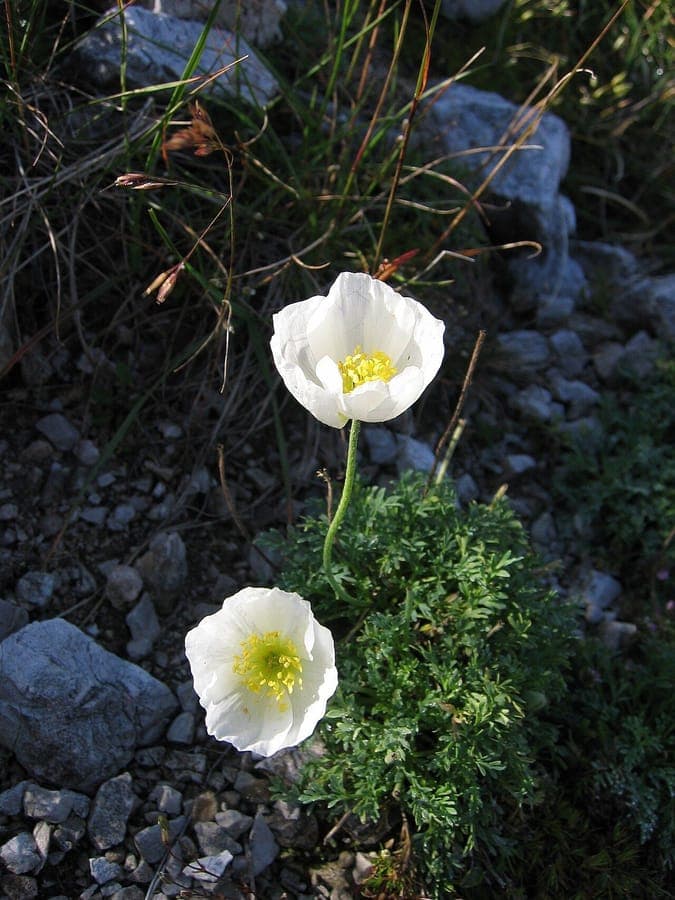
Wikimedia Commons / CC BY-SA 3.0, via Wikimedia Commons
Alpine poppy: complete guide
Papaver alpinum
¿Quieres ver Alpine poppy: complete guide en tu jardín?
1 minuto, sin tarjeta de crédito
Overview
The alpine poppy, botanically Papaver alpinum, is a jewel among alpine plants. This delicate species grows naturally in European mountain regions on bare rocky slopes above the tree line. The plant is renowned for its porcelain-like fragile flowers in white, yellow, orange, and pink.
On gardenworld.app see how this mountain treasure perfectly suits modern alpine and rock gardens. Papaver alpinum is not easy, but for those willing to invest this effort, reward comes with unforgettable beauty. This plant is for gardeners with love of detail and willingness to experiment.
Appearance and bloom
Alpine poppy forms neat rosettes of finely-divided, almost woolly-looking greenish leaves. The plant remains compact - often not taller than 15-25 cm. From leaf rosettes grow slender stems with several large, striking flowers.
The flowers are the absolute highlight. They vary from pale white to vibrant orange, yellow, or pink. Many varieties feature two-colored petals with contrasting eye-spots. Blooming runs May through July, and with care secondary bloom can be enjoyed in September.
Ideal location
Alpine poppy grows optimally in very sunny, windy spots. The plant tolerates no shade whatsoever and demands 8-9 hours direct sunlight. In Mediterranean mountain gardens this is no problem; in lowlands you must choose locations very carefully.
Plants on north-facing slopes or shady garden corners will disappoint. The plant belongs on south-facing rocks, between stones where it receives intense radiation.
Soil
This is THE critical factor. Alpine poppy demands perfectly draining soil - better is impossible! Heavy clay is totally unsuitable. Sand, gravel, and alpine stone chips are essential. Ideal mix: 60% sharp sand/gravel, 30% alpine soil, 10% organic (leafmold).
The plant prefers neutral to slightly alkaline soils. In very acidic soils it grows poorly. After planting cover with extra gravel or stone chips. This keeps feet dry and cool during hot summers.
Diseño gratis
¿Quieres ver Alpine poppy: complete guide en tu jardín? Crea un diseño gratis ahora.
Watering
Once established, alpine poppy tolerates long dry periods. In first year (after planting) water regularly but never allow standing water! After that, virtually no watering needed.
Winter moisture is the greatest threat. Ensure water never pools around the crown. Good drainage prevents this automatically. In rainy autumns you can forget the plant entirely.
Pruning
Pruning is not necessary. Remove only spent flower stems after blooming. This sometimes encourages additional blooming and provides neater appearance. Dead leaves need not be removed - they become part of the natural rosette structure.
In early spring remove only dead material if visible. The plant manages itself otherwise.
Maintenance calendar
May to July: Check for damage and enjoy the blooms. Minimal water if extremely dry. August to October: Plant achieves rest; NEVER water. November to April: Winter dormancy; protect from moisture. May: Check that plant survives.
Winter hardiness
Alpine poppy is extremely hardy - to minus 20 or even minus 25 degrees Celsius. Frost is not the problem; moisture is! The plant must stay dry in winter. In extremely rainy mountain regions, extra gravel cover helps.
In dry mountain climates overwintering is not an issue. In lowlands with wet winters you must be very careful.
Companion plants
Alpine poppy combines beautifully with other dwarf alpines like dianthus, gentiana, and saxifrage. It also forms lovely combinations beside other poppies. Avoid companion plants needing lots of nutrients and water - they don't mix.
On gardenworld.app design pure alpine gardens where this poppy shines.
Closing
Alpine poppy is not for everyone - it demands growing expertise and careful management. But for those willing to invest the effort, reward is priceless. These subtle, delicate flowers are true mountain treasure. Plant in perfect drainage environment and you're rewarded with years of enjoyment. Available through specialized alpine nurseries.
¿Quieres ver Alpine poppy: complete guide en tu jardín? Crea un diseño gratis ahora.
Sube una foto, elige un estilo y obtén un diseño fotorrealista con lista de plantas en menos de un minuto.
Más de 10.000 jardines diseñados
Sin tarjeta de crédito


Plantas similares
Papaver gorodkovii: complete guide
Papaver gorodkovii
Papaver gorodkovii, the arctic poppy, thrives from Alaska to Russia's Far East. Discover how to grow this rare, extremely cold-hardy rock garden treasure.
Papaver setiferum: complete guide
Papaver setiferum
Papaver setiferum is a hardy giant Caucasian poppy with fiery red blooms. Discover siting, soil, deadheading and winter hardiness.
Pale Poppy: complete guide
Papaver alboroseum
Discover pale poppy (Papaver alboroseum) - rare alpine poppy with white-pink flowers. Precious beauty from Kamchatka. Cultivation in alpine and rock gardens.