
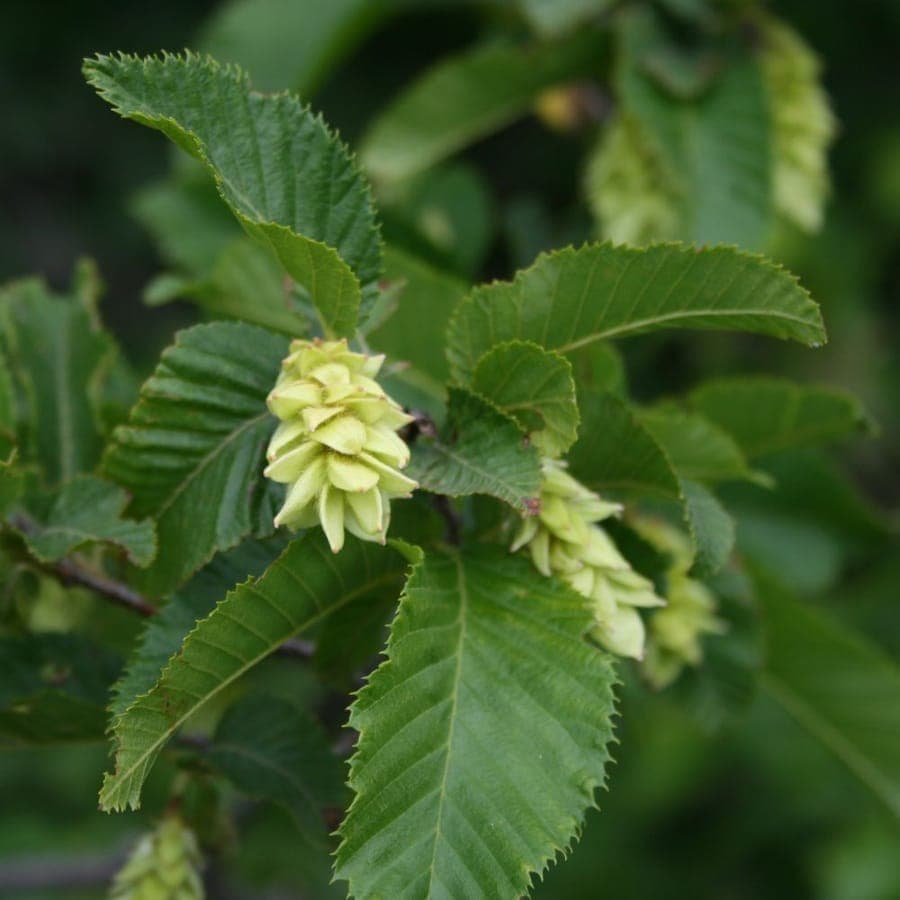
Franz Xaver / CC BY-SA 3.0, via Wikimedia Commons
Ostrya carpinifolia: complete guide
Ostrya carpinifolia
¿Quieres ver Ostrya carpinifolia: complete guide en tu jardín?
1 minuto, sin tarjeta de crédito
Overview
Ostrya carpinifolia, better known as the European hop-hornbeam or charme-houblon, is an elegant and compact tree originating from Southern and Central Europe. This member of the Betulaceae family (birch family) grows naturally on rocky slopes in the Mediterranean region extending to the Caucasus. The tree is highly valued for birds and insects, providing lasting visual interest in gardens.
The European hop-hornbeam distinguishes itself from its American cousin (Ostrya virginiana) through its smaller size and more elegant silhouette. When fully grown, it reaches a height of 15 to 20 meters, but in many locations they grow smaller. The tree is hardy in nearly all of Europe and requires minimal maintenance.
Appearance and Bloom
Ostrya carpinifolia has small, oval leaves that are dark green with a very regular pattern. The bark is gray-brown and develops vertical lines, creating interesting texture. The leaves turn golden to yellow in autumn, providing a visual spectacle.
Flowering occurs in April and May. The male flowers are yellow-green hanging catkins, while the female flowers are smaller and less conspicuous. After pollination, characteristic fruit clusters form that resemble hop cones. These clusters remain on the branches and provide food for birds and squirrels.
Ideal Location
Ostrya carpinifolia grows well in full sun to partial shade. It prefers at least four hours of direct sunlight daily but can also grow in dappled light. The tree is highly adaptable and grows in many different climate zones. It grows best in locations protected from strong, cold winds.
The tree forms a narrow, upright silhouette, making it suitable for smaller gardens or as part of a historic orchard. It's also a good choice for front gardens where you want vertical structure without much width.
Soil
Ostrya carpinifolia is not fussy about soil but grows better on well-drained alkaline soil. The tree accepts both acidic and neutral soil. Heavy clay soil should be worked with sand. Very wet soil is not ideal; ensure good drainage.
Preparation: When planting, work coarse sand and organic material into the soil. The tree naturally grows on rocky terrain, so it readily accepts dry periods once established. A pH of 7.0 to 8.0 is ideal.
Diseño gratis
¿Quieres ver Ostrya carpinifolia: complete guide en tu jardín? Crea un diseño gratis ahora.
Watering
Once planted and established, Ostrya carpinifolia needs little extra water. During dry periods, you can water, especially in the first year. As a mature tree in dry Mediterranean climates, it can survive long periods without additional water. In cooler, wetter climates, you can water if desired, but it's not essential.
Young trees should receive regular water during their first growing season to develop roots properly.
Pruning
Ostrya carpinifolia requires minimal pruning. The tree naturally forms an attractive silhouette. Remove dead or damaged branches in spring. Heavy pruning is not needed. If you want to shape the tree, do so carefully during dormancy (November to March).
One important note: ensure the central leader remains strong. This gives the tree its characteristic upright form.
Maintenance Calendar
Spring (March-May): Check for diseases or damage. Add organic material around the tree. Summer (June-August): Water during dry periods. No further pruning needed. Autumn (September-October): Enjoy autumn color. Remove dead branches. Winter (November-February): Prune only if necessary. Protect against strong winds.
Winter Hardiness
Ostrya carpinifolia is extremely winter-hardy. The tree can withstand temperatures down to -25 degrees Celsius, and in many cases colder. In Central and Northern Europe, it grows without protection. Young trees may need some protection in severe winters, but mature trees are strong.
Companion Plants
Ostrya carpinifolia combines well with other Mediterranean trees such as Ilex aquifolium (holly) and Quercus ilex (holm oak). It also grows well with groundcover plants. The tree is highly valuable for wildlife: birds eat the fruits, and bees visit the flowers.
The tree attracts many insects, which in turn attract birds. This makes it valuable for biodiversity in your garden.
Conclusion
Ostrya carpinifolia is an underrated tree for European gardens. With its elegant form, interesting fruits, and value for birds and insects, it deserves more attention. It grows well in almost all climates in Europe, from south to north.
Want to read more guides? Visit gardenworld.app for comprehensive information about diverse trees and shrubs for your garden.
Visit gardenworld.app for more plant guides and gardening tips. Discover thousands of plant profiles and make your garden dreams come true.
¿Quieres ver Ostrya carpinifolia: complete guide en tu jardín? Crea un diseño gratis ahora.
Sube una foto, elige un estilo y obtén un diseño fotorrealista con lista de plantas en menos de un minuto.
Más de 10.000 jardines diseñados
Sin tarjeta de crédito


Plantas similares
Heart-leaf birch: complete guide
Betula cordifolia
Heart-leaf birch is an attractive North American birch tree for large gardens. Discover growth, white papery bark and winter hardiness.
Tropical hornbeam: complete guide
Carpinus tropicalis
Everything about Carpinus tropicalis, the tropical hornbeam from Central America. Growing tips, location, care, and garden use explained.
Japanese Alder (Alnus firma): complete guide
Alnus firma
Learn everything about Japanese Alder in our complete guide. Discover care, growth, and applications for larger gardens.