
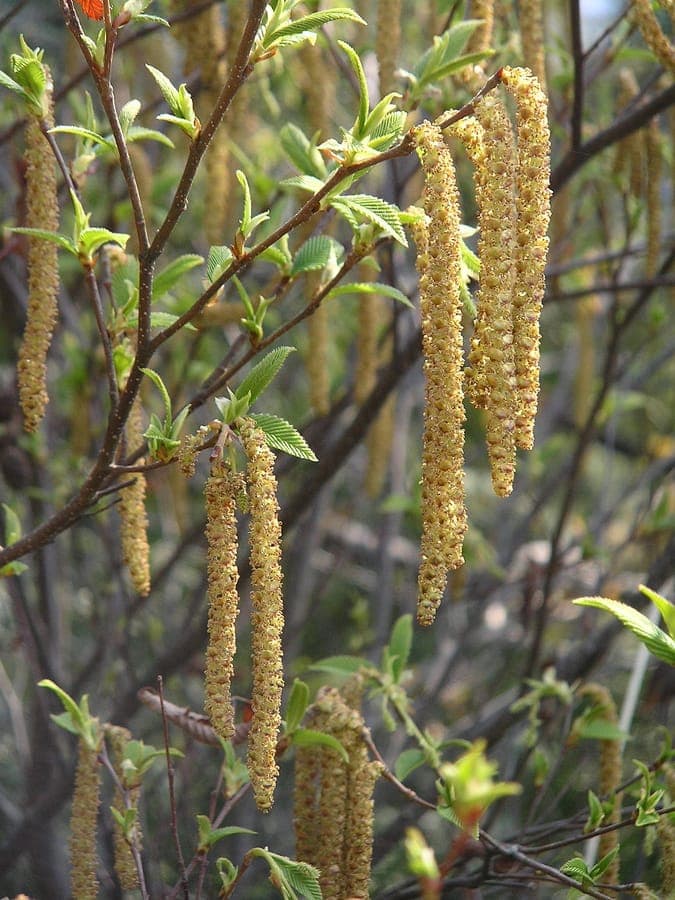
Akiyoshi's Room / Public domain, via Wikimedia Commons
Japanese Alder (Alnus firma): complete guide
Alnus firma
¿Quieres ver Japanese Alder (Alnus firma): complete guide en tu jardín?
1 minuto, sin tarjeta de crédito
Overview
Alnus firma, known as Japanese Alder or Yashabushi, is a medium-sized tree from Japan belonging to the Betulaceae family (the birch family). Native to Kyushu in Japan, this tree thrives in moisture-loving and sheltered locations. Alnus firma is an important part of Japanese garden tradition and is valuable for both natural forests and cultivated landscapes.
The tree is a nitrogen-fixer, meaning it can capture nitrogen from the air and return it to the soil. This makes it highly valuable for ecological gardens and forest systems. The tree attracts many insects, especially pollen and nectar-seeking species, making it an excellent choice for biodiversity.
Appearance and Bloom
Japanese Alder grows into a medium-sized tree of 10-20 meters tall, though this height can be controlled through pruning in garden settings. The tree has a dense crown with alternately arranged, oval leaves approximately 5-10 centimeters long. Leaves are green in summer and can turn yellow or brown in autumn.
The flowers are inconspicuous, appearing in catkins (hanging flower clusters). Male catkins are approximately 5-10 centimeters long and yellow, while female catkins are smaller and red to purple. The tree bark is dark gray and has a smooth to slightly furrowed surface.
Ideal Location
Japanese Alder thrives best in locations with plenty of light, although it can tolerate partial shade. The tree needs at least 5-6 hours of direct sunlight daily for optimal growth. Protection from strong winds is beneficial, though the tree can tolerate wind exposure once established.
Use Japanese Alder as a specimen tree, in groups with other Japanese plants, or as part of a natural forest landscape. The tree combines well with other moisture-loving trees and shrubs. It works well along water features and streams.
Soil
Japanese Alder thrives in moist, well-draining soils. The tree prefers neutral to slightly acidic soils. Heavy, clay soils can be suitable as long as there's no water accumulation. Add organic matter to sandy soils to improve water retention.
The tree can adapt to moderately poor soils due to its nitrogen-fixing properties. This makes it valuable for bare or depleted areas. Container cultivation is not recommended due to eventual size, though small, pruned specimens can thrive in large pots with regular watering and feeding.
Diseño gratis
¿Quieres ver Japanese Alder (Alnus firma): complete guide en tu jardín? Crea un diseño gratis ahora.
Watering
Japanese Alder needs regular water supply, especially during the growing season. Keep soil consistently moist but not waterlogged. Young trees should be watered frequently, while established trees can tolerate more drought.
Extra water may be needed in summer, especially during hot or dry periods. In winter, when the tree is dormant, water needs decrease significantly. Avoid prolonged dry periods, especially for young trees.
Pruning
Japanese Alder requires minimal pruning in its natural form. Remove dead or damaged branches in spring or early summer. For formal garden shapes, regular pruning may be desired, but the tree naturally prefers a natural form.
Pruning is best done after blooming in spring or early summer. Avoid heavy pruning in autumn or winter, as this can cause frost damage. Thin the crown for better air circulation and light penetration.
Maintenance Calendar
In spring (March-April), catkins begin to appear. This is the time to add feeding and remove damaged branches. In May-June, pollination and seed setting occur. The tree grows vigorously during this period.
In July-August growth continues, though some water may be needed in dry conditions. In September-October, leaves turn yellow and fall. From November to February, the tree is dormant and young trees may need frost protection.
Winter Hardiness
Japanese Alder is reasonably winter hardy in temperate climates. The tree can tolerate approximately -15°C, though young trees may need protection from extreme frost. In very cold climates (below -20°C), branches may freeze, but the tree usually recovers.
In temperate climates, Japanese Alder is fully winter hardy outdoors without protection. Young trees can benefit from mulch protection in their first winter.
Companion Plants
Japanese Alder combines well with other moisture-loving trees and shrubs like Japanese Maple and other water-loving plants. This combination creates a natural, forest-like environment. Underplanting with ferns, hellebores, and foliage plants also works well.
Avoid drought-tolerant plants in the immediate vicinity, as they may compete for growing space. Japanese Alder works best in similar moisture zones.
Final Thoughts
Japanese Alder is a valuable tree for larger gardens and forest landscapes in temperate climates. With its attractive foliage, catkin interest, and ecological benefits, it offers both aesthetic and functional value. The tree is sometimes available from specialized tree nurseries.
Whether planting near water features, creating a natural forest environment, or simply looking for an interesting tree, Japanese Alder is an excellent choice. Visit gardenworld.app and gardenworld.app for more inspiration on tree selections.
¿Quieres ver Japanese Alder (Alnus firma): complete guide en tu jardín? Crea un diseño gratis ahora.
Sube una foto, elige un estilo y obtén un diseño fotorrealista con lista de plantas en menos de un minuto.
Más de 10.000 jardines diseñados
Sin tarjeta de crédito


Plantas similares
Heart-leaf birch: complete guide
Betula cordifolia
Heart-leaf birch is an attractive North American birch tree for large gardens. Discover growth, white papery bark and winter hardiness.
Tropical hornbeam: complete guide
Carpinus tropicalis
Everything about Carpinus tropicalis, the tropical hornbeam from Central America. Growing tips, location, care, and garden use explained.
Corylus heterophylla: complete guide
Corylus heterophylla
Siberian hazel offers early catkins and bird-attracting hazelnuts. Hardy, easy shrub for garden design. Discover planting and care strategies.