
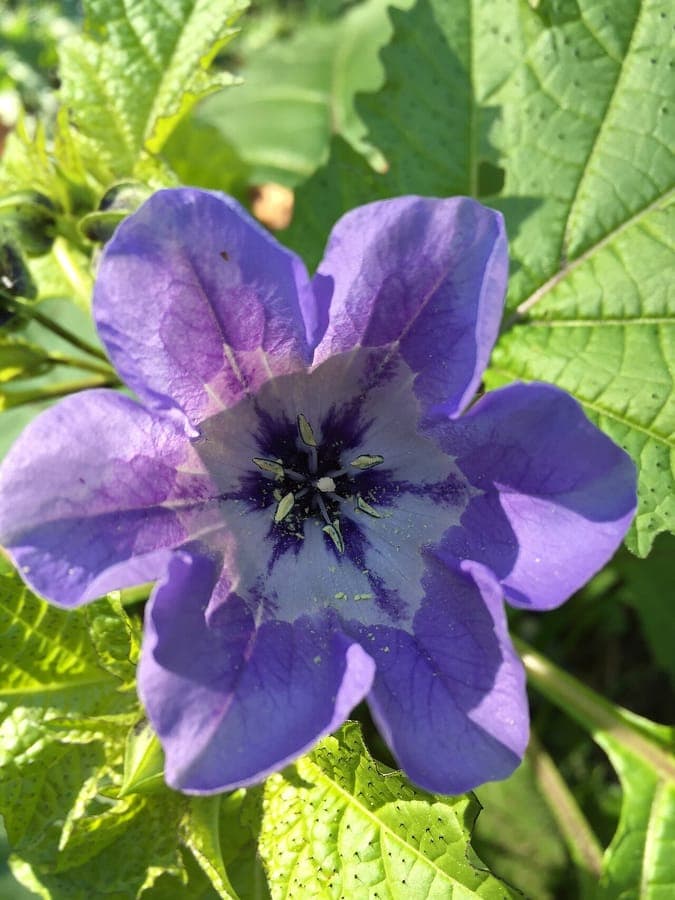
Flobbadob / CC BY-SA 4.0, via Wikimedia Commons
Nicandra physalodes: complete guide to growing apple of Peru
Nicandra physalodes
¿Quieres ver Nicandra physalodes: complete guide to growing apple of Peru en tu jardín?
1 minuto, sin tarjeta de crédito
Overview
The apple of Peru, scientifically known as Nicandra physalodes, is a fascinating annual plant from the Solanaceae family. This plant originates from Peru and surrounding South American regions and is becoming increasingly popular in European gardens because of its unique appearance and rich history. The plant grows to about 80 centimeters in height and produces beautiful purple to bluish flowers followed by striking fruits in papery calyxes that resemble little lanterns.
The apple of Peru is known for its decorative value, especially because of the characteristic bladder-like fruit capsules that appear after flowering. This plant is not only cultivated for its beauty but also for its insecticidal properties and its ability to repel certain pest insects. In European gardens, it is often seen as a special annual plant that adds striking structure and color. The plant has become a favorite among gardeners seeking something different and distinctive.
Appearance and bloom
Nicandra physalodes grows as an upright, bushy plant with strongly branched stems covered with large, oblong leaves that have irregular edges. The leaves are green in color and give a lush impression. The flowers appear throughout the growing season and are approximately two to three centimeters in size, with a purple to bluish color and a characteristic light-colored base. After flowering, large, papery fruit capsules form - the so-called physalides - which are greenish and then turn yellow in color.
These fruit capsules resemble small paper lanterns or lantern fruit and contain a small, round fruit inside. This decorative aspect makes the plant interesting for flower arranging and dried bouquets. The entire plant has a soft, hairy texture and releases a pleasant, fragrant aroma when the leaves are touched. The flowering period extends from June to September, making this plant remain decorative for a long time.
Ideal location
Nicandra physalodes grows best in a sunny location that receives at least six to eight hours of direct sunlight per day. A southwest-facing exposure is ideal for maximizing flowering and bloom pleasure. The plant also tolerates light partial shade, but will grow poorly in full shade and produce fewer flowers. It is important to choose a protected location that is not exposed to strong winds, which can damage the tall, brittle stems.
Make sure the plant has enough space to grow to its full size. An open, well-ventilated growing location helps prevent moisture problems and promotes healthy growth. Avoid locations that remain wet for long periods or where water staggers. The plant can be grown both in open ground and in large pots.
Soil
The apple of Peru prefers loose, well-draining soil with average soil fertility. The plant is not very choosy about soil type but prefers sandy to loamy soil with good drainage. If you have heavy clay or silt soil, it is advisable to work it up with compost, peat or sand to improve drainage.
The soil pH should be between neutral and slightly acidic, about 6.0 to 7.5. Before sowing or planting, you can enrich the soil with ripe compost or other organic matter. This not only improves drainage but also adds essential nutrients. For pot culture, you can use standard potting soil supplemented with sand for improved drainage. Well-draining soil is essential, as this plant is susceptible to root rot in wet conditions.
Watering
Although Nicandra physalodes has some drought tolerance, it grows best with regular, moderate moisture supply. Water when the top layer of soil feels dry - usually once a week in normal weather conditions, but more often in hot, dry periods. Make sure water penetrates well into the soil and excess water can drain away.
Avoid keeping leaves and stems wet, as this can promote fungal diseases. Water preferably at the base of the plant. During periods of extreme drought and heat, daily watering may be necessary, especially for container plants. In autumn and winter, when the plant dies back, less water is given. For potted plants, it is important to water regularly to prevent root rot.
Diseño gratis
¿Quieres ver Nicandra physalodes: complete guide to growing apple of Peru en tu jardín? Crea un diseño gratis ahora.
Pruning
Actually, pruning is not absolutely necessary for Nicandra physalodes, but pinching the tops of young plants (approximately at the height of 15-20 centimeters) promotes bushier growth with more branching and more flowers. Regularly remove wilted or damaged leaves to keep the plant neat and prevent disease. If the plant becomes too large or grows out of shape, you can carefully trim the outer parts.
Remove spent flowers and old fruit stands to retain energy for new blooms. This process, known as deadheading, promotes continued blooms throughout the season. At the end of the growing season, when frost threatens, the entire plant can be cut back to the ground or removed.
Maintenance calendar
In spring, as soon as all frost danger has passed and the soil has warmed up (May in Europe), you can sow seeds or plant seedlings. During summer, ensure regular watering and feeding with a balanced fertilizer once every two weeks. In July and August, monitor for pest insects, although the plant itself repels many pests. Regularly pinching wilted flowers promotes continued blooms.
In September to October, when flowering declines and the first frost threatens, you can collect fruits for seed saving. In November, after the first hard frost, this annual plant dies off and can be removed. The plant can however self-seed, so check if you want to prevent unwanted seedlings.
Winter hardiness
This is an annual plant that is not winter-hardy. Nicandra physalodes is frost-sensitive and dies as soon as temperatures drop below zero degrees Celsius. In Europe, this plant is not suitable for permanent outdoor cultivation with winter outside. After the first frost danger (usually end of October to November), the plant must be removed.
If you want to retain seeds for next year, you can collect ripe seeds and store them in a cool, dry place. These seeds can be viable for up to three years. For propagation next season, store seeds in the refrigerator (approximately 4 degrees Celsius) until sowing time in May.
Companion plants
Nicandra physalodes combines well with other annual plants that require similar growing conditions. Good companions include: Zinnias, Sunflowers, Salvia, Cleome (spider flower), Amaranthus, Cosmos and other South American summer bloomers. The plant can also form interesting contrasts with less conspicuous plants, as it draws much attention with its beautiful flowers and decorative fruits.
This plant works well in the backgrounds of flower beds because of its height. The apple of Peru can also look lovely next to silvery-foliaged plants like Senecio and Artemisia. For an even more dramatic effect, you can combine this plant with darker-leaved plants such as purple-leafed Alternanthera or Coleus.
Closing
The apple of Peru is an exceptional annual plant that adds interest and beauty to your garden throughout an entire season. With minimal attention and good growing conditions, you will enjoy numerous purple flowers and beautiful papery fruits. This plant is perfect for gardeners who want to try something unique and out of the ordinary. Both beginners and experienced gardeners will enjoy growing this fascinating species.
For information about the apple of Peru and other garden plants, visit gardenworld.app. For purchasing seeds and plant material, we recommend visiting your local garden center. Complete your garden with this special plant and enjoy its exotic beauty throughout the entire summer season.
Visit gardenworld.app for more plant information and garden advice for all seasons.
¿Quieres ver Nicandra physalodes: complete guide to growing apple of Peru en tu jardín? Crea un diseño gratis ahora.
Sube una foto, elige un estilo y obtén un diseño fotorrealista con lista de plantas en menos de un minuto.
Más de 10.000 jardines diseñados
Sin tarjeta de crédito


Plantas similares
Solanum dolichosepalum: complete guide
Solanum dolichosepalum
Discover Solanum dolichosepalum, an Andean nightshade with striking long sepals. Growing tips, hardiness, and companion planting for your patio.
Solanum ripense: complete guide
Solanum ripense
Discover Solanum ripense, a moisture-loving Andean nightshade for pond edges and conservatories. Growing tips, hardiness, and companions.
Solanum tomentosum: complete guide
Solanum tomentosum
Discover Solanum tomentosum, a thorny South African nightshade with felted leaves. Growing tips, hardiness, and companion planting ideas.