
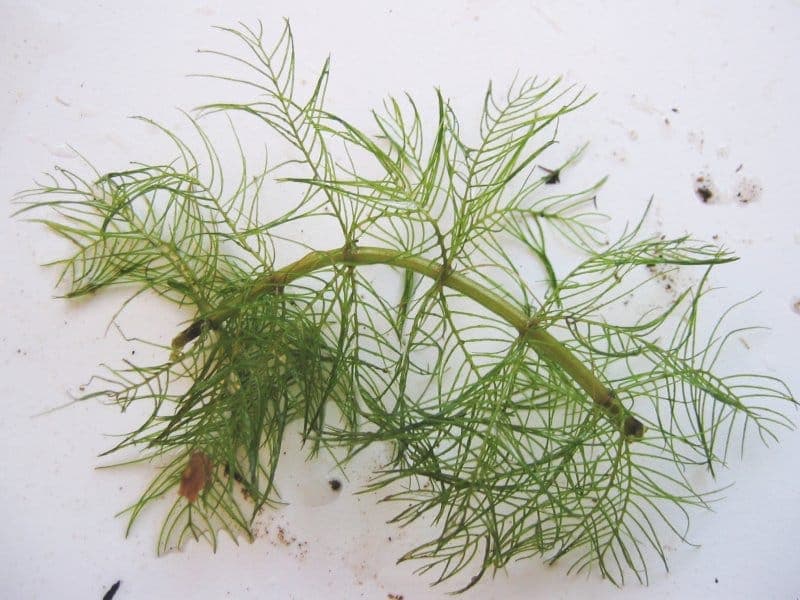
Kristian Peters -- Fabelfroh 15:25, 23 October 2006 (UTC) / CC BY-SA 3.0, via Wikimedia Commons
Coontail: complete guide
Myriophyllum verticillatum
¿Quieres ver Coontail: complete guide en tu jardín?
1 minuto, sin tarjeta de crédito
Overview
Coontail (Myriophyllum verticillatum) is an elegant submerged aquatic plant that captivates aquarium enthusiasts and water gardeners with its finely divided, feathery foliage. This plant belongs to the family Haloragaceae and originates from temperate zones of the northern hemisphere. Known for its hardiness and adaptability to various water conditions, coontail is an ideal choice for both beginners and experienced aquarists. The plant grows at a slow to moderate pace depending on light availability and helps keep water clean and healthy by absorbing excess nitrogen and phosphate. Coontail is particularly valuable in freshwater ecosystems where it produces oxygen and provides shelter for small aquatic creatures.
The name verticillatum refers to the whorled arrangement of leaves around the stem, giving the plant its unique visual appeal in any aquarium or water basin. This plant is undemanding and rewards patient gardeners with beautiful, dense growth when basic care requirements are met.
Appearance and bloom cycle
Coontail has a distinctly elegant appearance with fine, feathery leaves arranged in dense whorls around the stem. The leaves are typically 10-20 mm long and extremely finely divided, almost hair-like, giving the plant its special delicate character. The stem structure is slender and flexible, usually 2-4 mm thick, and can reach 20-50 cm length in aquariums and water gardens under good conditions. The color varies from bright green to light red, especially under intense lighting, creating beautiful contrast in aquarium landscapes.
The bloom period of coontail occurs mainly in summer months (July to August) when the plant grows above water. The flowers are very small and inconspicuous, usually reddish in color, appearing in short dense spikes. In submerged conditions, the plant rarely flowers but reproduces primarily through vegetative means by fragmentation and stem cuttings. The plant can grow extremely long and should be regularly trimmed to maintain compact growth.
Ideal location
Coontail thrives best in locations with moderate to bright light, between 8 and 12 hours daily. In aquariums, this means positioning the plant where it receives regular exposure from lamps positioned 20-30 cm away. The plant also tolerates shadier conditions but grows more slowly there and may become less compact. In outdoor water gardens, coontail can grow in full sun (6 to 8 hours direct sunlight) as well as partial shade, though it will grow faster in full sun.
The plant performs best in shallow waters (30-100 cm depth) where root systems can develop well in substrate. In aquariums, plant coontail at least 15 cm above the bottom to allow sufficient space for growth. Keep in mind that coontail can be a vigorous grower under ideal conditions, so ensure adequate horizontal space is available in your water basin.
Soil requirements
Coontail prefers silty or sandy substrates that are nutrient-rich and moisture-retentive. In aquariums, achieve best results with a substrate layer of at least 5-7 cm, consisting of aquarium sand or aquarium gravel, preferably mixed with nutrient-enriched substrate supplements like aquarium fertilizer tabs. The pH should range between 5.5 and 8.0, ideally around 6.0-7.5 for optimal growth.
The plant is fairly flexible regarding carbonate hardness (KH), but grows best in water with KH between 4 and 10 dH. Coontail responds well to regular liquid aquarium fertilizer application, especially nitrogen and trace elements like magnesium, iron, and potassium. In nutrient-poor waters, growth becomes stunted, so remember that regular fertilization is essential for success.
Watering and nutrition
Although coontail grows in water and does not drink in traditional terms, regular water changes are crucially important for plant health. Replace water weekly - approximately 25-30% of total volume - to maintain healthy concentrations of nitrogen compounds and other waste products. In stagnant water without changes, water quality problems will manifest quickly.
Feeding with macro- and micronutrients is essential for healthy growth. Use a balanced aquarium fertilizer weekly with ratios approximately 10-10-10 (nitrogen-phosphorus-potassium) and add trace elements if water is not changed from tap water sources. Many aquarists have success with fertilizers specifically designed for aquatic plants, available from specialized aquarium retailers. At gardenworld.app, you will find guidelines for proper water care and fertilizer application schedules.
Diseño gratis
¿Quieres ver Coontail: complete guide en tu jardín? Crea un diseño gratis ahora.
Pruning and shaping
Regular pruning is essential to keep coontail compact and attractive. Trim the upper 5-10 cm of stem when the plant reaches 25-30 cm height, then prune growth tips regularly every 3-4 weeks. This stimulates side shoots and makes the plant fuller and bushier rather than tall and thin. Regularly remove dead leaves and damaged stems to prevent disease.
When pruning, plant the cut stem portions in substrate where they will easily develop new root tissue and grow into new plants. This is an ideal way to expand your coontail collection without purchasing new specimens. Ensure cut stems are at least 10 cm long and remove lower leaves before planting.
Maintenance calendar
April to May: Begin the growing season by gradually raising water temperature to 18-24 degrees Celsius and extending lighting duration to 10-12 hours. Add nutrients and check for parasites or fungal issues that may have developed during winter.
June to August: This is peak growing season. Provide daily 12-hour bright light, regular weekly water changes (25-30%), and weekly fertilization. Check regularly for algae growth and remove dead leaves. Prune at least monthly or more frequently as needed.
September to October: Gradually reduce lighting duration and water temperature. Reduce fertilization to once every two weeks. Remove fallen leaves and perform thorough aquarium cleaning.
November to March: Reduce food and fertilization as growth season declines. Check regularly for algae and fungal issues. Ensure temperature does not drop below 12 degrees Celsius.
Winter hardiness
Coontail is not winter hardy in the traditional sense - it cannot survive in frozen water. In temperate climates, the plant may survive in outdoor water during summer but must be brought indoors before temperatures drop below 12 degrees Celsius. In the Netherlands, Belgium, and Germany, this typically means October through April for outdoor water.
If you cultivate coontail outdoors in water gardens, prevent freezing by placing the plant in deeper water (at least 50 cm) where temperature remains above freezing. Many aquarists bring their outdoor-growing coontail to the aquarium for winter, which can benefit both the plant and the aquarium environment.
Companion planting combinations
Coontail combines beautifully with other aquatic plants sharing similar requirements. Try pairing it with slow-growing plants like Anubias and Hemianthus, which prefer shaded aquarium corners. For fast-growing plant composition, combine coontail with Cabomba and Rotala - all three are vigorous growers that create dense, forest-like appearance together.
In water gardens, coontail works well with floating plants like Azolla and Salvinia, as well as grass-like aquatic plants such as dwarf arrowhead (Sagittaria subulata). Avoid planting too many species in limited space - coontail can grow aggressively and crowd out other plants. Spatial planning and regular pruning are key to a harmonious aquarium ecosystem.
Closing thoughts
Coontail is a wonderful plant for anyone beginning with aquatic plant care or wanting to improve their water garden experience. With its elegant feathery foliage, adaptability to various conditions, and easy-care nature, this plant offers great satisfaction for the effort invested. Whether you have an aquarium with a few fish or an extensive water basin in your garden, coontail will enhance your water system visually and maintain ecological health.
Look for healthy specimens at local aquarium retailers or specialized shops in your region, or obtain plant material from gardenworld.app where you will also find advice for specific water conditions in your area.
¿Quieres ver Coontail: complete guide en tu jardín? Crea un diseño gratis ahora.
Sube una foto, elige un estilo y obtén un diseño fotorrealista con lista de plantas en menos de un minuto.
Más de 10.000 jardines diseñados
Sin tarjeta de crédito


Plantas similares
Siberian water-milfoil: complete guide
Myriophyllum sibiricum
Siberian water-milfoil is an underwater plant with fine, feathery leaves. Perfect for aquariums and ponds with moderate temperatures and good light.
Various-leaf water-milfoil: complete guide
Myriophyllum heterophyllum
Discover various-leaf water-milfoil (Myriophyllum heterophyllum), an elegant aquatic plant from North America with feathery fine foliage, perfect for aquariums and pond gardens with aquatic plant scapes.
Alternate water-milfoil: complete guide
Myriophyllum alterniflorum
Learn how to grow and care for Myriophyllum alterniflorum in your pond or aquarium. Details on depth, light, water quality, and pruning.