
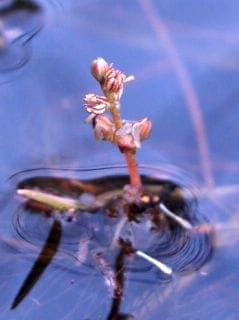
Ruppia2000 / CC BY-SA 3.0, via Wikimedia Commons
Alternate water-milfoil: complete guide
Myriophyllum alterniflorum
¿Quieres ver Alternate water-milfoil: complete guide en tu jardín?
1 minuto, sin tarjeta de crédito
Overview
Alternate water-milfoil (Myriophyllum alterniflorum), also called northern water-milfoil, is a fascinating aquatic plant of the Haloragaceae family. Growing naturally in cold mountain streams and nutrient-poor lakes across Europe, North America, and Asia, this submerged plant is essential for both wildlife ponds and planted aquaria. Its fine, feather-like foliage and exceptional oxygen production make it invaluable. The plant prevents algae blooms through nutrient competition and provides shelter for aquatic fauna. On gardenworld.app, you can design a fully functional water garden with alternate water-milfoil as an essential ecosystem component.
Appearance & bloom cycle
Alternate water-milfoil grows as a slender, branching stem 50 to 120 cm long with extraordinarily fine, feather-like leaves. The leaves are arranged in opposite or alternate pairs, divided into extremely delicate, hair-thin lobes - hence the scientific name "alterniflorum." Mature stems form a dense, dark-green crown 3 to 5 cm wide. Underwater, leaves are soft and flexible; above water, they become stiff and brittle. Flowers are sparse and inconspicuous, appearing as tiny red or yellow-red buds above water in July-August. Growth during the active season (May-October) is extremely rapid, reaching 5-10 cm per week under favorable conditions.
Ideal location
Alternate water-milfoil thrives in sunny locations with a minimum of 4 to 6 hours of direct light daily. In full sun (7-8/10 light scale), growth is fastest and color deepens to reddish-green in top leaves. Partial shade (5-6/10) is acceptable, especially in hot climates where intense sun can damage delicate leaves. In deep shade, growth nearly halts. A south or southeast-facing water feature is optimal. In shallow ponds (60-80 cm), direct sunlight is preferable. In large, deep water bodies with abundant aquatic flora, it can grow between water lilies with reduced light. On gardenworld.app, design a multifunctional water garden with optimal sun positioning for water-milfoil.
Soil requirements
Alternate water-milfoil has no true "soil" as a floating aquatic plant, but it thrives better with soft, organic substrates. If planting in a pond pot, use rich, fertile potting soil mixed with sand (2:1 ratio). Nutrient-poor waters (oligotrophic), like mountain lakes, are its natural habitat. In home gardens, supplement nutrients via aquarium/pond fertilizers, especially potassium, iron, and micronutrients, without rooting in substrate. Floating plants typically require no substrate anchoring.
Watering
Alternate water-milfoil is a fully aquatic plant - "watering" is irrelevant. Water quality is paramount. It thrives best in soft, slightly acidic water (pH 5.5-7.0) with moderate to low nutrient concentration (aquaria: nitrate below 40 mg/l). It tolerates neutral to slightly alkaline water. In aquaria: perform 25% weekly water changes. In ponds: natural water cycling (rain, evaporation) usually suffices. Very hard, lime-rich waters can slow growth through iron deficiency.
Diseño gratis
¿Quieres ver Alternate water-milfoil: complete guide en tu jardín? Crea un diseño gratis ahora.
Pruning
Alternate water-milfoil grows rapidly and requires regular pruning to maintain form and space control. Cut stems above the top leaf pairs when reaching 60-80 cm. Pruned tops can be replanted immediately - they root within 7-10 days. Remove dead or slimy lower leaves to prevent fungal disease. In vigorous-growing ponds (May-September), prune every 2-3 weeks for control.
Maintenance calendar
- Jan: Minimal growth; reduce pruning in aquaria
- Feb: Prepare for growing season; check for detritus
- Mar: Growth begins; first pruning possible
- Apr: Rapid growth; start 2-weekly pruning
- May: Peak growth; inspect weekly
- Jun: Maximum growth; frequent pruning needed
- Jul: Flowers possible; supplement nutrients
- Aug: Growth sustained; replant pruned tips
- Sep: Growth slows; reduce pruning frequency
- Oct: Growth halts; minimal pruning
- Nov: Dormant season in aquaria
- Dec: Minimal care
Winter hardiness
Alternate water-milfoil is hardy to USDA zone 4 in outdoor ponds, but growth nearly ceases in winter. In heated aquaria, it grows year-round. In cold outdoor ponds (unheated), the plant dies back above water but may sprout from root nodes in spring. For protection in very cold climates, keep some plants indoors in aquarium or bucket with nutrient solution over winter.
Companion plants
Alternate water-milfoil grows well with other aquatic plants: water-weeds (Egeria densa), duckweed, cabomba, and true water lilies. In aquaria: Perfect mid to background plant with foreground options like Dwarf Sagittaria. Fish: Mutual benefits with herbivorous fish (small cichlids, plecos) controlling algae. In ponds: Position among other oxygenators like pondweed (Potamogeton) for maximum oxygen production. Avoid highly eutrophic waters where blanket algae dominates.
Closing
Alternate water-milfoil is an indispensable aquatic plant offering functional ecological benefits - oxygen production, nutrient binding, animal shelter - alongside elegant, feathery appearance. With regular pruning and mild nutrient supplementation in nutrient-poor waters, it thrives continuously. Ideal for aquascaping beginners. Available from most aquarium shops and aquatic plant nurseries. The plant also serves as a foraging source for aquatic insect larvae that feed wild birds. In garden ponds, it prevents algae growth by consuming excess nutrients that otherwise feed algae blooms. Experienced pond owners use alternate water-milfoil as their first plant to cycle newly constructed ponds - it absorbs excess nutrients and establishes ecosystem balance much faster than without. Its rapid growth makes it ideal for testing nutrient regimes and light intensity before attempting more demanding plant species. Many aquarium clubs recommend starting with milfoils before adding sensitive, slow-growing aquatic plants. Use gardenworld.app to design a complete water garden where alternate water-milfoil functions as a core component in a sustainable aquatic ecosystem that attracts beneficial insects and wildlife.
¿Quieres ver Alternate water-milfoil: complete guide en tu jardín? Crea un diseño gratis ahora.
Sube una foto, elige un estilo y obtén un diseño fotorrealista con lista de plantas en menos de un minuto.
Más de 10.000 jardines diseñados
Sin tarjeta de crédito


Plantas similares
Siberian water-milfoil: complete guide
Myriophyllum sibiricum
Siberian water-milfoil is an underwater plant with fine, feathery leaves. Perfect for aquariums and ponds with moderate temperatures and good light.
Various-leaf water-milfoil: complete guide
Myriophyllum heterophyllum
Discover various-leaf water-milfoil (Myriophyllum heterophyllum), an elegant aquatic plant from North America with feathery fine foliage, perfect for aquariums and pond gardens with aquatic plant scapes.
Brazilian water-milfoil: complete guide
Myriophyllum aquaticum
Learn how to grow and care for Myriophyllum aquaticum in your aquarium, paludarium, or pond. Details on temperature, light, pruning, and dual-growth.