
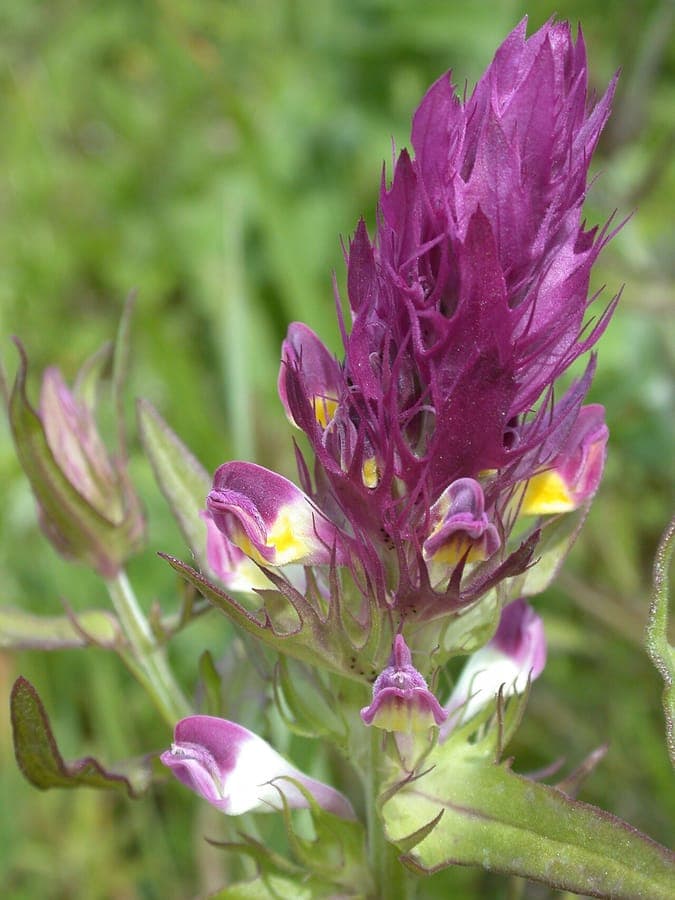
Olivier Pichard / CC BY-SA 3.0, via Wikimedia Commons
Field cow-wheat: complete guide
Melampyrum arvense
¿Quieres ver Field cow-wheat: complete guide en tu jardín?
1 minuto, sin tarjeta de crédito
Field cow-wheat (Melampyrum arvense L.) is a fascinating semi-parasitic plant from the Orobanchaceae family (formerly Scrophulariaceae), scientifically described in 1753. This plant grows naturally from Europe through Kazakhstan and forms part of arable and grassland flora ecosystems. With its striking red or pink flowers, field cow-wheat is a valuable addition to natural gardens and wildflower mixtures.
The plant is also known as 'acker-wachtelweizen' in German, 'mélampyre des champs' in French, and variously as 'field melampyre' or 'cow-wheat' in English. This annual plant reaches 20-45 cm height with characteristic flowers where the two lower flower petals form hooks. The flowers contain nectar and attract bees, butterflies, and other pollinators.
The growth period of field cow-wheat extends from May to October (USDA zones 3-8). Flowering occurs from June to August with red, pink, white-green, or yellow flowers in loose spikes of 5-10 cm length. The flowers possess a distinctive structure: two lower petals form hooks bearing two eyespots, which contain nectar attractive to insects. Fruit development occurs in August-October, producing ovate seed capsules containing 2-4 black seeds.
For ideal growth, select a sunny to half-shaded location with at least 4 hours of direct sunlight daily. Field cow-wheat grows in well-draining, un-enriched soils. The plant is annual but typically self-sows if seed reaches soil. USDA zones 3-8 indicate it's hardy in most European regions when fall-sown.
Soil should be moderately to poorly fertile - over-enriched soils reduce flowering. The plant is semi-parasitic on grasses and other plants, drawing nutrients via haustoria (suction roots). This parasitic nature makes it interesting for ecological study and nature-true gardens.
Watering is minimal once sown. Field cow-wheat is frost-hardy and grows well on standard rainfall. Only during very dry periods (longer than 3 weeks without precipitation) provide supplemental water, especially for young plants.
Pruning not needed. The plant is annual, dying after seed set in October-November. Leave ripened seed capsules on plants until they naturally burst and seed scatters. Ensure seed contacts soil for next year's self-sowing.
Maintenance calendar: October-November sow directly into ground or allow natural seed fall; May-June emergence and growth; June-August flowering period; August-October seed ripening; October-November seed scatters and regeneration for next season.
Field cow-wheat is hardy to USDA zone 3. This is a fall-seeder so frost periods are necessary for germination breaking. Sow seed in October-November and leave outside to overwinter. Seed germinates in spring when soil temperature rises to 10-15°C.
As companion plants, field cow-wheat combines well with other arable flora such as cornflower, snapdragon, and corn poppy. In wildflower seed mixes, it works well with forget-me-not, rose, and sunflower. These combinations maintain ecosystem biodiversity.
Availability: Seed sold as part of wildflower mixes and arable flora collections from seed retailers. Sometimes available as individual seed packets. For gardenworld.app users, field cow-wheat is ideal for semi-natural, ecological garden designs.
Final thoughts: Field cow-wheat is a beautiful, ecologically valuable plant for experiencing nature in home gardens. The semi-parasitic nature, red flowers, and self-sowing system make it particularly interesting. Discover more wildflower species on gardenworld.app and create blooming natural spectacles.
¿Quieres ver Field cow-wheat: complete guide en tu jardín? Crea un diseño gratis ahora.
Sube una foto, elige un estilo y obtén un diseño fotorrealista con lista de plantas en menos de un minuto.
Más de 10.000 jardines diseñados
Sin tarjeta de crédito


Plantas similares
Common cow-wheat: complete guide
Melampyrum pratense
Common cow-wheat is a beautiful plant.
Yellow-rattle: complete guide
Rhinanthus minor
Yellow-rattle (Rhinanthus minor) is a delicate yellow-flowering herb with semi-parasitic properties. Discover the growth, cultivation and ecological importance of this valuable wildflower.
Common Toothwort: complete guide
Lathraea squamaria
Common Toothwort (Lathraea squamaria): discover this fascinating parasitic plant. Cultivation, care and where to find this rare species in the wild.