
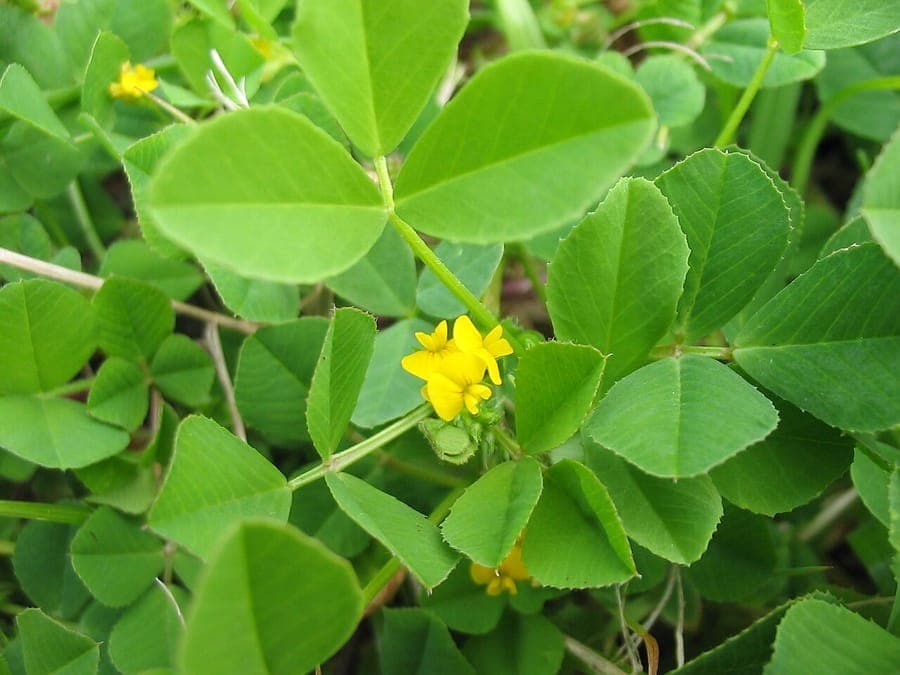
Ixitixel / CC BY-SA 3.0, via Wikimedia Commons
Bur medic: complete guide
Medicago polymorpha
¿Quieres ver Bur medic: complete guide en tu jardín?
1 minuto, sin tarjeta de crédito
Bur medic (Medicago polymorpha L.) is a polymorphic legume from the Fabaceae family, scientifically described in 1753. This plant grows naturally from Europe through Central Asia and western Nepal, with distribution also in North and Central Africa. The characteristic spiny seed pods clearly distinguish this species from related Medicago species, earning it the name 'bur medic' or 'rough medic.'
The name 'polymorpha' refers to the high morphological variability of this species. In English regions, the plant is variously called 'bur trefoil,' 'California bur-clover,' and 'toothed medic.' The distinctive seed pods are roughened with prickles or spines, typically containing 2-5 coiled spiral chambers. The plant reaches 20-40 cm height with a herbaceous, much-branched appearance.
The growth period of bur medic extends from March to October (USDA zones 3-9). Flowering occurs from May to July with yellow flowers in compact spikes of 1-3 cm length. The characteristic seed pods are highly spiny, intricately coiled, and reach 5-8 mm diameter. These spines contain hooked structures that facilitate dispersal via animal fur.
For ideal growth, choose a fully sunny location with at least 6 hours of direct sunlight daily. Bur medic thrives in dry to moderately moist soils. The plant is hardy to USDA zone 3, making it well-suited to most northern climates. Sow in spring or autumn depending on frost risk in your region.
Soil should be well-draining with pH 5.5-7.5. Bur medic flourishes on poor soils and improves soil quality through nitrogen fixation. Plant at spacings of 20-30 cm apart. The plant is very grazer-resistant thanks to the spiny seed pods - many herbivores avoid this crop.
Watering is minimal after establishment. Bur medic is extremely drought-tolerant. Only during periods longer than 3-4 weeks without rain provide supplemental water. In containers, more frequent watering needed - ensure well-draining potting soil.
Pruning not required, however cutting after blooming in August promotes compact growth. For fodder production, cut in June at full bloom. Regrowth occurs 6-8 weeks later. This crop sometimes produces two full harvests in one season under favorable conditions.
Maintenance calendar: March-April direct sowing; May-June initial growth; June-July flowering; July-August seed ripening; September-October seed harvest. In temperate zones, sometimes self-seeds in subsequent years.
Bur medic is hardy to -30°C (USDA zone 3). In severe winters, young plants may sustain damage, but mature plants typically survive. Seed shed in autumn usually undergoes vernalization and germinates in spring.
As companion plants, bur medic combines well with other drought-tolerant crops such as wild oat, blue alfalfa, and vetchling clover. In natural plantings, it works well with thistles, wild carrot, and bird's-foot trefoil. This combination promotes insect-friendly habitats.
Availability: Seed obtainable from seed retailers specializing in fodder crops, and online catalogs. For gardenworld.app users, bur medic is ideal for dry, poor soils and sustainable ground cover.
Final thoughts: Bur medic is a robust plant perfect for challenging growing conditions. The spiny seed pods, drought tolerance, and nitrogen-fixing capability make it valuable for sustainable gardens. Discover more fodder crops on gardenworld.app and improve your soil naturally.
¿Quieres ver Bur medic: complete guide en tu jardín? Crea un diseño gratis ahora.
Sube una foto, elige un estilo y obtén un diseño fotorrealista con lista de plantas en menos de un minuto.
Más de 10.000 jardines diseñados
Sin tarjeta de crédito


Plantas similares
Hop trefoil: complete guide
Medicago lupulina
Hop trefoil (Medicago lupulina) is a legume valuable for ground cover and fodder. Learn about cultivation, maintenance and benefits.
Little bur-clover: complete guide
Medicago minima
Little bur-clover (Medicago minima) is a compact legume with tiny leaves and seed pods. Ideal for small gardens and container planting.
Alfalfa: complete guide
Medicago sativa
Alfalfa (Medicago sativa) is the world's premier legume for nutrition and soil enrichment. Learn complete cultivation and management techniques.